Where an Industrial Town Disappeared Beneath the Pennsylvania Woods
SAFE HARBOR, PA
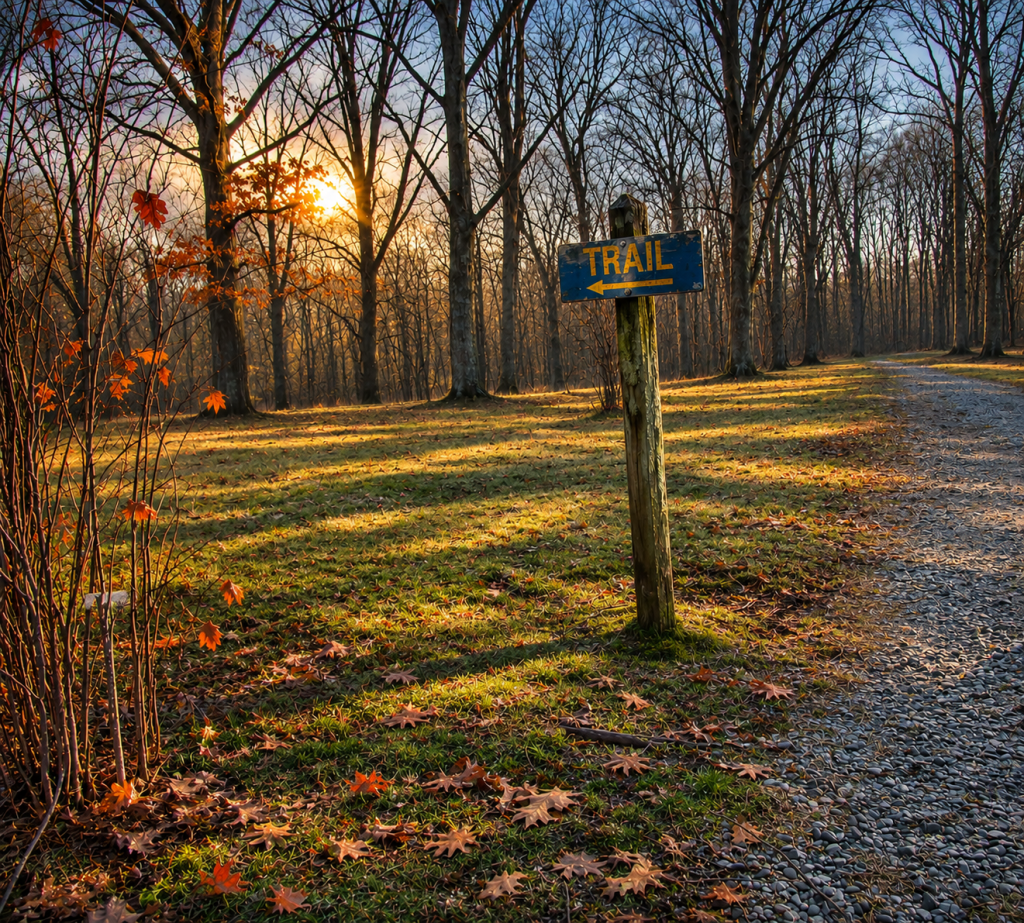
By the time I reached the road leading toward the forgotten village of Safe Harbor, the clouds had swallowed most of the morning light. It was the kind of road you could drive a hundred times without remembering. Nothing about it suggested that an entire community had once existed somewhere beyond the trees. No grand entrance. No welcoming sign announcing the remains of a forgotten town. Just a quiet stretch of Pennsylvania countryside where the woods had slowly reclaimed what people had left behind.
At first glance, there was nothing particularly remarkable about the place. A dirt trail. A few scattered stones. The remains of old foundations, barely distinguishable from the forest floor, but I knew there was a history here, and that changed everything.
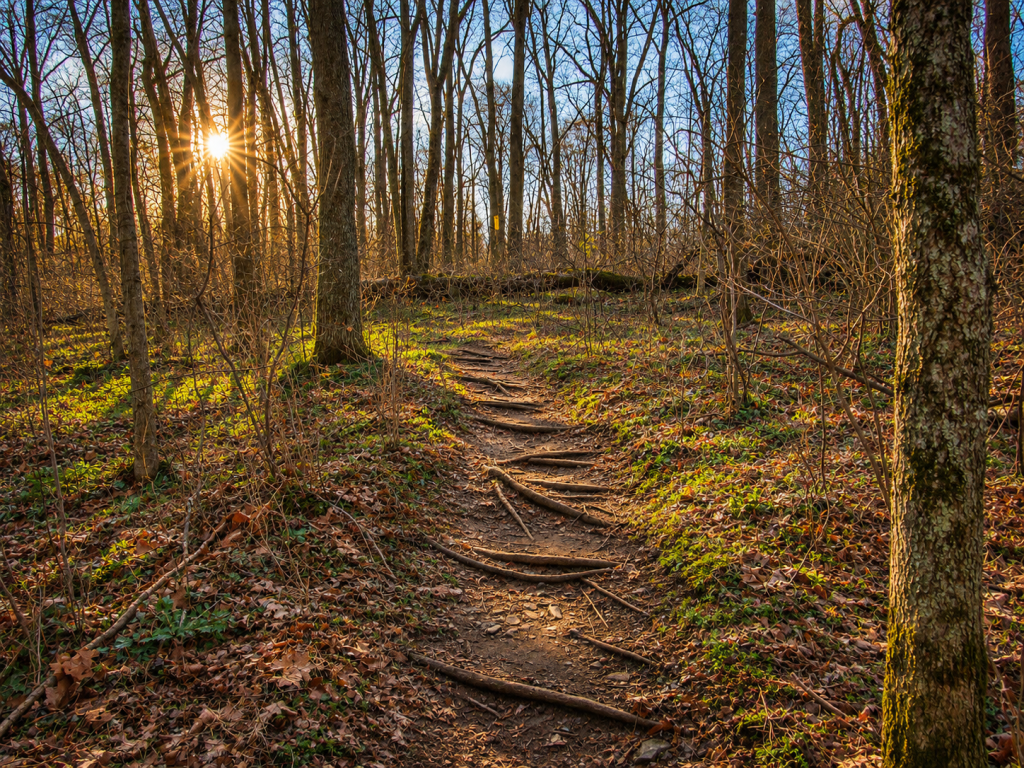
Somewhere beneath the fallen leaves and tangled undergrowth were the remnants of a village that had once been home to hundreds of families along the Conestoga River, near its meeting with the Susquehanna. They had built homes here. Raised children. Worked, worshipped, celebrated, and buried their dead, and eventually, the village they knew disappeared.
I had come to find out what remained. The deeper I followed the trail, the easier it became to imagine how different this place must have looked more than a century ago. The silence of the woods was a far cry from the sounds that would have accompanied daily life in a thriving industrial community.
Where trees now stood, there had once been buildings. Where the ground rose in uneven mounds, stone foundations hinted at structures that no longer existed. Nature had done an impressive job of concealing the evidence. But not everything was gone, and to understand what I was looking at, I needed to go back to a time when Safe Harbor was anything but forgotten.
An Industrial Town Rises from the Countryside
In 1846, Reeves Abbot & Company of Philadelphia chose this quiet stretch of Lancaster County to establish the Safe Harbor Iron Works. The location was ideal. With the Conestoga and Susquehanna Rivers nearby, along with established canal routes, raw materials could be transported in and finished products shipped out.
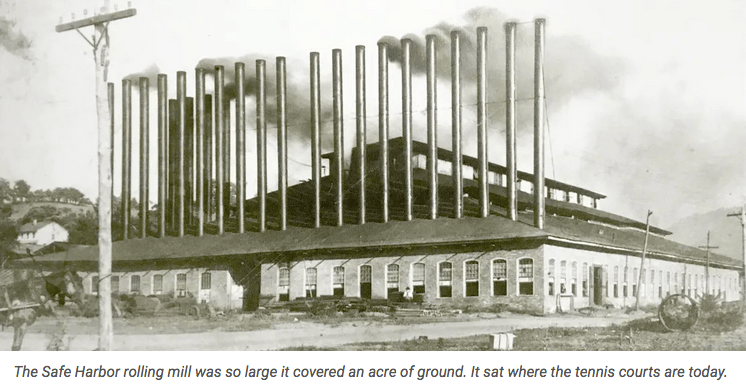
Construction took approximately two years, and by August 1848, the furnaces and machinery were operating. The company had come here with a purpose: to manufacture iron for Pennsylvania’s rapidly expanding railroad industry. At the heart of the operation stood an enormous rolling mill covering more than an acre of ground. Inside, workers fed heated slabs of iron through massive rollers, gradually pressing the metal into the precise thickness needed for railroad rails.
The work was hot, exhausting, and dangerous, but it brought employment, and employment brought people. Almost overnight, the quiet countryside began transforming into a company town. The ironworks employed approximately 250 men, many of whom arrived with their families. Suddenly, roughly 750 people needed homes, stores, schools, and places to gather.
Reeves Abbot & Company responded by constructing more than 70 duplex dwellings along a carefully planned network of streets with names like Walnut, Cedar, Spring, Griffin, Willow, and Race. Many of the workers were Irish immigrants recruited during the devastating potato famine. Among them were skilled iron workers known as puddlers, men who endured intense heat while converting brittle pig iron into a more workable form.
For families escaping famine and poverty, Safe Harbor offered the possibility of a new beginning, but life in an industrial town came with hardships of its own. Within two decades, the settlement had grown into a surprisingly busy community of approximately 1,200 residents. There were schools, churches, hotels, general stores, a drugstore, a post office, and an Odd Fellows Hall. The industrial complex included a blast furnace, rolling mill, and foundry, and apparently, the residents knew how to enjoy themselves after a long day at work.
At one-point, Safe Harbor boasted five taverns, three liquor stores, and six beer halls. It earned a reputation as one of Lancaster County’s more enthusiastic drinking towns. For a settlement built around hard labor, there certainly wasn’t a shortage of places to spend a paycheck, but the prosperity wouldn’t last.
War, Floodwaters, & the Beginning of the End
When the Civil War erupted in 1861, the ironworks shifted its attention from railroad rails to weapons. The furnaces that had helped build America’s railroads were now producing Dahlgren guns, heavy naval cannons designed for Union forces. For several years, the war kept the operation busy.
Then, in 1865, disaster struck. Just weeks before Confederate General Robert E. Lee surrendered at Appomattox, severe flooding devastated the canal systems along the Conestoga and Susquehanna Rivers. A bridge was also destroyed. For an industrial operation dependent on waterways to transport materials and finished products, the damage was catastrophic. The ironworks had lost a vital connection to the outside world.
Although the company continued operating for years afterward, the flood marked the beginning of a long decline. The industry that had created Safe Harbor was slowly losing its ability to sustain it. In 1894, the ironworks finally closed. The village, however, refused to disappear quite so easily.
Some industrial buildings found new purposes. One became a match factory, while another later served as a machine shop and air compressor station during construction of the Enola Low-Grade railroad line. Families remained. Buildings still stood. Life continued, even as the industry that had brought everyone together faded into history, but Safe Harbor had another disaster waiting, and this one would change the village forever.
The Winter That Destroyed Safe Harbor
The winter of 1904 was brutally cold. Along the Susquehanna River, ice reportedly reached two feet thick. For weeks, the frozen river remained locked beneath the weight of winter. Then March arrived. Heavy rains and rising temperatures began breaking apart the ice, sending enormous frozen masses downstream. As the ice moved, sections became trapped, forming temporary dams that forced water to rise with terrifying speed.
In some locations, river levels reportedly climbed ten feet in just five minutes. On March 8, 1904, an enormous ice jam near Turkey Point broke apart and moved downstream. The accumulating ice blocked the mouth of the Conestoga River, forcing water backward toward Safe Harbor. The village was directly in its path. What followed was devastating.
Water and enormous blocks of ice surged into the community, surrounding homes and forcing residents onto rooftops. The stone railroad bridge spanning the Conestoga was torn apart, its wreckage collapsing into the water. The flooding reached miles upstream, inundating buildings as far away as the Rock Hill Hotel near Millersville.
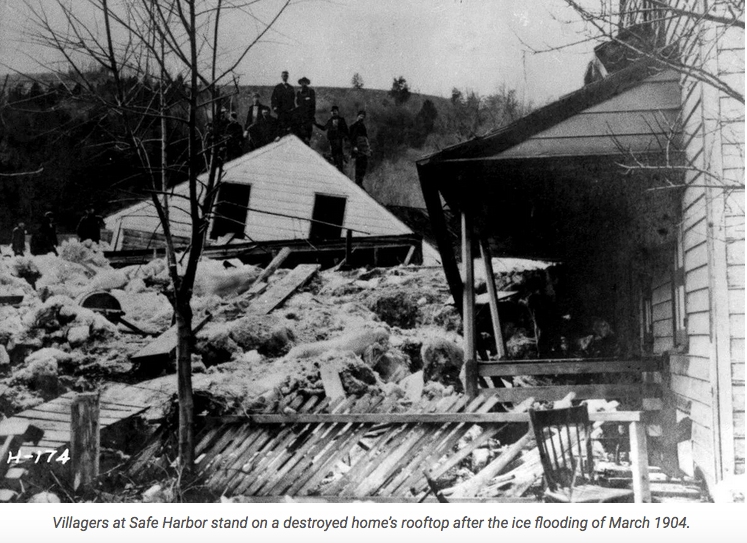
Safe Harbor’s 79 homes suffered catastrophic damage. Families fled with whatever they could carry. Some sought shelter in a schoolhouse on higher ground, while others were taken in by nearby farmers and residents living above the flooded valley. Imagine surviving a bitter Pennsylvania winter only to watch enormous slabs of ice tear through the streets of your hometown.
For many families, there was nothing left to return to. The flood had accomplished what decades of industrial decline could not. It had effectively destroyed the village. By approximately 1907, the remaining ironworks buildings had been demolished. In 1913, many of the damaged homes were sold for salvage for just $30 apiece. An entire community that had once housed more than a thousand people was being dismantled, piece by piece. The streets remained on old maps, but the buildings were disappearing, and eventually, the woods began taking their place.
A New Village Rises
Safe Harbor’s story didn’t end with the destruction of the ironworks settlement. In the late 1920s, strangers began appearing in the area, offering to purchase property. Rumors spread that a major construction project was coming. The rumors were true.
A massive hydroelectric dam was planned for the Susquehanna River. Construction began on April 1, 1930, just as the Great Depression was tightening its grip on the country. For thousands of unemployed men, the project offered something desperately needed: work. At its peak, approximately 4,000 workers were involved in constructing the 5,000-foot-long concrete gravity dam. Many lived in temporary shelters scattered throughout the surrounding ravines.
Once again, Safe Harbor became a bustling community, and once again, the sudden influx of workers brought complaints. Residents petitioned the district attorney, alleging that bootleg whiskey was being sold openly and gambling had become widespread. Considering the original village’s impressive collection of taverns, liquor stores, and beer halls, the complaints carried a certain historical irony. Apparently, some traditions were harder to bury than others.
The dam closed its gates for the first time on September 29, 1931. Electricity generation began that December. Nearby, the Safe Harbor Power Corporation developed an entirely new residential community for employees. Unlike the temporary shelters used during dam construction, this neighborhood was carefully designed with attractive English Tudor-style architecture. The development included 21 single-family homes, bachelor apartments, and a multipurpose building with a ballroom. This new community became known as the Village at Safe Harbor.
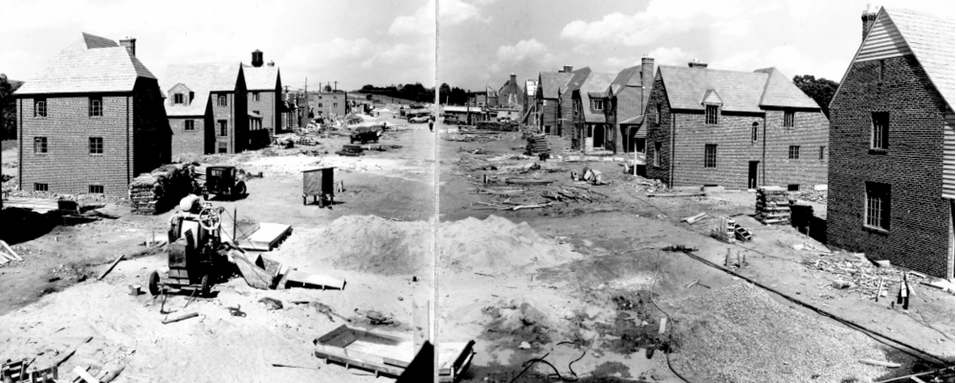
During World War II, military personnel were stationed in the area to protect the hydroelectric facility following the attack on Pearl Harbor. The dam was considered important infrastructure because of the electricity it supplied to railroads and industrial centers. Safe Harbor had once again become strategically important, but this new village wasn’t the one I had come to explore. I was looking for the older settlement, the one that had nearly vanished beneath the trees, and that meant following a trail into the past.
Walking the Streets of a Ghost Village
Back at Safe Harbor Park, I parked near the tennis courts and looked around. It was quiet. The kind of quiet that makes it difficult to believe hundreds of people once lived and worked here. The tennis courts occupy the former site of the ironworks’ enormous rolling mill. Where machinery once thundered and men labored beside blazing furnaces, there was now little to suggest the industrial operation that had dominated the landscape.
Nearby stood a stone monument displaying a faded historical photograph of the village. It was my first real glimpse of the Safe Harbor that no longer existed. The blue-and-white-marked walking trail, established in 1997, follows portions of the old settlement through open grassy areas and returning woodland. The park also serves as an arboretum, containing dozens of varieties of trees and shrubs, although many of their identifying labels have disappeared over the years.
I started uphill along what had once been Cedar Street. There were no houses anymore. No porches, fences, or neighbors calling across the road. Just grass, towering trees, and the occasional blue-and-white trail marker. Some of those trees had been planted around homes that disappeared generations ago. It’s strange to think that a tree can outlive an entire neighborhood.
A short distance ahead, the trail turned sharply left, and there, on the hillside, stood one of the few buildings that had survived.
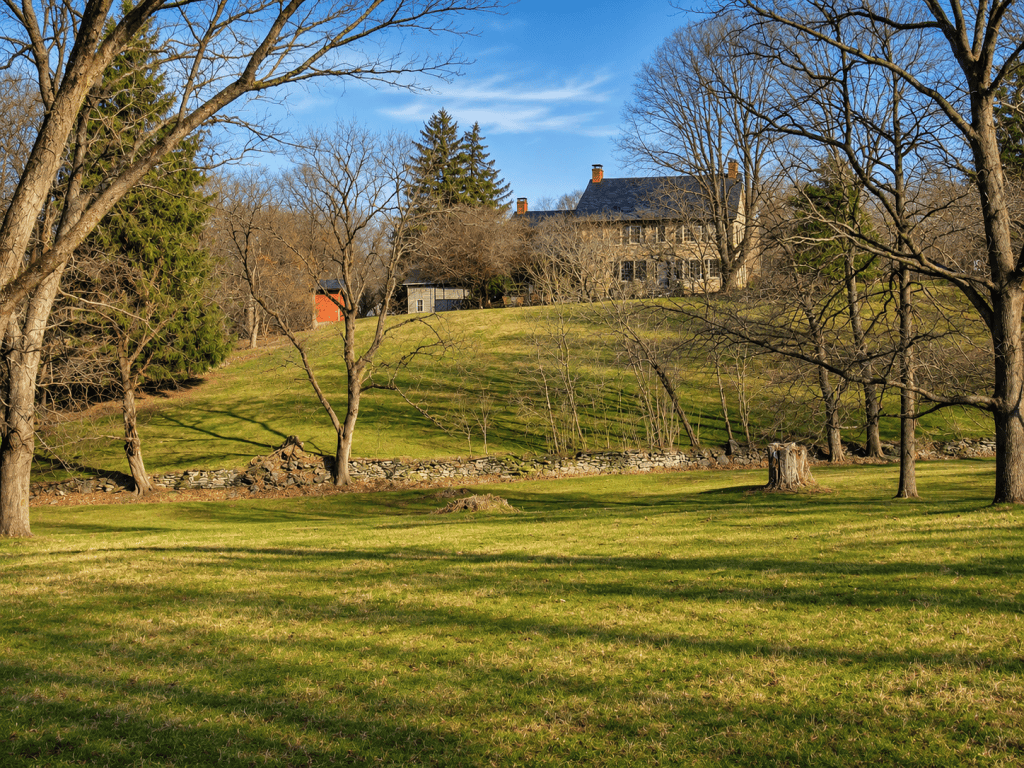
The Ironmaster’s House & the Odd Fellows Hall
Overlooking the former village was an impressive stone mansion known as the ironmaster’s house. Unlike the company dwellings that once surrounded it, this building had survived the passage of centuries. In fact, the house predates the ironworks settlement itself. It was originally built in 1725 by Benjamin Eshelman, an early Mennonite settler, and was later associated with the ironworks. The restored mansion offered a striking contrast to the scattered ruins nearby. It was a reminder that not everything from Safe Harbor’s past had been lost.
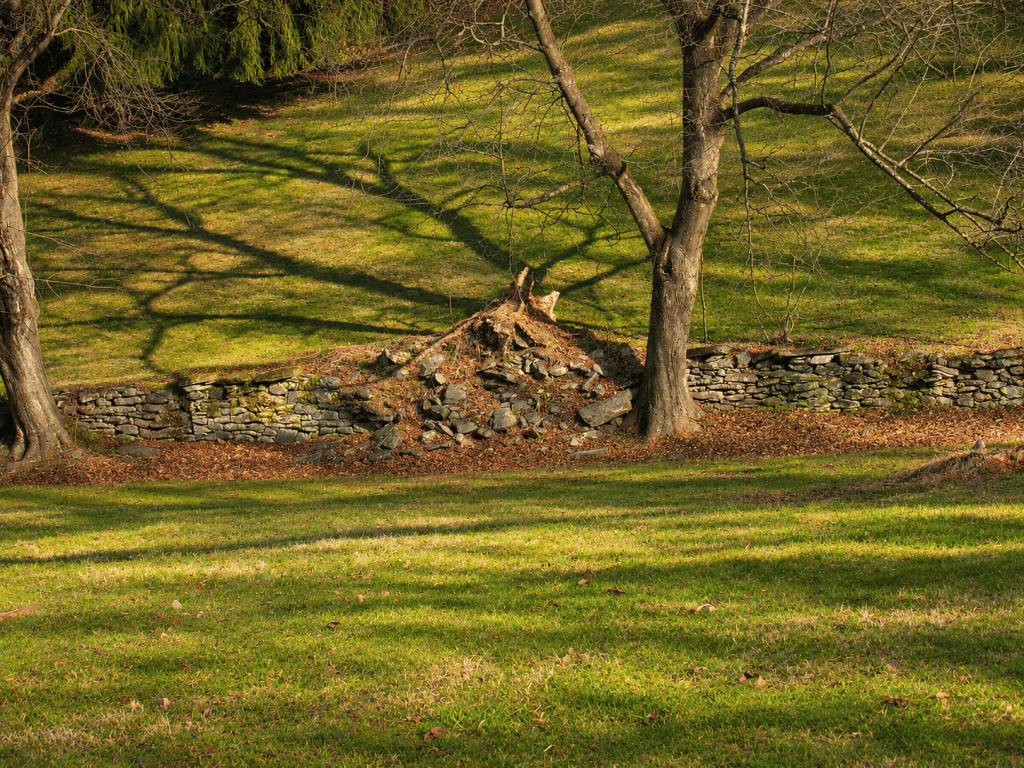
Following the trail around the hillside, I continued beside an old stone wall that once bordered Spring Street, the village’s main thoroughfare. If you look closely, some of the original paving stones marking the street’s curbs can still be seen. Without knowing what you’re looking for, it would be easy to walk right past them.
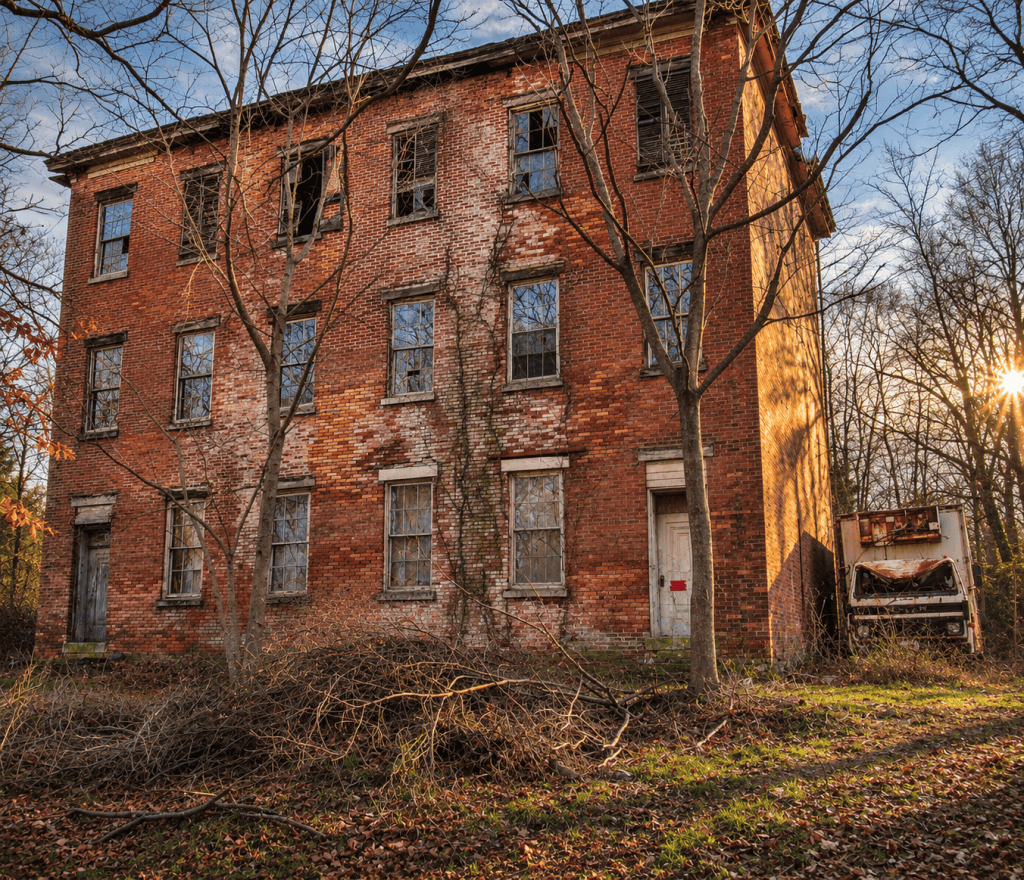
Before the trail entered the woods, another surviving building came into view. The Odd Fellows Hall. Established in 1848 as Conestoga Lodge No. 334 of the Independent Order of Odd Fellows, the organization played an important role in the community’s social life. Members gathered every Saturday, and the third-floor meeting room was reportedly large enough to accommodate 200 people. The lodge struggled during the Civil War as members enlisted, but it recovered afterward and remained active for decades. The building also hosted Masonic meetings between 1871 and 1899 and temporarily accommodated school classes.
Standing near the old hall, I tried to imagine a Saturday evening here during the village’s busiest years. Workers finishing their shifts. Neighbors gathering in the streets. Voices drifting from taverns and meeting halls. Now, there was little more than the sound of the wind moving through the trees, and just beyond the surviving buildings, the forest concealed what was left of the neighborhood.
Where the Houses Once Stood
Entering the woods felt like stepping into another part of Safe Harbor’s history. The trail continued through the trees, but the most interesting things weren’t necessarily on the path itself. They were hidden on either side. Shallow depressions appeared among the fallen leaves; some arranged in surprisingly orderly rows.
At first, they looked like ordinary uneven patches of forest floor, but these were the remains of the village’s residential streets. The company had built approximately 70 duplex homes for its workers and their families. Each dwelling was divided into two residences, with a shared central chimney providing heat and a place to cook.
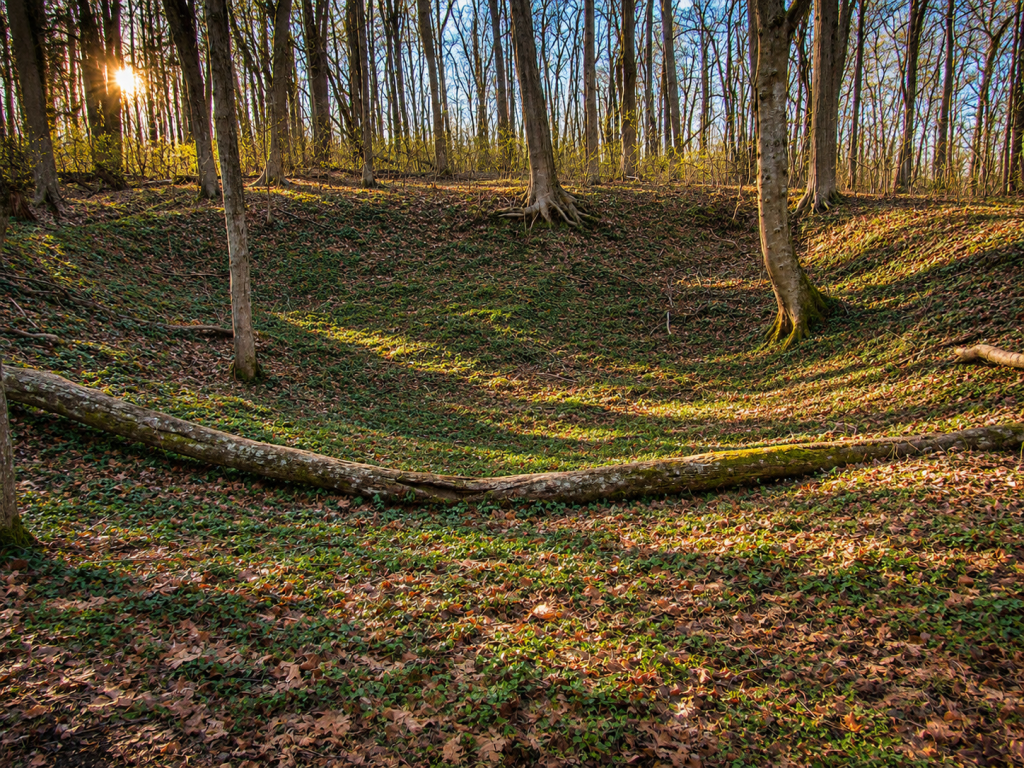
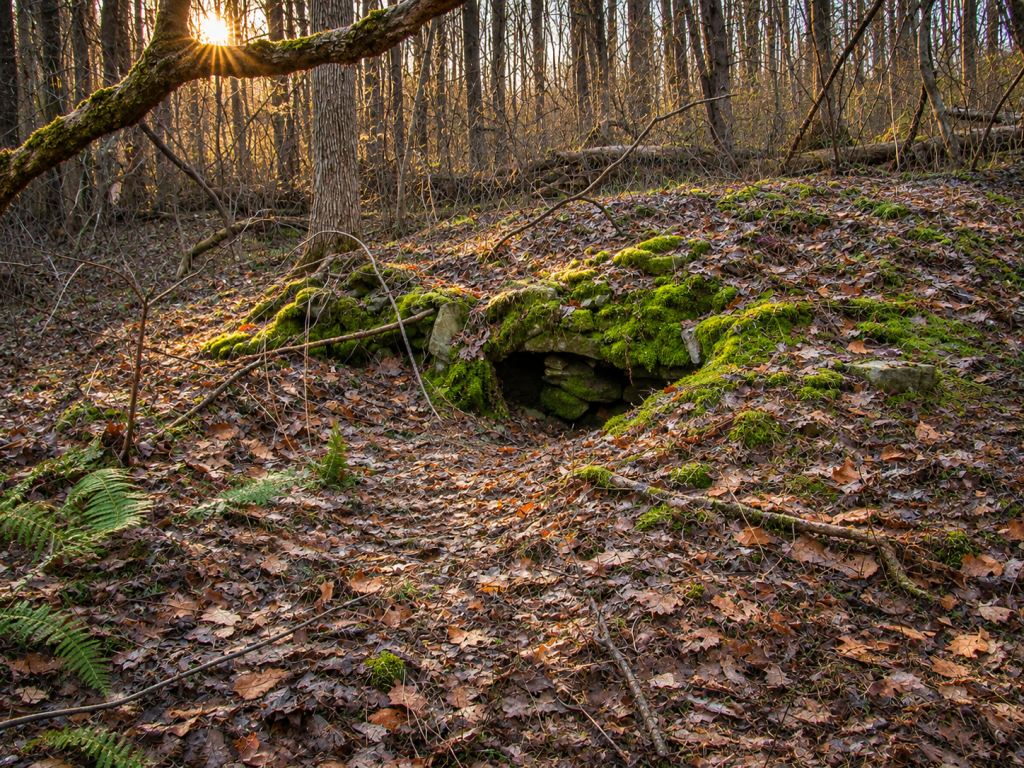
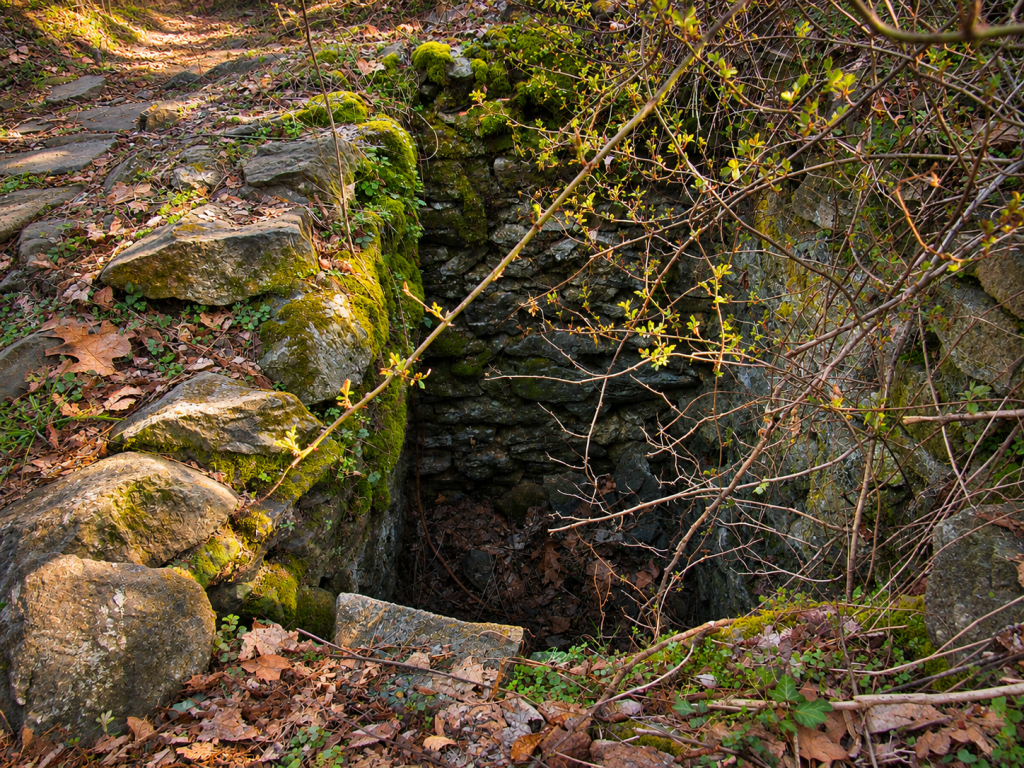
Today, the houses are gone. What remains are the impressions they left in the ground, along with occasional foundation stones almost swallowed by moss and vegetation. Someone had called this place home. Someone had looked out a window that no longer existed, and now, more than a century later, the only evidence of their home was a shallow hollow beneath the trees.
Standing there was one of those moments that made the history feel less distant. These weren’t simply ruins. They were the remains of people’s everyday lives.
The School That Disappeared
Farther along the trail, I reached the former site of the Safe Harbor Independent School. Built in 1850, it was one of two one-room schoolhouses that served the community. The other stood across the Conestoga River on the Manor Township side. By 1883, only one schoolhouse remained after a storm destroyed the other building. During the disruption, classes were temporarily held upstairs in the Odd Fellows Hall.
Today, very little survives of the Independent School. A few foundation stones rest among moss, weeds, and fallen leaves. Nearby, an informational marker displays a faded photograph of the building. Without that sign, I might never have realized a school once stood here. I looked at the scattered stones and thought about the generations of children who had passed through its doors. Children whose parents worked long hours in the ironworks. Children who grew up on streets that no longer existed. Some probably spent their entire lives in Safe Harbor. Others may have left, never imagining that the village of their childhood would eventually disappear.
I continued along the trail. The next clearing held one of the most haunting remnants of the settlement.
The Church & the Forgotten Cemetery
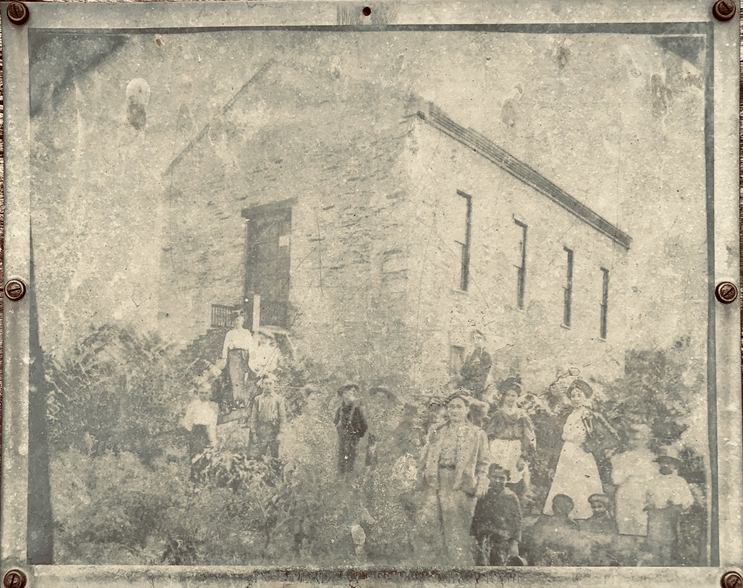
The woods eventually opened into a grassy clearing near the former East Spring Street. At first glance, there wasn’t much to see, but this was once the site of St. Mary’s Immaculate Conception Catholic Church. The parish was organized in 1853 as an extension of St. Mary’s Church in Lancaster. The following year, Irish ironworkers constructed a stone church to serve the growing Catholic community.
It was an impressive building for a small industrial village. Measuring approximately 40 by 60 feet, the church featured a slate roof and a semicircular apse where the altar stood. For the Irish families who had left their homeland during the potato famine, it must have offered a familiar sense of community in an unfamiliar country, but as Safe Harbor’s population declined, so did the congregation.
By 1883, fewer than a dozen parishioners remained, and the church closed. The abandoned building was sold for salvage in 1917. Although much of its interior was removed, the stone walls continued standing for decades. Eventually, deterioration made the structure dangerous. In 1985, the Harrisburg Catholic Diocese ordered its demolition.
Today, there is no church. Instead, a small display stands on a pedestal constructed from stones salvaged from the original building. It holds a photograph taken around 1955, showing the church in its abandoned condition. Looking at the photograph, I could see the building that had once occupied the clearing. Then I looked up. Nothing remained but open ground.
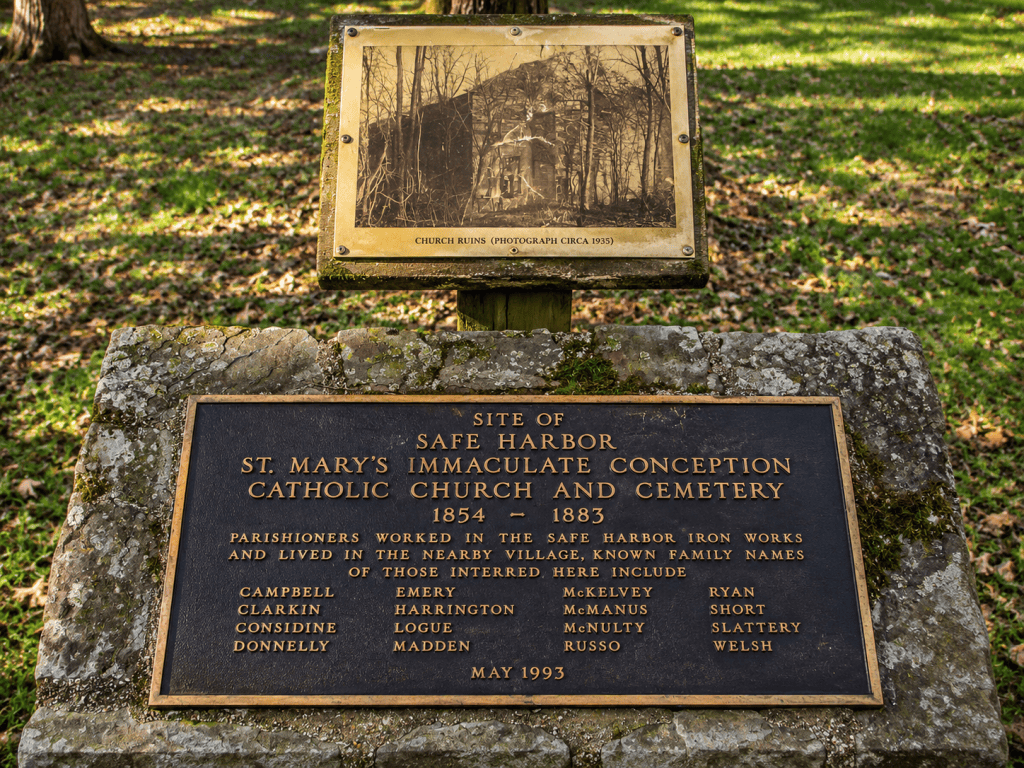
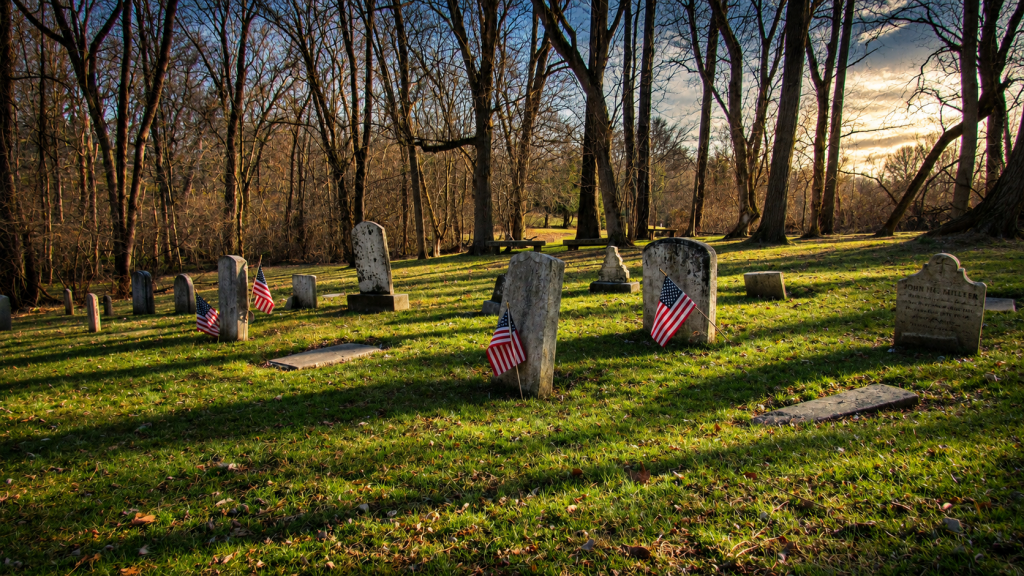
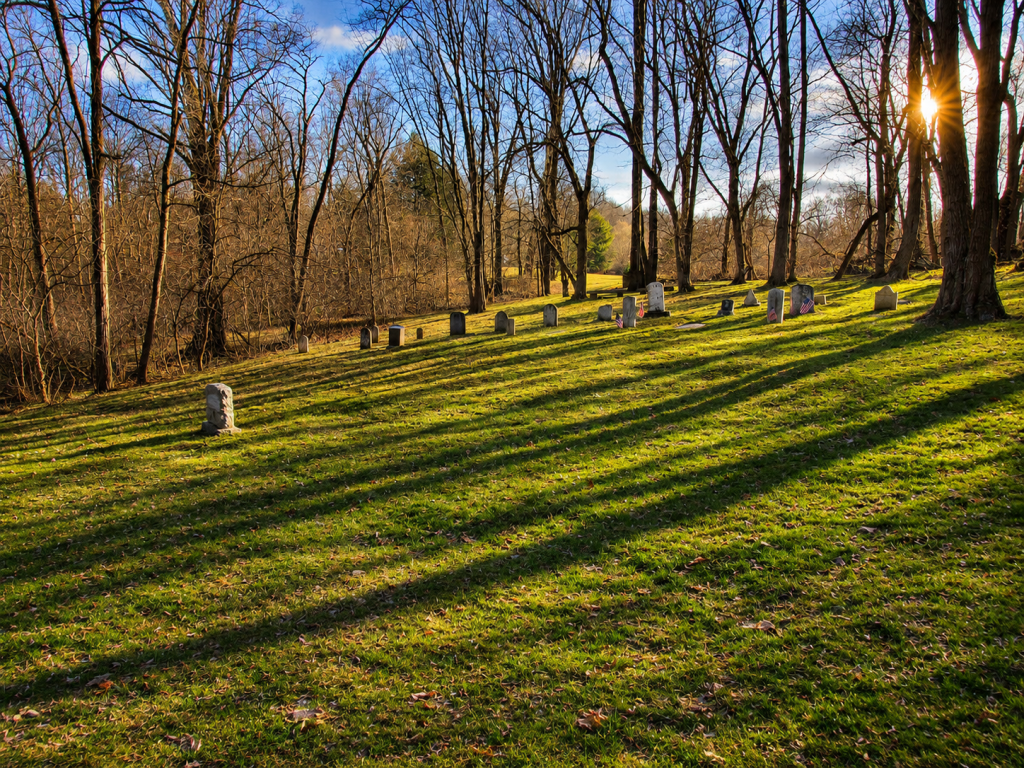
Nearby, however, the cemetery still held evidence of the people who had lived and died here. Weathered gravestones stood among the grass, some marking the resting places of Civil War veterans. Others told darker stories.
The cemetery contains graves associated with violent deaths, including shootings and stabbings, as well as children who reportedly died in fires that swept through the temporary housing occupied by immigrant workers, but some of the most troubling history lay in the sections where there were no headstones at all.
During construction of the Enola Low-Grade railroad line, Italian immigrant laborers lived and worked in the surrounding area. The project was dangerous, and historical accounts report that at least 34 workers died during construction. At least 50 Italian immigrants are believed to have been buried in unmarked graves within the cemetery. There are no individual markers identifying many of these people. Only a memorial plaque, a few surviving stones, and subtle rises and depressions in the ground hint at their presence.
I walked slowly through the clearing, careful of where I stepped. It was unsettling to think that so many people could be buried here without so much as a name carved into stone. Men who had crossed an ocean looking for work. Families who had hoped for a better future. People who helped build the infrastructure of a growing nation, only to disappear into the margins of its history.
The cemetery was perhaps the clearest reminder that Safe Harbor was never just a collection of buildings. It was a community of real people, and some of their stories had been almost entirely forgotten.
What the Woods Remember
Eventually, the blue-and-white trail began leading me back toward the parking area. Along the way, I passed more remnants of the village. Old stone foundations emerged from the undergrowth. Shallow depressions marked the outlines of former houses. Trees grew where kitchens, bedrooms, and front porches had once stood.
In places, tangled branches and invasive shrubs made the ruins difficult to distinguish from the surrounding forest. One surviving foundation revealed the remains of a duplex dwelling, including stones from the central chimney that once served two families. It wasn’t much to look at. Just old stones slowly sinking into the earth, but after learning what had happened here, those stones seemed far more significant.
For decades, Safe Harbor had been a place of opportunity, hardship, industry, and community. Then the ironworks closed. The floods came. The buildings disappeared, and the forest returned.
By the time I reached the end of the trail, the village had become quiet again. Not because its history was insignificant, but because so little of it remained visible. That’s what makes places like Safe Harbor so fascinating to explore. You can stand in the middle of what appears to be an ordinary patch of Pennsylvania woodland and have no idea that an entire town once surrounded you. The streets are gone. The houses have vanished. Most of the people who lived here have been forgotten, but if you know where to look, the evidence is still there. A foundation hidden beneath the leaves. A weathered gravestone. A stone wall bordering a street that no longer exists. The remains of a chimney that once warmed two families.
Safe Harbor didn’t disappear all at once. It faded over decades, until nature had almost completely erased the village from the landscape, and yet, more than a century after its destruction, there are still pieces of its story waiting in the woods. You just have to know what you’re looking at.
Some places don’t need ghosts to be haunted. Their history is haunting enough.


Leave a Reply