WRIGHTSVILLE, PENNSYLVANIA
The morning sky was heavy with clouds when I turned onto the road leading toward the old Accomac Inn. Every so often, the sun tried to break through, casting a pale light across the landscape before disappearing behind the gray again. It was the kind of morning that made everything seem a little quieter, a little more isolated.
I had come to York County to investigate a story that began more than a century ago, when a young woman lost her life because she refused to marry a man who would not accept her answer, and somewhere on the grounds of the old inn, that man still lies buried.
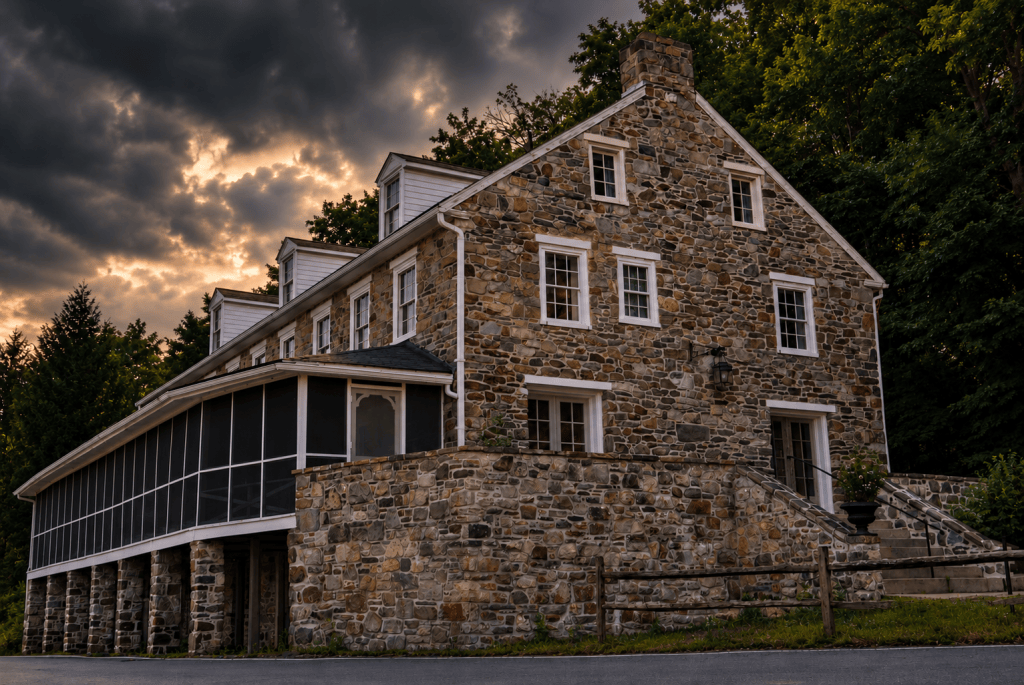
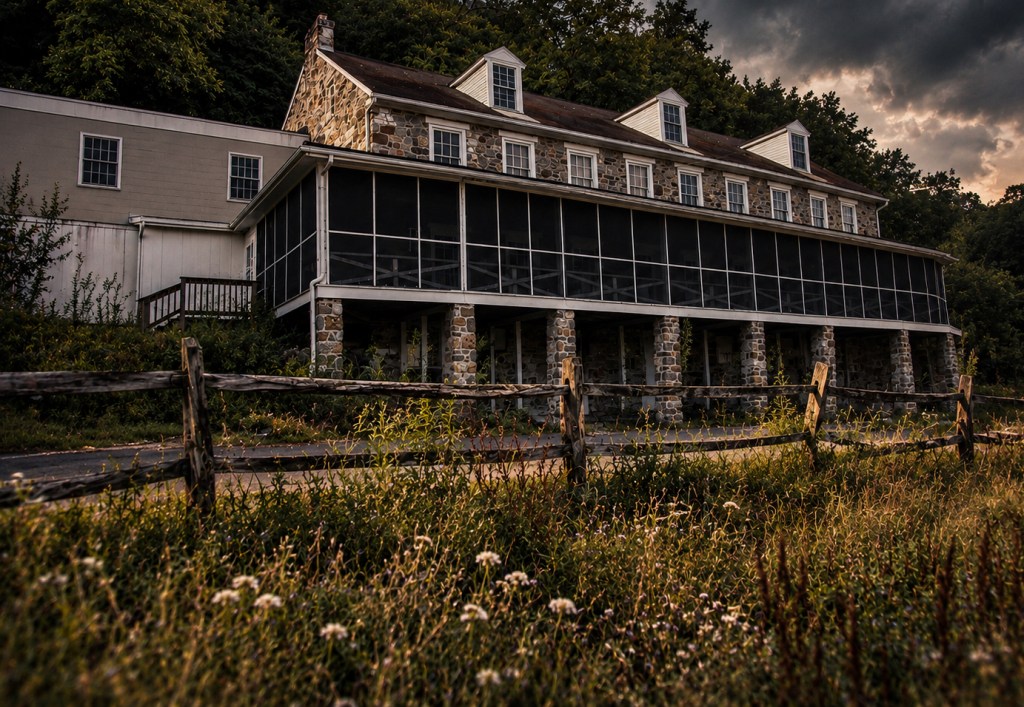
The building came into view as I approached, its old stone walls standing against the gloomy September sky. There was something imposing about it, even from a distance. Once a place where travelers gathered, ferries carried passengers across the Susquehanna River, and families celebrated special occasions, the Accomac Inn had been closed to the public since 2018, but it wasn’t the building’s age or its abandonment that had brought me here. It was a murder, and the stories of what supposedly remained afterward.
Before the Bloodshed
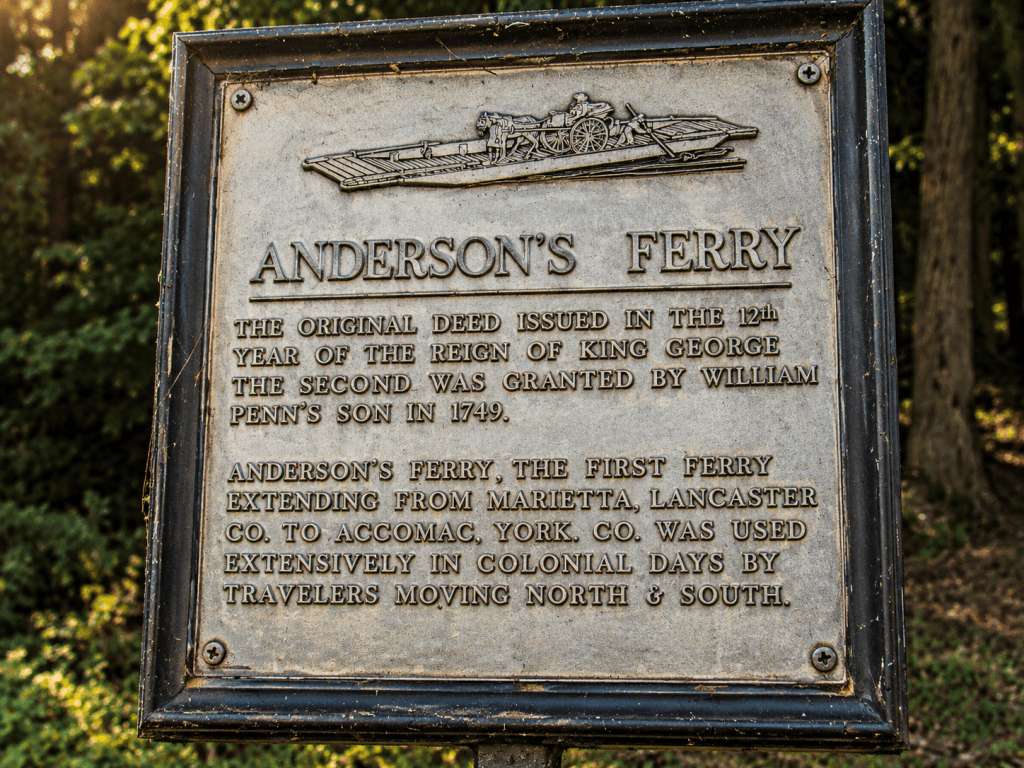
Long before the Accomac Inn became associated with murder and restless spirits, this stretch of the Susquehanna River was a busy transportation corridor. In the eighteenth century, ferries were an essential part of life along the river. They carried travelers, livestock, and goods between communities that otherwise faced difficult journeys to reach one another.
As early as 1730, James Anderson operated a ferry crossing between the York County shore and Marietta, on the Lancaster County side. Around 1775, a stone building was constructed near the crossing. Originally known as Anderson’s Ferry Inn, it provided food, lodging, and a place to rest for travelers making their way through the region.
Over the years, the inn reportedly welcomed a variety of visitors, including the Marquis de Lafayette. Ownership and operations changed as the decades passed. During the 1840s, Dr. Jacob Glatz acquired the ferry business and surrounding property, and the crossing became known as Glatz’s Ferry.
By the late 1850s, businessman John Noel had leased the ferry operation and expanded its appeal. A former sawmill was transformed into a pavilion where people gathered for picnics, weddings, and social events. For a time, the property was as much a gathering place as it was a transportation stop. The ferry also became particularly important during the Civil War. In 1863, Union militia burned the bridge at Columbia to prevent Confederate forces from crossing the Susquehanna during the Gettysburg Campaign. With the bridge gone, ferry crossings became even more valuable.
It was a property with a long history of travelers coming and going, but in 1864, a new owner arrived whose family name would eventually become inseparable from one of the area’s most notorious crimes. His name was John Coyle Sr.
The Girl Who Said No
By 1880, the Coyle family operated the inn and ferry, employing workers to help maintain the property and serve its guests. Among them was a sixteen-year-old girl named Emily Myers. Emily worked as a domestic servant and milkmaid. Her days would have been filled with the ordinary responsibilities of life at a busy nineteenth-century inn: household chores, tending to animals, and helping keep the property running. She was young, with a life still ahead of her.
Unfortunately, she had attracted the attention of the owner’s son. John Coyle Jr., often called Johnny or Johnnie, was approximately twenty-six years old. Historical accounts describe him as a troubled young man who sometimes drank heavily and whose mental abilities were questioned by those around him. He had become fixated on Emily.
What began as unwanted attention developed into repeated proposals of marriage. Emily refused him, but her refusals apparently did little to discourage his pursuit. John continued asking. Emily continued saying no.
More than a century later, we cannot know everything Emily experienced during those months. We have only fragments of her life preserved through the crime that ended it, but one thing is clear. She did not want to marry John Coyle Jr., and on May 30, 1881, he made her pay for that decision.
May 30, 1881 — Murder at the Ferry
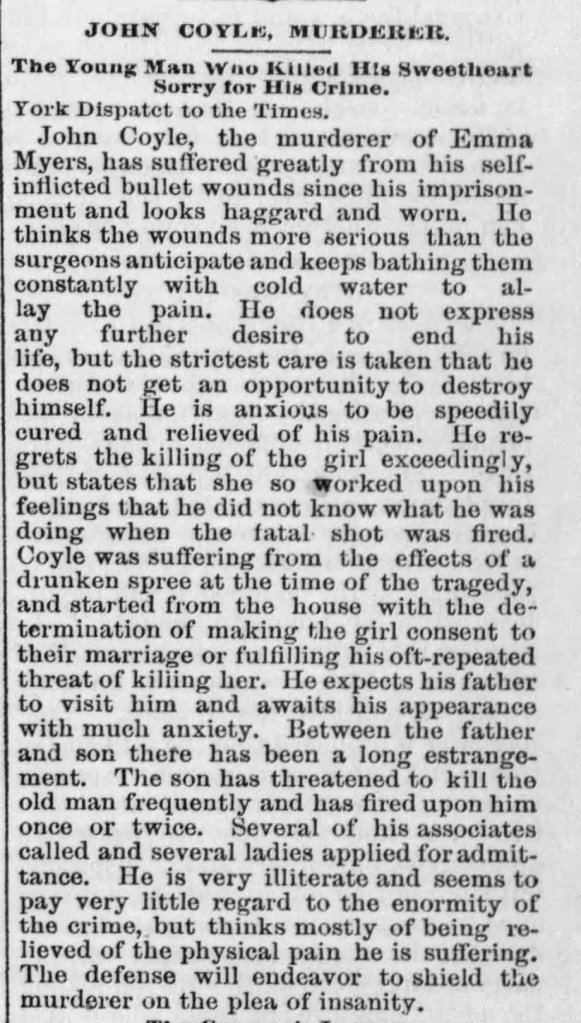
It was Memorial Day. The property along the Susquehanna was carrying on with the ordinary routines of a late-spring morning. Emily was in the barn, milking a cow, when John approached her. Once again, he demanded that she marry him. Once again, she refused. What happened next took only seconds. John drew a pistol and shot Emily in the chest. The bullet struck her heart, and she died there in the barn.
A sixteen-year-old girl killed while carrying out an ordinary chore, because a man refused to accept that she had the right to choose her own future. Some accounts state that John then turned the pistol on himself. The attempt failed, leaving him alive to face the consequences of what he had done. Other accounts describe him fleeing into the nearby hills, where he remained hidden for approximately ten days before being captured. Whatever the precise sequence of his movements after the shooting, the outcome was the same. Emily Myers was dead, and John Coyle Jr. would eventually stand trial for her murder.
A Murder That Shocked the Community
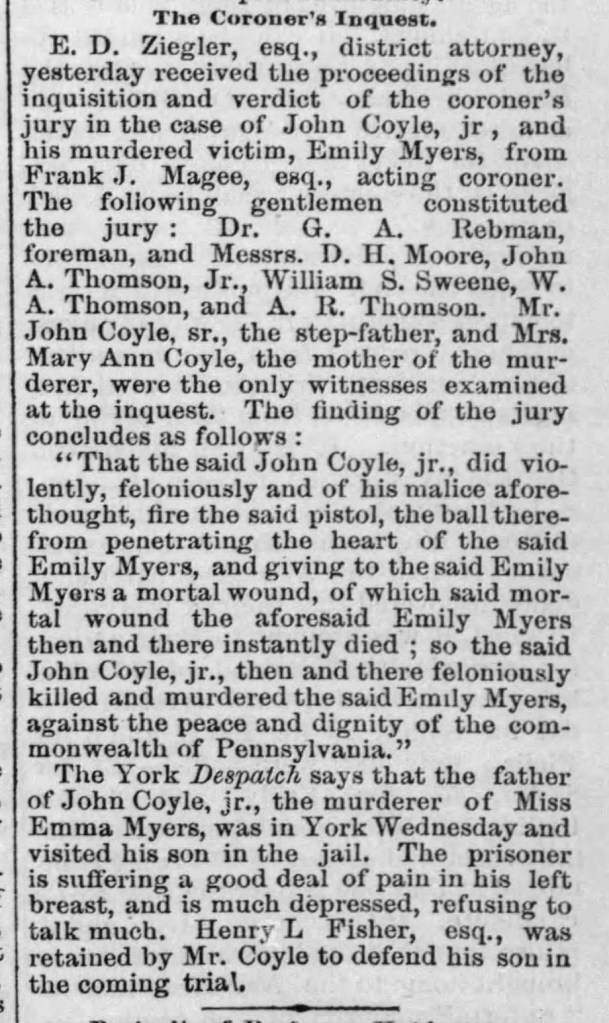
News of Emily’s death spread quickly through the surrounding communities. The killing was particularly disturbing because of its circumstances. Emily had been working on the property when she was confronted and shot by the son of the man who employed her. There was little question about who had fired the gun. The central argument at trial would instead concern John’s state of mind. His defense maintained that he had been driven insane by his feelings for Emily and her repeated rejection of his marriage proposals. His attorneys also emphasized what they described as his limited mental capacity.
The case became a sensation. Newspapers followed the proceedings, reporting on testimony, courtroom arguments, and the public’s reaction. In October 1881, John was tried in York County and convicted of first-degree murder, but the case was far from over. His conviction was overturned on appeal, and a second trial was ordered. This time, the proceedings took place in Gettysburg.
On March 5, 1883, a crowded courtroom awaited the jury’s decision. After approximately three hours of deliberation, the jurors returned the same verdict. Guilty of murder in the first degree. The defense again pursued appeals, but the second conviction was upheld. John Coyle Jr. had exhausted his legal options. He was sentenced to hang.
The Execution at Gettysburg
On April 22, 1884, nearly three years after Emily Myers was murdered, John Coyle Jr. was executed in Gettysburg. More than 300 people reportedly gathered to witness the hanging. His final punishment brought the criminal proceedings to an end, but it did not bring the story of the Coyle family to a close.
John’s mother claimed his body and arranged for it to be returned to the family’s property along the Susquehanna. The family reportedly wanted him buried in Marietta Cemetery, across the river in Lancaster County, but there was a problem. Emily Myers was believed to be buried there. Her grave, reportedly located near that of her great-aunt Sarah Myers, was unmarked. According to local accounts, the cemetery association refused to allow John to be buried in the same cemetery as the young woman he had murdered.
The Coyle family was left to find another resting place for their son. They buried him on their own property. Not far from the inn.
The Grave
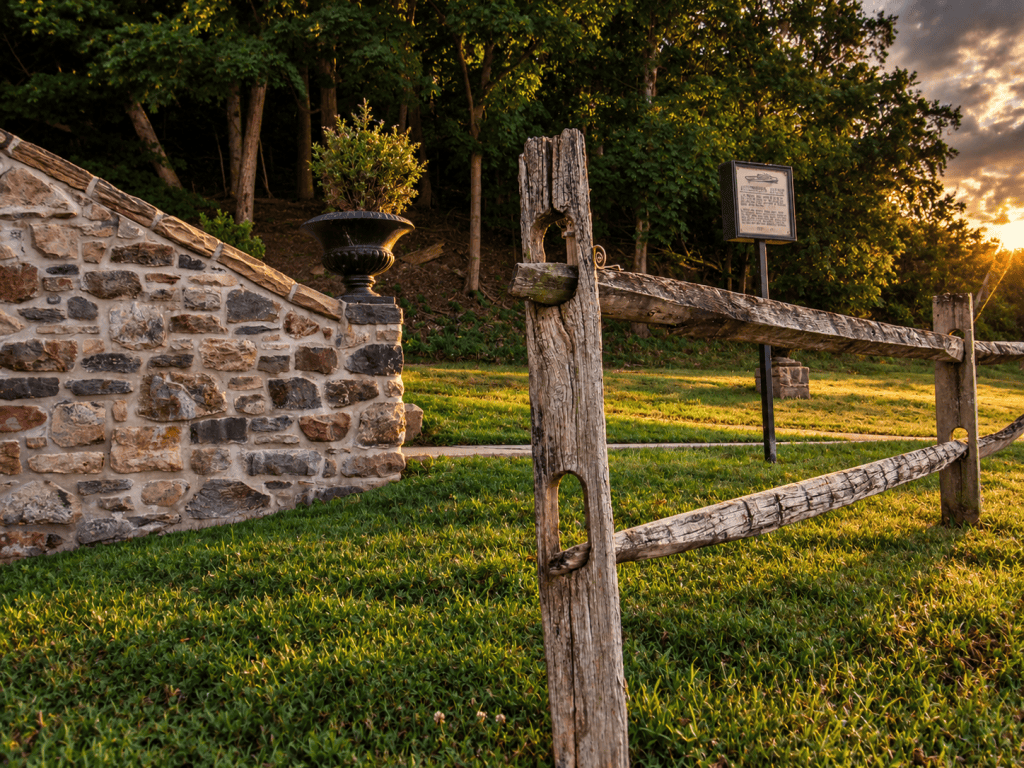
On the hillside near the old Accomac Inn lies the grave of John Coyle Jr. It is an unusual burial place, separated from the orderly rows of headstones found in a traditional cemetery. The grave is roughly fifty feet south of the inn. Time has worn away much of the lettering on the stone, although his name can reportedly still be made out with careful examination.
There is something unsettling about the contrast between the two graves. Emily, whose life was taken at sixteen, is believed to rest in an unmarked grave across the river. John, the man who killed her, has a grave on the property where the crime occurred. His name remains attached to the inn’s history. Hers is too often remembered only in relation to his crime.
Six years after the murder, in 1889, the Coyle family sold the ferry property and left the area. Around this period, the establishment became known as the Accomac Inn. Ownership changed. The building continued serving guests. New generations came and went, but the story of the murder was never entirely forgotten, and eventually, another kind of story began to circulate.
The Hauntings of the Accomac Inn
Over the years, the Accomac Inn developed a reputation for something beyond its food, historic architecture, and riverfront setting. People began reporting strange occurrences inside the building. Some described hearing faint music when no source could be found. Others claimed to hear a woman’s voice in otherwise empty rooms.
Staff reportedly returned to dining areas they had already cleaned, only to discover chairs, tables, and dishes moved from their original positions. Doors were said to open and slam without explanation. Glassware allegedly shifted or broke on its own. The more mischievous activity was often attributed to John Coyle Jr., whose spirit some believed remained attached to the property where he was buried, but not every reported encounter involved him.
One of the more unsettling stories concerned an upstairs storage room, where an employee reportedly witnessed apparitions believed to be both John and Emily. The idea that the victim and her killer might still occupy the same building has become one of the most disturbing elements of the inn’s paranormal reputation. These accounts have circulated through local publications, paranormal investigations, and regional folklore, including stories collected by author Rick Fisher.
Of course, reports of unexplained sounds and apparitions are not proof that a building is haunted. Old structures settle. Sounds travel. Memories change as stories are passed from one generation to another, and places associated with violent deaths often develop legends that grow more elaborate with time. Still, the Accomac Inn’s reputation is unusual because the underlying crime is not simply a ghost story invented to entertain visitors.
Emily Myers really was murdered. John Coyle Jr. really was convicted and executed, and his grave remains part of the property’s history. The supernatural claims are another matter entirely.
What Remains Today
Standing outside the old inn that September morning, I found myself looking at the building differently. Its stone walls had witnessed generations of travelers long before Emily Myers arrived. They had survived changing owners, shifting transportation routes, and the gradual disappearance of the ferry trade that once made this location important. The inn had once been filled with conversations, meals, celebrations, and the ordinary noise of people passing through. Now, with the business closed, the property seemed strangely removed from the world around it.

Clouds drifted overhead, occasionally allowing the sun to brighten the old stone before the shadows returned. It was easy to understand why a place like this inspired ghost stories, but as I stood there, I wasn’t thinking about phantom footsteps or dishes moving in empty rooms. I was thinking about Emily. A sixteen-year-old girl who went to work one morning in 1881 and never came home.
Her life had been reduced to a handful of surviving details, most of them recorded because of the man who killed her. The building was still standing. The murderer’s grave was still nearby, but Emily’s resting place was believed to be unmarked, somewhere across the Susquehanna, and that, to me, was more haunting than any ghost story.
The Story That Refuses to Disappear
Whether the Accomac Inn is truly haunted remains a question of personal belief. Perhaps the sounds and sightings reported over the years have ordinary explanations. Perhaps the building’s tragic history has encouraged people to interpret unfamiliar experiences through the lens of a century-old murder. Or perhaps there are things about certain places that we simply cannot explain.
I hadn’t come looking for proof of ghosts. I came because an old building along a Pennsylvania back road held a story that deserved to be remembered, and behind the legends of restless spirits, slamming doors, and mysterious voices was a real young woman whose life ended violently because she refused to surrender her choice.
The Accomac Inn may be remembered for its ghosts, but it should never be remembered without Emily Myers.
Some places are haunted by what people claim to have seen or heard. Others are haunted by what we know happened there.
And sometimes, the truth is disturbing enough.


Leave a Reply