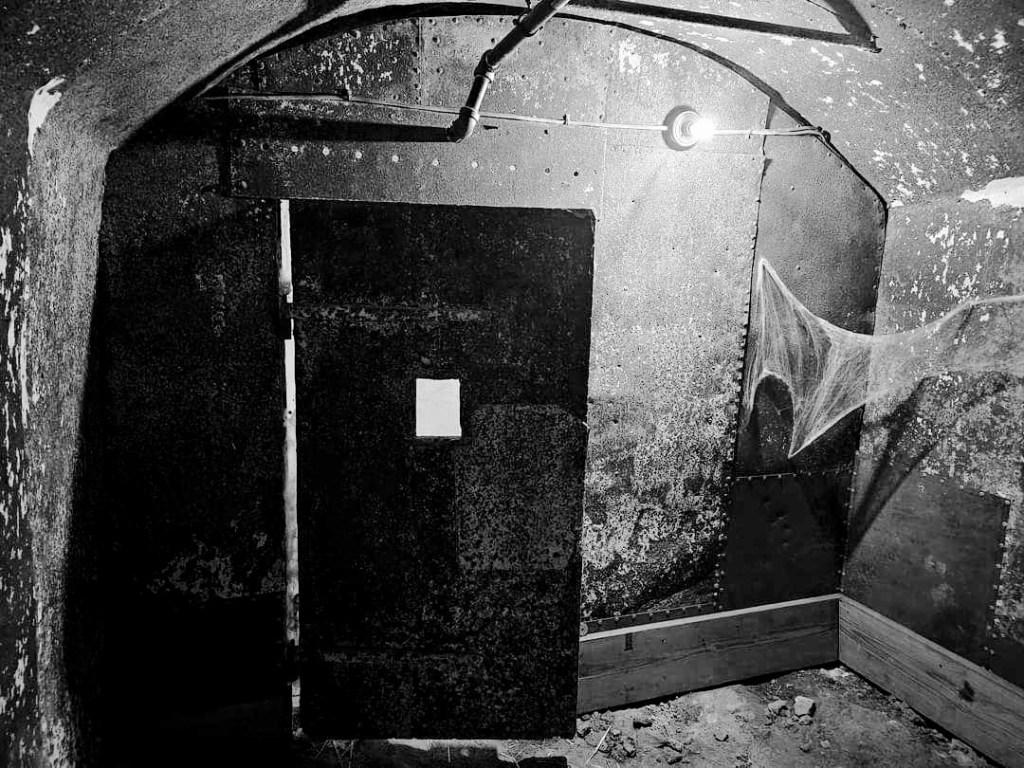
The borough of Columbia, Pennsylvania, holds claim to one grim institution that once cast a shadow over the town’s reputation: the dungeon beneath the Columbia Market House. Though the market above is the oldest farmers’ market in Lancaster County, the space below told a darker story. The dungeon was perpetually damp, bitterly cold, and cloaked in darkness—conditions unfit for even an animal, let alone a human. Over the years, the Health Officer repeatedly reported its appalling state to the town council. Each time, officials responded with a superficial fix: a coat of whitewash and the clearing of accumulated filth. But these efforts were fleeting, and the dungeon always returned to its usual squalor.
After a fire broke out in one of the dungeon’s cells, an immense amount of water had to be pumped in to extinguish the flames. Days passed, yet no effort was made by the responsible officials to clean or even ventilate the space. Foul, choking odors rose from the cells—more suited for breeding disease than housing prisoners. The stench from the charred bedding was so overpowering that it was unbearable to remain inside for more than a moment. Still, local constables and officers had no choice but to use this space to confine offenders, despite its appalling and unsanitary conditions.
Eventually, something had to be done to replace the lockup—a new facility where people could be held without risking pneumonia or being exposed to disease. Chaplain Leonard of Columbia publicly condemned the conditions in a letter to the press, describing the borough lockup as a vile, filthy dungeon unfit for human confinement. He urged local authorities to shut it down and create a more humane alternative. In an age that considered itself enlightened, even lawbreakers deserved to be held in a clean, safe environment—not in a dark, damp, disease-ridden hole. Some even claimed that Columbia’s dungeon rivaled the infamous “Black Hole” of Calcutta and the worst prisons of the medieval era.
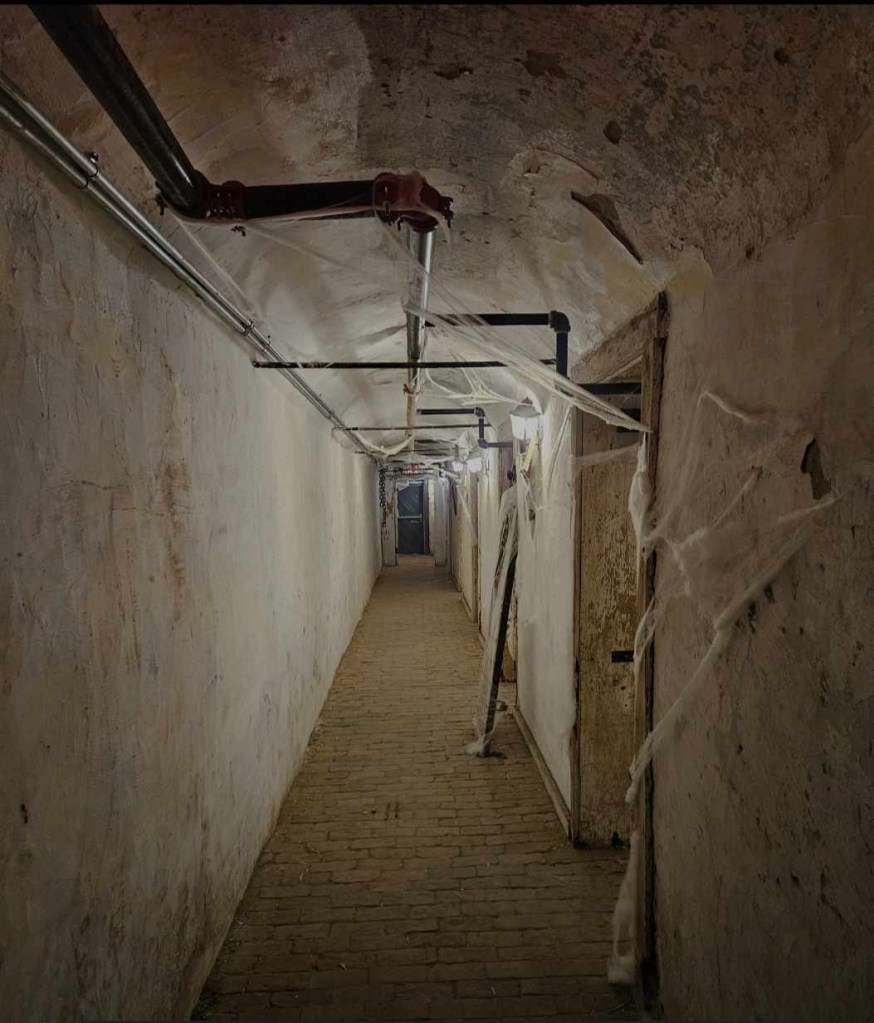
The old lockup held seven cells—one designated for women and six for men—including a maximum-security cell reinforced with steel. These cells once confined 19th-century offenders: drunks, thieves, murderers, and the occasional woman of ill repute. The ceilings and walls were lined with steel plates, and the cells were sealed with thick wooden doors fitted with small viewing windows for the guards. There were no bathrooms, no lighting, and no electricity until the 1960s. The only light came from the faint daylight that managed to seep through the access door above, casting a dim glow over the cold, shadowy space.
There were many reasons someone might find themselves thrown into the borough lockup. The most common offense was drunkenness. Others included speaking out of turn around ladies, fighting, prostitution, and even suspicious behavior—but mostly, it was a person’s inability to handle their liquor. Many offenders paid fines and costs and were then released. Some were only freed on the condition they leave town and never come back. A few even sought out the lockup themselves, looking for a safe, warm place to spend the night. But others who entered never walked out alive.
In 1884, there was widespread concern about several escapes from the lockup. Rumors circulated that half a dozen or more cell keys were in the hands of people who had no legal right to them. When speaking with members of the Police Committee, they admitted to being baffled by how the escapes happened. To their knowledge, all the cell keys had been entrusted to responsible officials. They were reluctant to believe that their trust had been betrayed or that any officer had improperly lent keys to unauthorized individuals. While they accused no one outright, they were determined to uncover who was responsible for the escapes.
For example, in 1903, a man known as “Johnny Jake,” a Black bootblack who fancied himself a policeman, locked an elderly man in the borough lockup to provide him a place to spend the night. No one realized the old man was inside until he was found and freed, half-starved, several days later. But how did Johnny Jake get hold of the keys?
Early one morning, officers patrolling the eastern part of town spotted a man behaving suspiciously. They arrested him on suspicion and took him to the lockup for safekeeping. But a few hours later, when Constables Shultz and Friend went to secure their prisoner, they were stunned to find the cell empty—the man had vanished without a trace. A careful inspection revealed no damage to the cell or its door, suggesting the prisoner had an accomplice with a duplicate key. Authorities launched an investigation to uncover who had helped free the escapee.
Constable Campbell arrested Henry Dupon, a one-armed vagrant, for fighting and placed him in the borough lockup. Later, another prisoner was assigned to share the same cell. Shortly after, smoke was seen billowing from the lockup windows, and an investigation revealed that Dupon had set fire to his bunk, leaving both men nearly unconscious from the smoke. Dupon was sentenced to thirty days in jail, while the other prisoner was released.
A tramp was thrown into the lockup after being found dangerously drunk. He began tearing the cell apart and would have succeeded if two constables hadn’t overpowered him, restraining him with handcuffs and a hitching rope. A doctor gave him an opiate that calmed his madness and drained his fighting strength. Afterward, he was sent to the county jail to fully cool off.
In 1889, Martha Brown was discovered in the last stages of strangulation inside one of the lockup cells. Known locally as “Mat Maulson,” Martha was a Black woman living on Tow Hill who had been drinking heavily on cheap whiskey for some time. She stole a small clock from her sister, sold it for fifty cents, and used the money to buy more liquor. Martha was charged with larceny by Squire Evans, arrested by Officer Wittick, and placed in the lockup.
A few hours later, Officer Schill arrested a man for drunkenness and brought him to the station house. As he opened the lockup door, he heard a strange noise—like someone sleeping deeply. Knowing Martha was confined in that cell, he called out to her, but got no response. Growing concerned, he opened the door and was horrified to find her body swinging from the ceiling, suspended by a rope made from her apron. Quickly, the officer lifted her to loosen the noose and called for help. Another officer rushed in and cut the rope. Martha was unconscious, her hands tightly clenched. She was laid on the bed, and water was sprinkled on her face. Dr. Craig was summoned immediately and confirmed she was alive, though it would be hours before she regained consciousness. How long she had hung there was unknown, but it was certain that if she had stayed much longer, she would have been lost to the world forever.
Two iron bars, about an inch thick, ran across the ceiling of the cell, roughly seven or eight feet above the floor. Martha had stood on the bed, looped her apron over one of the bars, and tied the ends tightly together. She then twisted the apron to form a noose large enough to fit around her neck before stepping off—believing she was stepping into eternity. Martha had a history of delirium, and there was no doubt her mind was unwell when she made this desperate attempt. She was ultimately sent to the county jail for thirty days to sober up and recover.
In 1907, Constable Campbell was approached on Locust Street by Harry K. Stout, who asked to be held overnight at the station house. There was nothing in Stout’s appearance to suggest he was under the influence of alcohol or drugs, so the officer agreed. Stout was placed in a cell, and a rear window was opened to let in fresh air. What the officer didn’t know was that Stout was a desperate addict, tormented by morphine, cocaine, and chloral. Driven by his torment, Stout nearly took his own life by attempting to hang himself from the cell’s iron grating.
His attempt was discovered by Charles Garber, a young boy who happened to glance through an open window at the back of the station house. Garber quickly alerted Constable Campbell, who cut Stout down just in time. A physician revived him, but upon regaining consciousness, Stout raved wildly, begging for morphine, cocaine, or chloral—clear evidence of his addiction. Though he recovered physically within the hour, his desperate cries for drugs continued, revealing the depth of his torment. The seriousness of his suicidal intent was underscored by a bold, clear message he had scrawled on the whitewashed cell wall in pencil:
“Officers please send me home: Mother – My best act to do, my fate to fulfill. God bless you and watch over you. May your love for me lead you to forgive an erring, sinful son. May God, our Father, God bless you, the blood of Christ our Savior, the Holy Spirit and the Blessed Virgin care for you and watch over you.” HARRY.
At just twenty-eight years old, he had been battling drug addiction for several years, triggered by heavy morphine use during an illness. Throughout the night, he made several desperate attempts to force a two-dram vial down his throat, but was restrained each time, and the bottle was confiscated. Efforts were then made to find his family.
Edward Hogentogler was arrested by Constable Campbell on charges of desertion from Troop K, 11th Cavalry, Fort Oglethorpe, Dodge, Georgia. While held at the station house, he attempted to take his own life by slashing the arteries in his left wrist, but fortunately, the wounds were not deep enough to be fatal. When discovered, he was still conscious and had lost only a small amount of blood. A physician attended to him before he was sent to jail to await military proceedings. The twenty-eight-year-old had one year remaining on his third enlistment when he deserted. Months earlier, he had written home complaining of poor health and asked his father to secure a discharge, but the effort was unsuccessful. The weapon he used to inflict the wound was never found, and the reason for his suicide attempt remained a mystery, as he refused to explain.

A man named John Wall, who had been placed in the lockup for vagrancy, took his own life by hanging. Using his cane, he secured it to a partition and then suspended himself with his handkerchief. When he was found, he was already deceased.
Weary and footsore, with more than sixty-five years of a hard, troubled, and eventful life etched into his weathered face, Dutch Christ trudged into Columbia and sought refuge for the night at the lockup. The well-known wanderer ended his journey along the hobo road in a lonely place—his final moments spent alone in a small cell. Before settling onto his cot, he washed his face and hands. As he wiped the sweat from his brow, he suddenly collapsed to the floor. By the time the police station doctor arrived, Dutch Christ was unconscious. After examining him, the physician shook his head and grimly predicted he would not survive the night. His condition was too severe to be moved to the hospital. It was later determined that a stroke of apoplexy had claimed his life.
Who Dutch Christ truly was and where he came from remained a mystery. There was no identification on his worn clothing. He carried a large, battered black suitcase, tightly bound with yards of hemp. What lay inside would only be revealed when the coroner opened it. For more than twenty years, Dutch Christ had wandered the world, spending his nights in lockups and his days trudging from village to village, town to town. He visited Columbia periodically each year and sometimes found work there. A skilled cook, he once worked at Wolf’s restaurant, where he had many acquaintances. It was later discovered that his real name was Christian Cledshick, a quiet and reserved German man believed to be between sixty-five and seventy years old. His family was thought to live in Baltimore, and every effort was made to reach out to them.
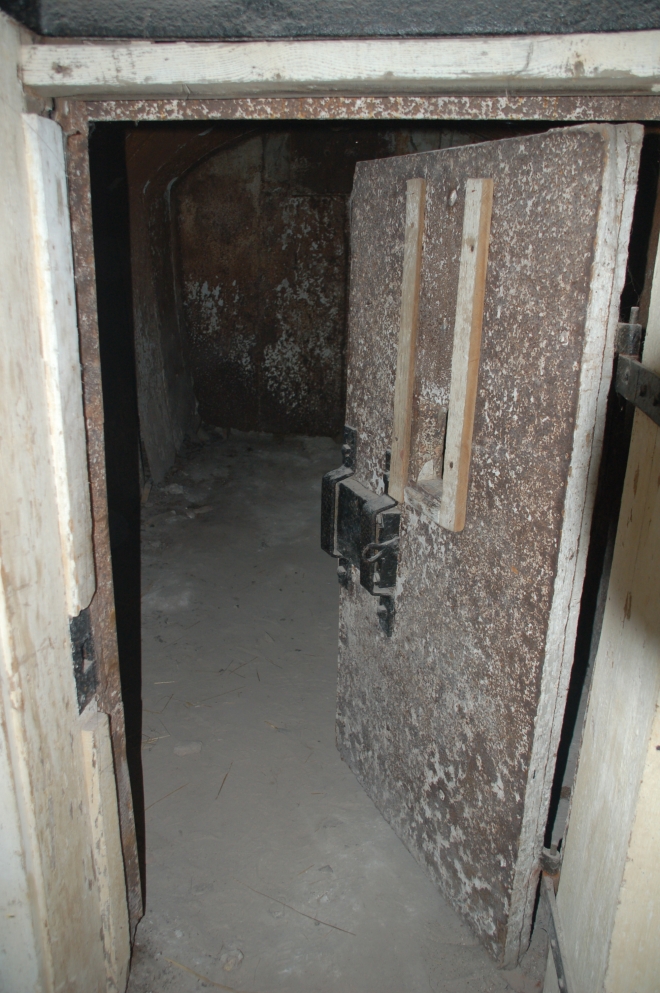

The borough lockup carries a long, dark history of death, and it wouldn’t surprise me to find many restless souls still wandering the old dungeon. Unfortunately, much of the lockup and arrest records were destroyed when the old Opera House burned down in 1947. Many of those documents may be lost forever, but based on the information I’ve uncovered, it’s clear that the dungeon is likely haunted by a few lingering ghosts.
The Columbia Market House Dungeon is currently undergoing renovations but is open for tours.
Location:
31 South 3rd Street
Columbia, PA




 Wander Woman