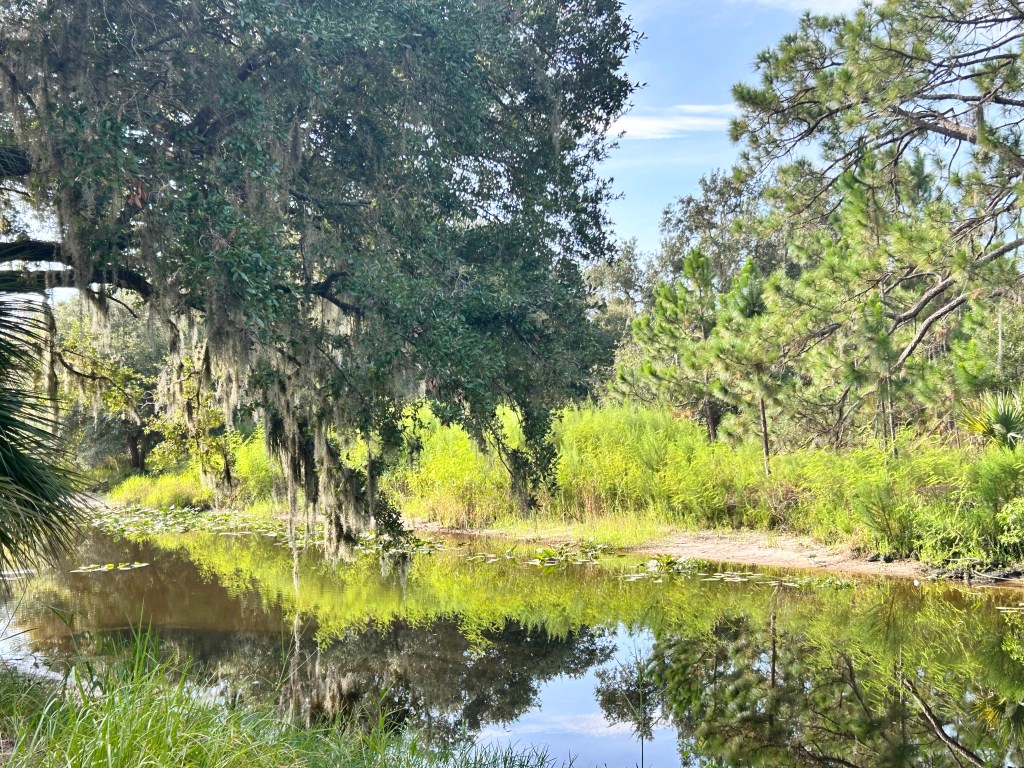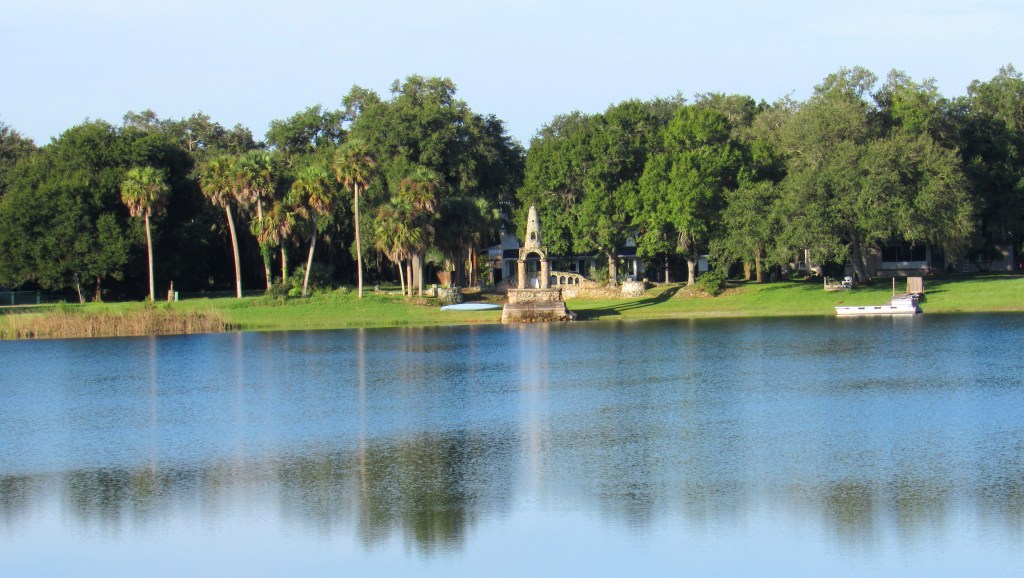
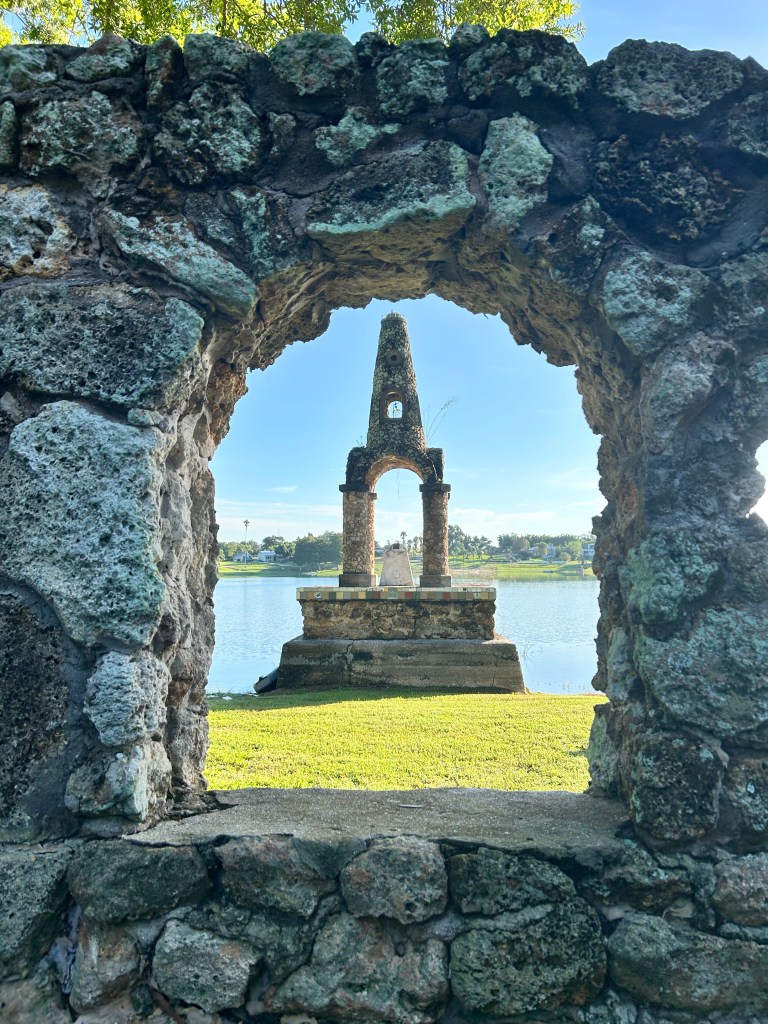
Hidden along a quiet stretch of road, sacred ruins linger beneath the trees, weathered by time and nearly swallowed by the landscape. St. Anne Shrine stands today as a shadow of what it once was, its aging stone grotto and tile-laden altar among the few remnants of a place once considered hallowed ground. There are no grand buildings here now, no crowds of pilgrims arriving with prayers on their lips, only fragments of a past that refuse to disappear completely. These crumbling stones are more than the remains of a forgotten shrine. They bear witness to a story born more than a century ago, a story of desperation, unwavering faith, and a healing some believed could only be called a miracle.
The story of St. Anne Shrine reaches back to 1920, when a group of Canadian Catholics traveled south to Florida, seeking refuge from the bitter winters of their homeland. They brought more than their faith with them. Remembering Canada’s deep devotion to St. Anne de Beaupré, they chose to honor her in their new surroundings by establishing a shrine near Lake Wales.
Saint Anne herself is a figure wrapped in mystery. Her name never appears in the Bible, and much of what is traditionally believed about her comes from ancient Christian writings outside the biblical canon, particularly the Protevangelium of James. According to these early traditions, Anne and her husband, Joachim, were the parents of the Virgin Mary—making Saint Anne the grandmother of Jesus Christ. Though her story exists beyond the pages of Scripture, devotion to her would endure for centuries, eventually traveling across continents and finding an unlikely home in the Florida wilderness.
Under the leadership and generosity of Canadian native and winter resident Napoleon Pelletier, the vision for St. Anne des Lacs—St. Anne of the Lakes, slowly began to take shape. In Canada, where devotion to Saint Anne ran deep, she was revered as a patron saint of sailors. Here, amid the quiet landscape of Central Florida, the faithful set out to create a sacred place worthy of that devotion.
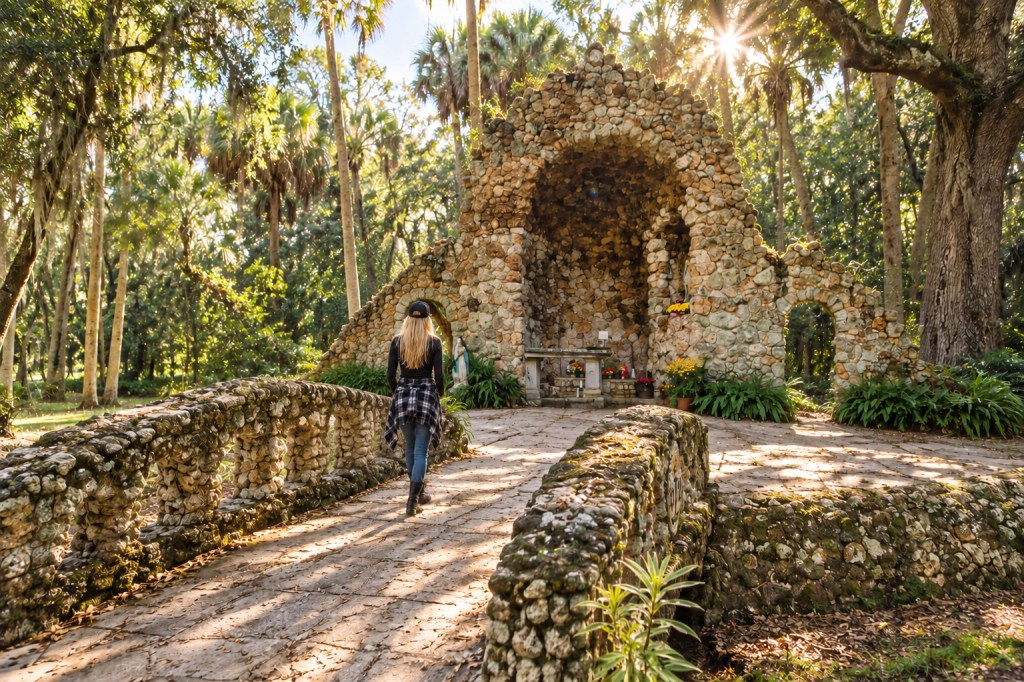
What emerged was far more elaborate than a simple roadside shrine. A moat encircled the grotto, crossed by an arched bridge constructed from native Florida stone. Nearby stood a small white chapel, with a statue of Jesus Christ raised upon a pedestal at its entrance. Towering over the grounds was an impressive grotto inspired by Lourdes, France, where the Virgin Mary was said to have appeared to a young Bernadette Soubirous in 1858.
The sacred landscape continued beyond the chapel and grotto. Along trails winding through the surrounding woods, elaborate statues depicted the Stations of the Cross, inviting pilgrims to follow the final journey of Christ beneath the Florida trees. Near the southern shore of St. Anne Lake stood yet another place of devotion, a monument dedicated to Saint Teresa of Ávila. Together, the chapel, grotto, statues, wooded trails, and monuments transformed this once-quiet corner of Florida into a place of pilgrimage, prayer, and faith.
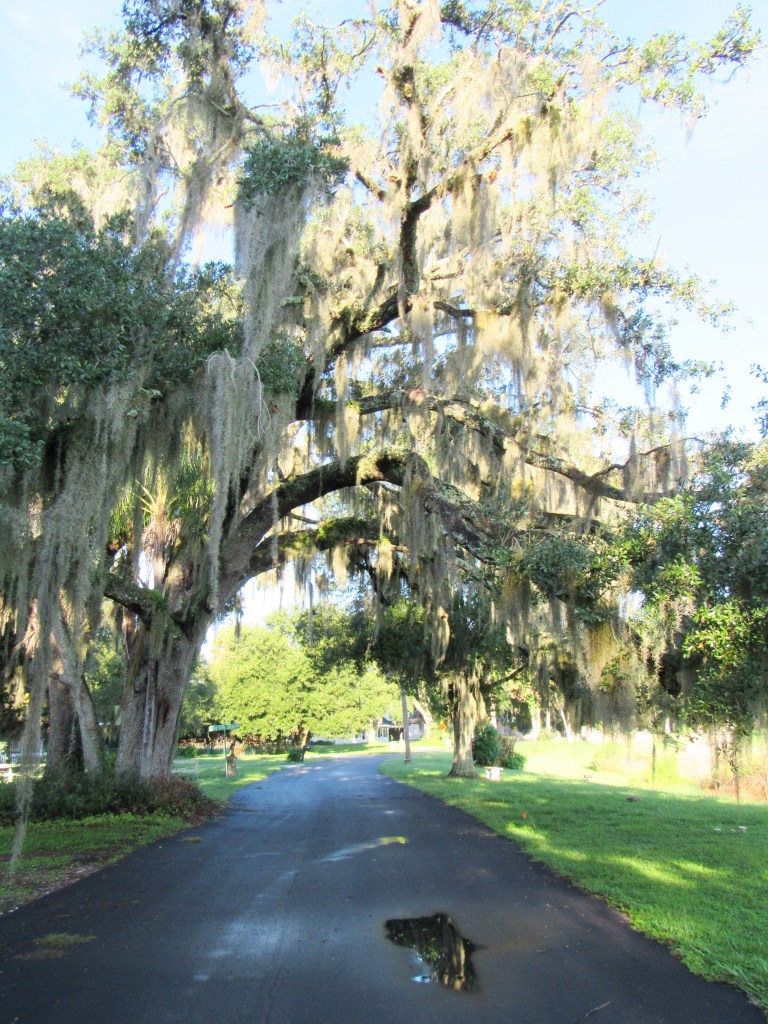
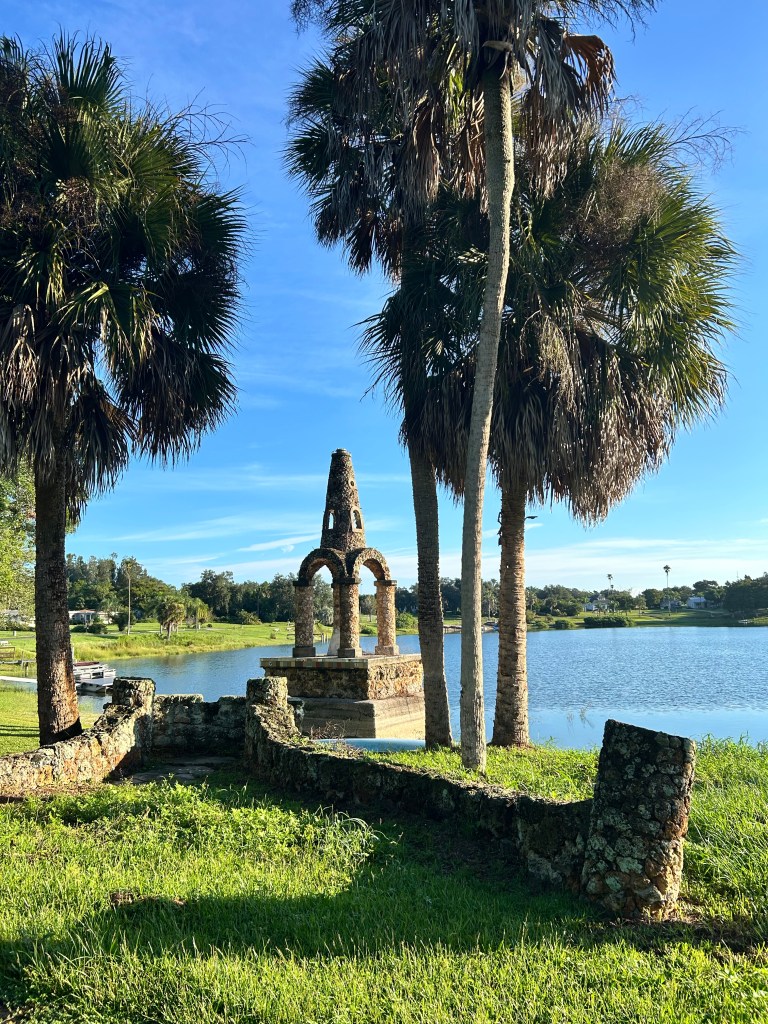
Then, sometime around 1926, a desperate father arrived at St. Anne Shrine with his young son. Francies Marsollier, a French artist, had been told his boy was dying of tuberculosis. With little hope left, Marsollier turned to faith. He brought his son to the quiet shores of St. Anne Lake, where the two camped near the shrine and swam in its waters. There, the grieving father made a promise: if his son’s life were spared, he would devote his own life—and his talents as an artist—to beautifying the sacred grounds.
What happened next would become part of the legend of St. Anne Shrine.
The boy recovered.
To Marsollier and those who believed in the shrine’s healing power, there was little question why. His son’s recovery was considered a miracle, attributed to the waters of St. Anne Lake and the intercession of Saint Anne.
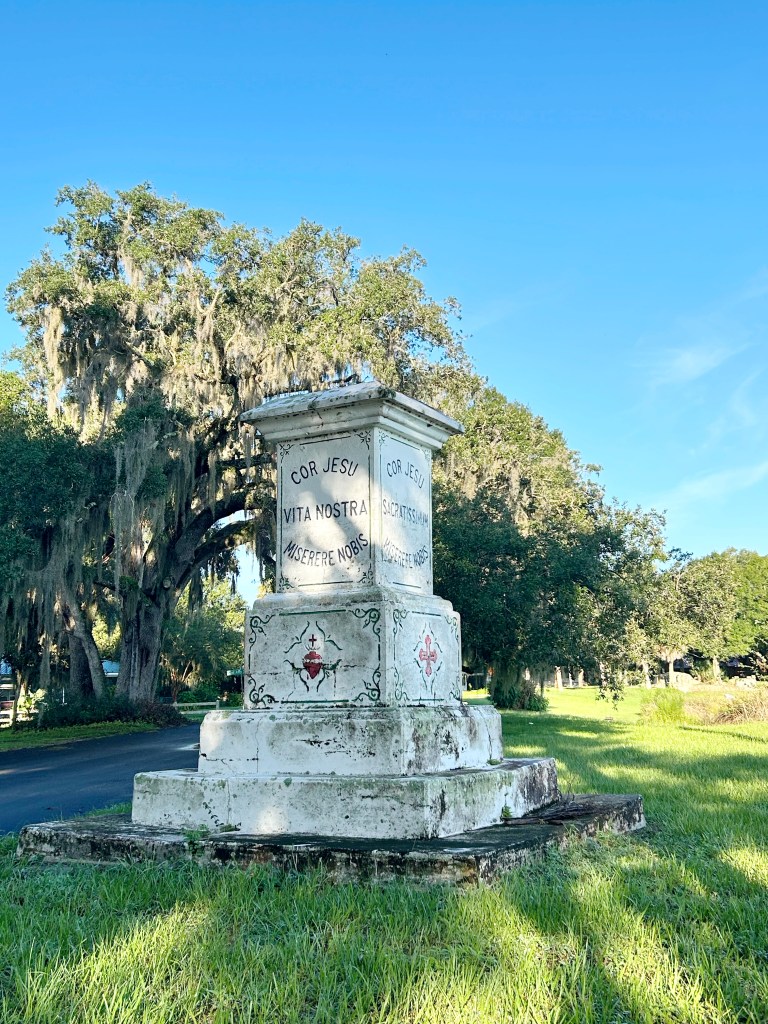
By 1928, word of St. Anne Shrine had traveled far beyond the quiet shores of the lake. That year, the first pilgrimage arrived from Canada, beginning a tradition that would transform the secluded sanctuary into a destination for thousands of the faithful.
Year after year, pilgrims made the journey to this remote corner of Florida, gathering each February to commemorate the apparition of the Virgin Mary at Lourdes and returning again in July for the feast day of Saint Anne. What had begun as a small shrine in the Florida wilderness had become something few could have imagined—a place where thousands came carrying prayers, seeking healing, giving thanks, or simply hoping to stand on ground they believed was sacred.
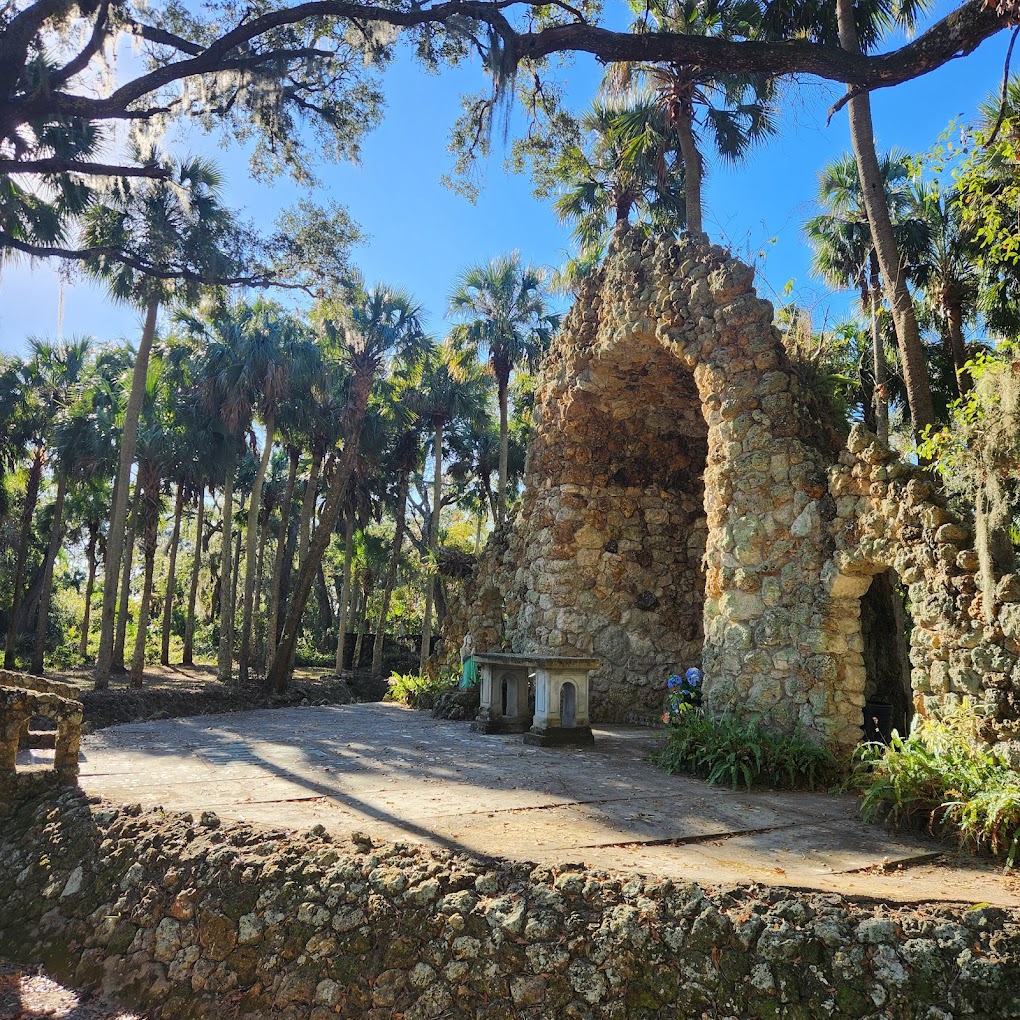
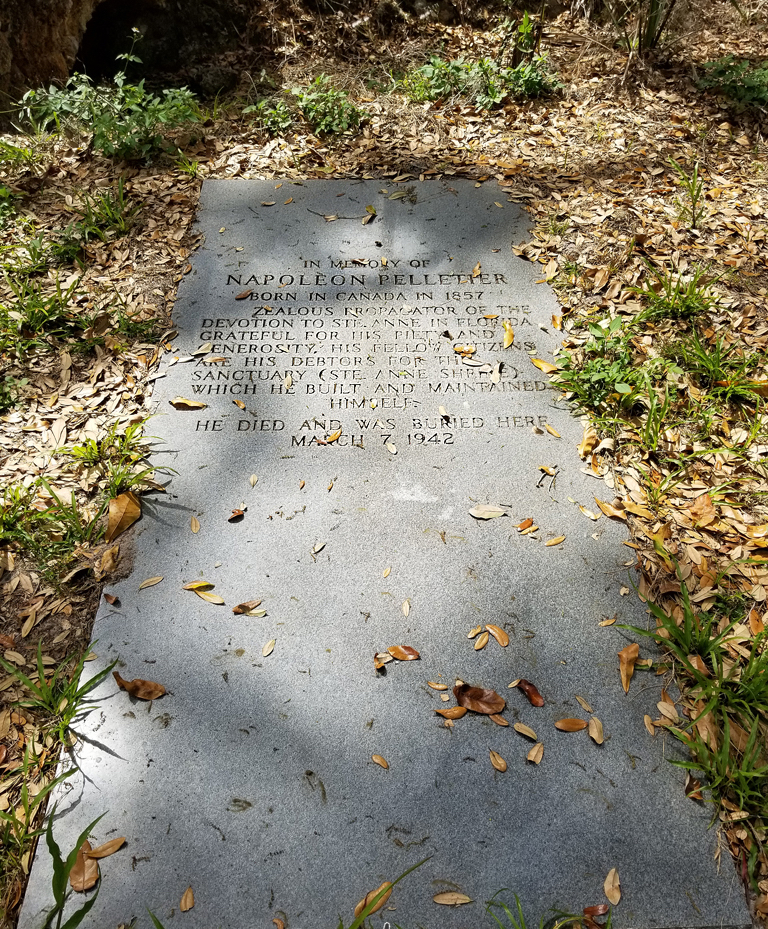
For decades, Napoleon Pelletier remained a devoted caretaker of the place he had helped bring to life. He watched over St. Anne Shrine until his death in 1942, and was laid to rest beside the grotto. A stone marker still bears his name today, though his remains have not rested there for more than half a century. In 1970, his body was removed from the grounds and returned to his native Canada.
The shrine itself was already disappearing. By the early 1960s, the crowds that had once journeyed to St. Anne Lake were becoming a thing of the past. The Catholic Diocese of Orlando eventually de-sanctified the little church, and the chapel that had welcomed generations of pilgrims was torn down. Its front stairs were left behind.
They still remain today—weathered steps rising from the earth and leading to a doorway that no longer exists.
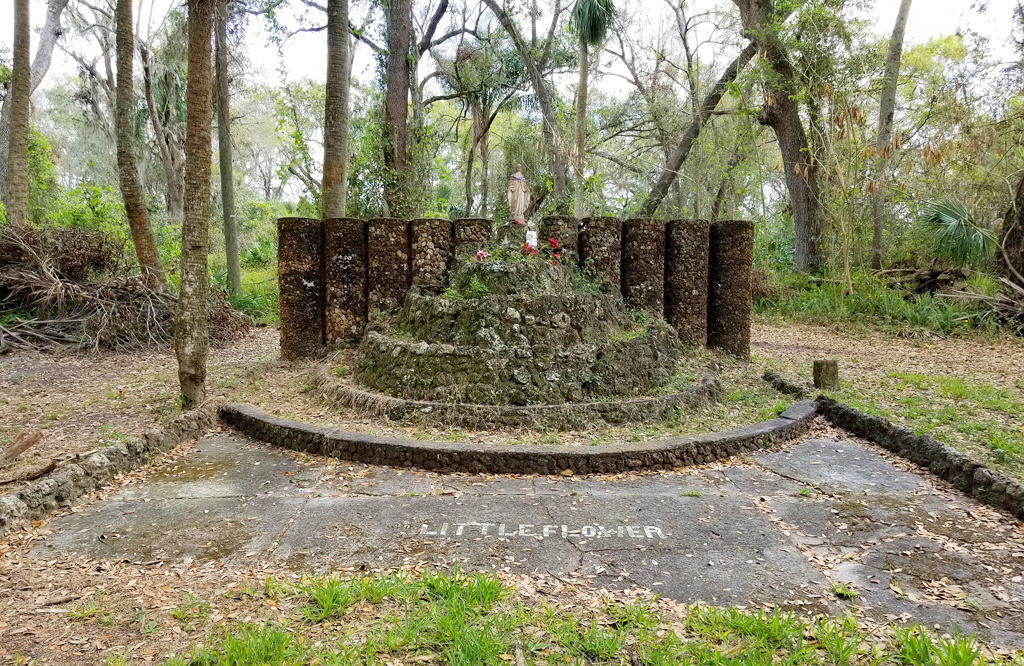
In the years that followed, nature slowly began reclaiming what people had abandoned. The trails faded, statues disappeared, and the once-bustling pilgrimage site slipped quietly from memory. The Diocese still owns the property, but little remains to suggest that thousands once gathered here in prayer.
Today, you can still wander beneath the trees and search for traces of the thousands who once made their pilgrimage here. Weathered stone peeks through the vegetation. Broken tiles cling stubbornly to an aging altar. A grave marker stands without the man whose name it bears. And somewhere nearby, a set of old steps rises from the earth, leading to a church that exists now only in photographs and memory.
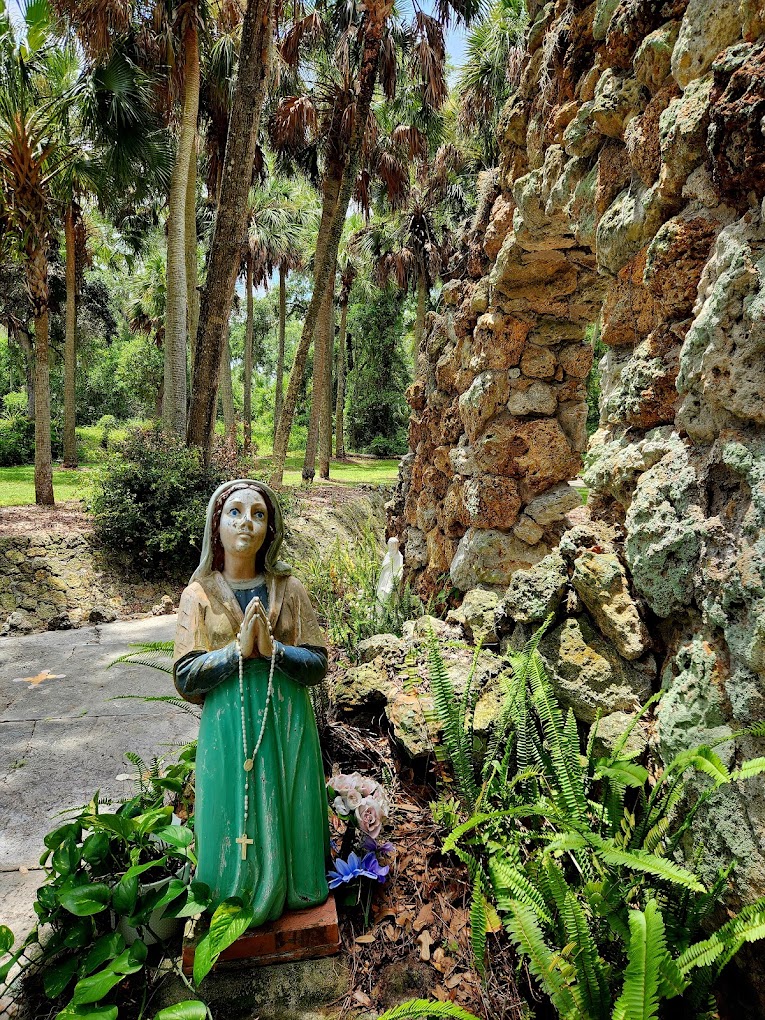
It’s strange to stand among those remnants and imagine what this place once was, the prayers whispered beside the grotto, pilgrims crossing the stone bridge, statues hidden along wooded trails, and a desperate father who arrived with a dying child and left believing he had witnessed a miracle.
Whether that miracle was born of faith, coincidence, or something we may never fully understand is part of what makes St. Anne Shrine so compelling. History rarely leaves us with every answer. Sometimes it leaves behind only fragments and invites us to go looking for the rest.
Perhaps that is the real adventure of places like St. Anne Shrine. You arrive searching for ruins, but somewhere among the shadows, you discover a story still waiting to be found.
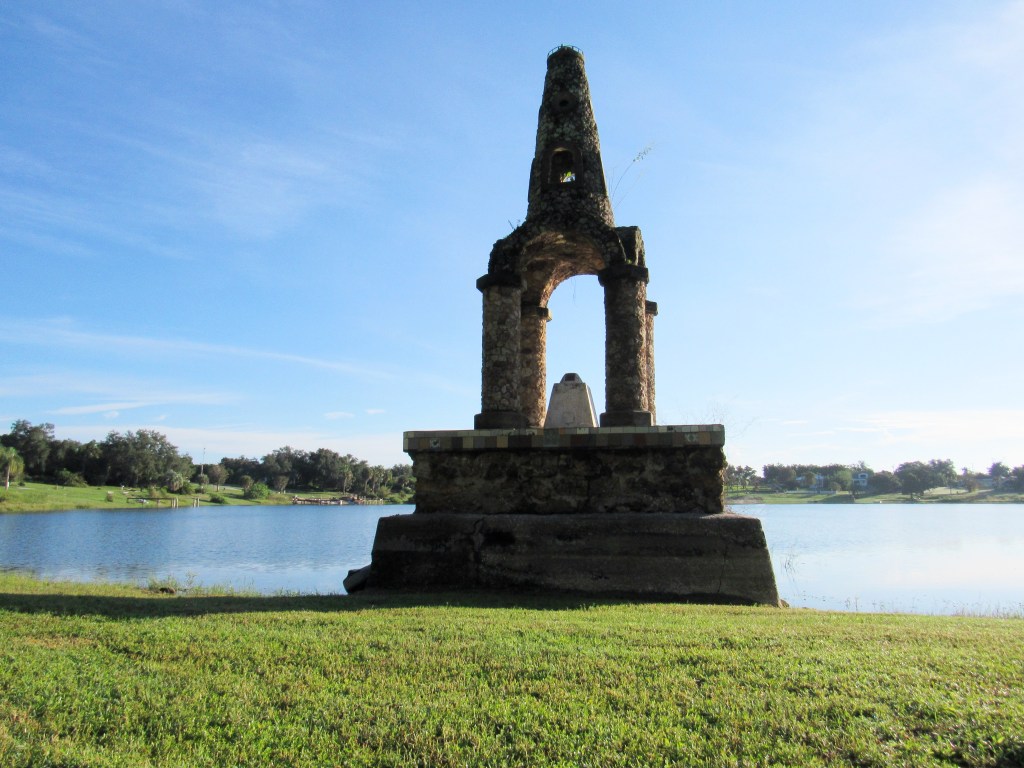
For those who want to seek out the remnants of St. Anne Shrine for themselves, the grounds are open daily from sunrise to sunset. You’ll find the shrine at 1240 St Anne Shrine Rd, Lake Wales, FL. There is no grand entrance announcing what waits beyond, just a nearly forgotten piece of Florida history waiting for those curious enough to go looking.