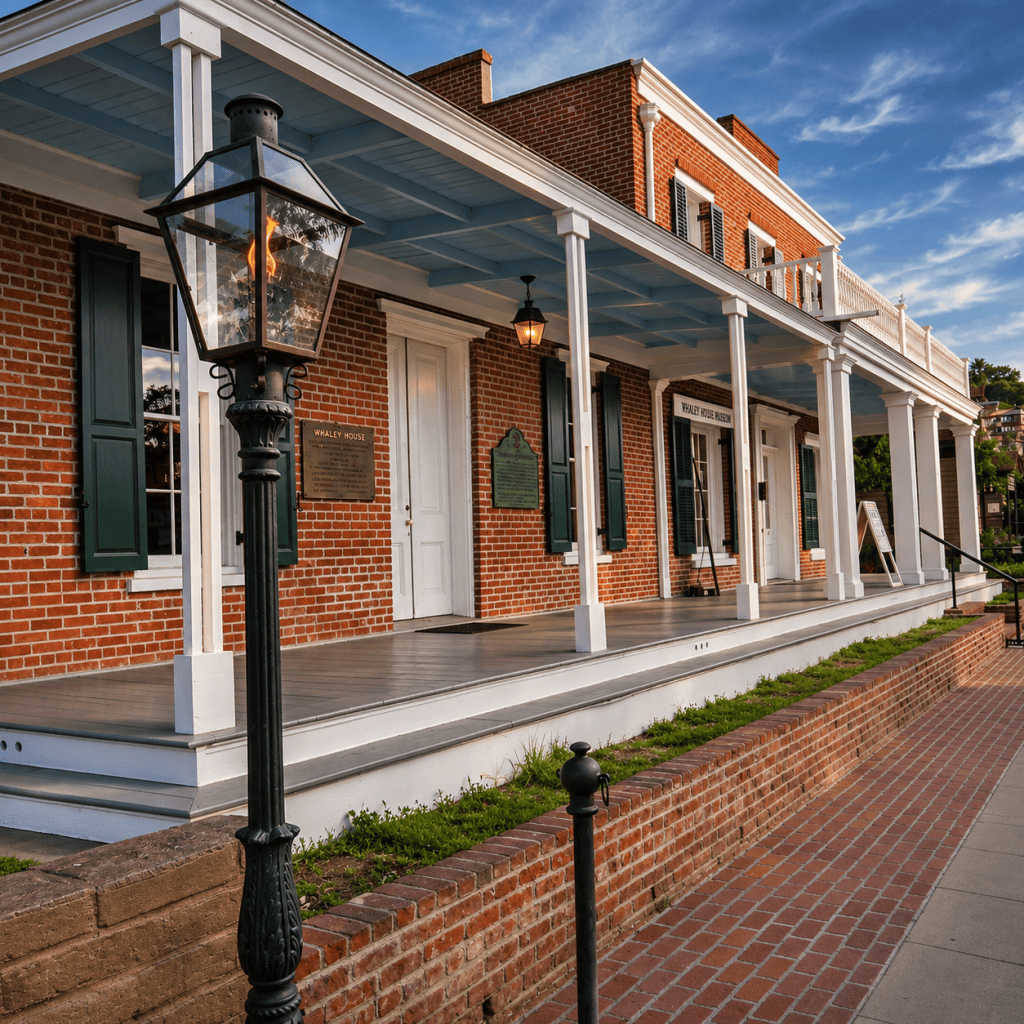
OLD TOWN SAN DIEGO, CALIFORNIA
There is something about walking through a historic neighborhood that makes me forget, even if only for a little while, what century I’m living in. Old Town San Diego was one of those places. Long before I reached the Whaley House, I found myself drawn into the neighborhood’s past. The historic buildings, old-fashioned storefronts, and preserved architecture seemed to belong to another time. It was easy to imagine the dusty streets of nineteenth-century San Diego, when horses and wagons traveled these roads, merchants conducted business from modest shops, and the settlement was still finding its identity on the California frontier.
I have always been fascinated by places where the past hasn’t been completely erased by the present. Old Town is one of them. History isn’t confined to a museum exhibit here. It surrounds you, and somewhere among those historic buildings stood the reason I had come. The Whaley House. I heard about the house long before setting foot in San Diego. Its reputation as one of America’s most haunted homes had caught my attention, particularly after watching an episode of Ghost Adventures devoted to its disturbing history and alleged paranormal activity.
I remembered the stories of unexplained footsteps, ghostly figures, and a man who had been hanged on the property before the house even existed. Naturally, I wanted to see it for myself. As I approached the two-story brick house, I stopped outside for a moment and studied it. There was nothing particularly threatening about its appearance. In fact, compared with some of the abandoned buildings and deteriorating landmarks I’ve explored, the Whaley House looked almost ordinary. Its brick walls and modest proportions suggested a respectable nineteenth-century family residence, but appearances have a way of concealing history.
Standing there, remembering the television episode and everything I had read about the property, I found myself wondering how much of its notorious reputation came from documented tragedy and how much had grown through generations of ghost stories. There was only one way to find out what the place was actually like. I headed inside.
A House That Knows How to Sell a Ghost Story
Before entering the historic residence, I made my way through the gift shop. If there was any doubt about the Whaley House embracing its haunted reputation, the merchandise quickly settled that question. Books about ghosts and paranormal investigations seemed to be everywhere. There were souvenirs, T-shirts, and mugs proudly advertising the house’s supernatural claims. Apparently, even the dead have a marketing department.
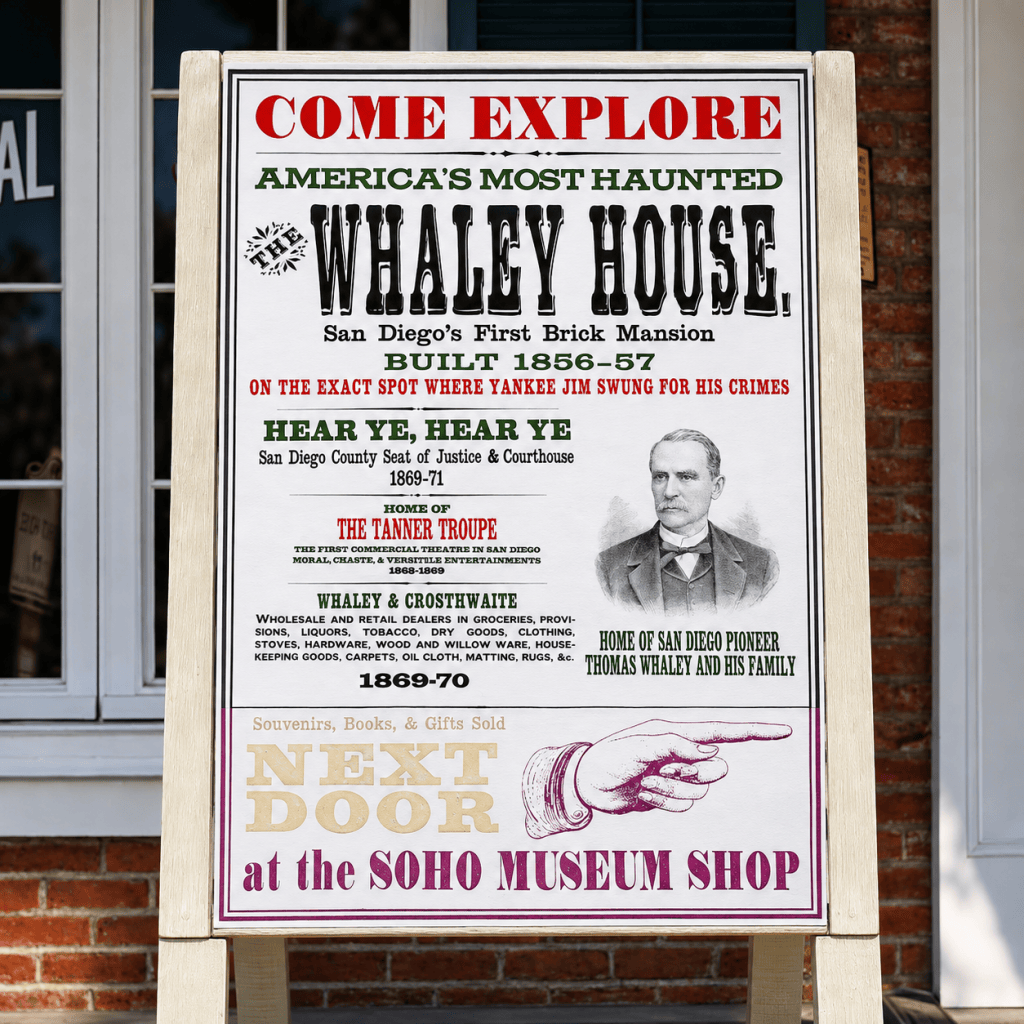
I couldn’t help finding the whole thing a little amusing. Here was a genuinely significant piece of California history, and much of the attention surrounding it focused on whether someone might catch a ghost in a photograph. Still, I understood the appeal. The paranormal stories were part of what had brought me there, too. At the time of my visit, admission was ten dollars. After purchasing my ticket, I left the gift shop behind and stepped into the house. Almost immediately, the atmosphere changed.
The rooms were furnished to reflect an earlier era, and the historic details offered a glimpse into domestic life in a frontier town that was slowly becoming a city, but the Whaley House had never been just a family home. Its walls had witnessed business transactions, theatrical performances, courtroom proceedings, family celebrations, and devastating personal tragedies, and according to those who believe the house is haunted, some of its former occupants never truly left.
Before the House, There Was a Hanging
The story of the Whaley House begins with a death. Not a death inside the house, but one that occurred years before its construction. In 1852, a man named James Robinson, better known as Yankee Jim, was executed by hanging in Old Town San Diego after being convicted of attempted grand larceny. The execution was reportedly a gruesome affair.
Accounts describe makeshift gallows and a hanging that did not go as intended. Rather than dying quickly, Robinson reportedly struggled as the execution dragged on. The precise details have been repeated and embellished over the years, but the hanging itself is part of San Diego’s documented history. The execution site has traditionally been associated with the ground later occupied by the Whaley House.
Thomas Whaley reportedly witnessed the hanging. For most people, watching a man die on a piece of property might be reason enough to avoid building a home there. Thomas Whaley apparently saw things differently. In 1857, he completed a substantial two-story brick residence on the site, using bricks produced at his own brickyard. The building became one of the most impressive homes in early San Diego and is recognized as the city’s first two-story brick building, but according to the family’s story, it wasn’t long before something unusual began happening.
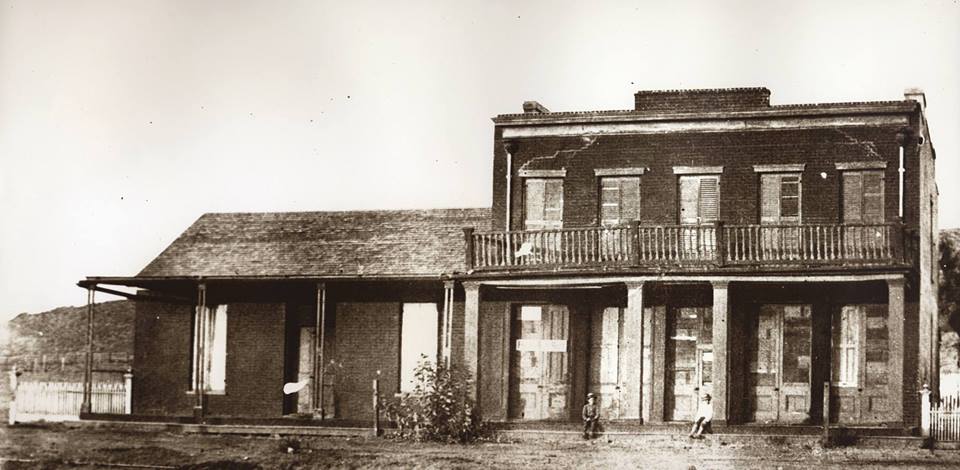
Heavy footsteps were reportedly heard moving through the house. Thomas himself described sounds resembling the boots of a large man. The footsteps became associated with Yankee Jim, whose restless spirit was believed by some to be wandering the property where he had met his death. As I moved through the rooms, I remembered that part of the story from Ghost Adventures.
One location had become associated with the hanging: the archway between the parlor and music room. According to the haunting lore, visitors standing near this area have reported an uncomfortable tightening sensation around their throats. The suggestion is that Yankee Jim’s final moments somehow left an impression on the property. Whether that sensation has any supernatural explanation is another matter entirely, but knowing the history certainly changes the way you look at an otherwise ordinary doorway.
More Than a Family Residence
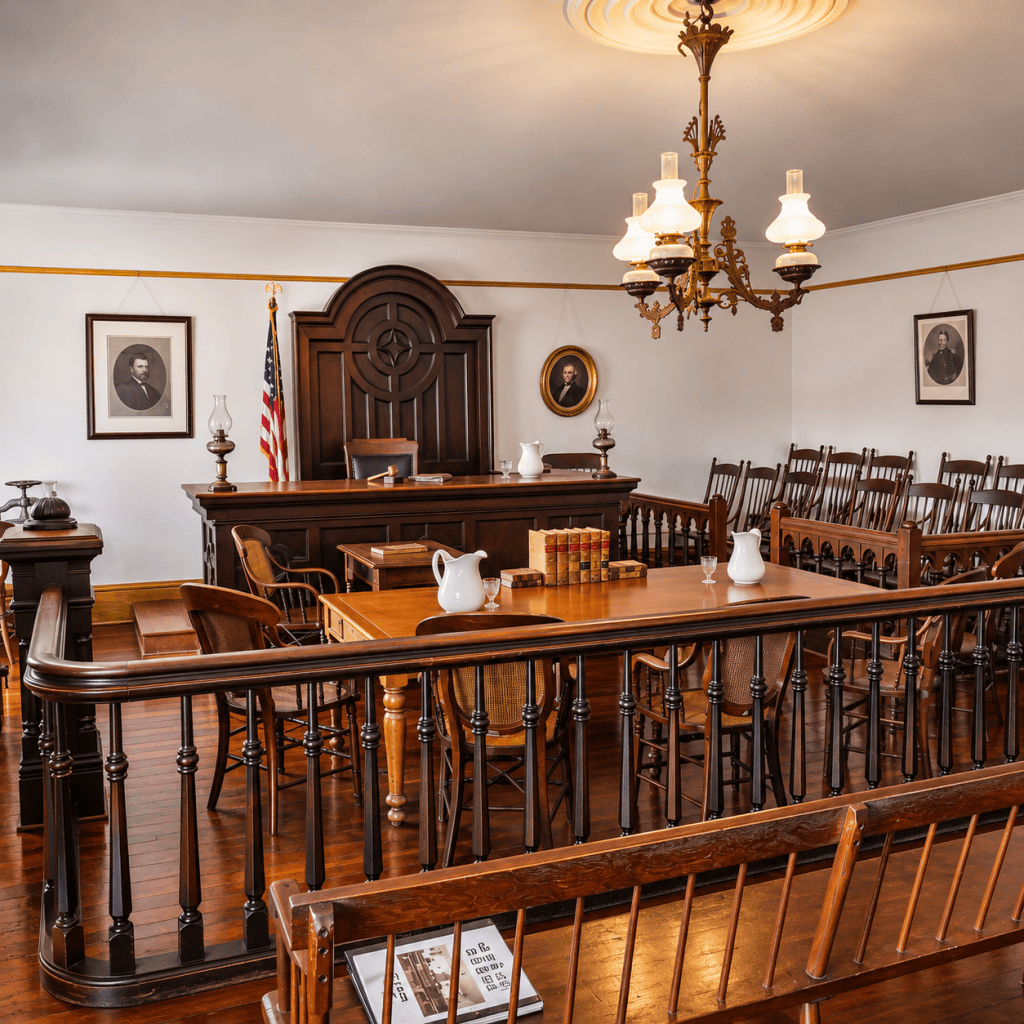
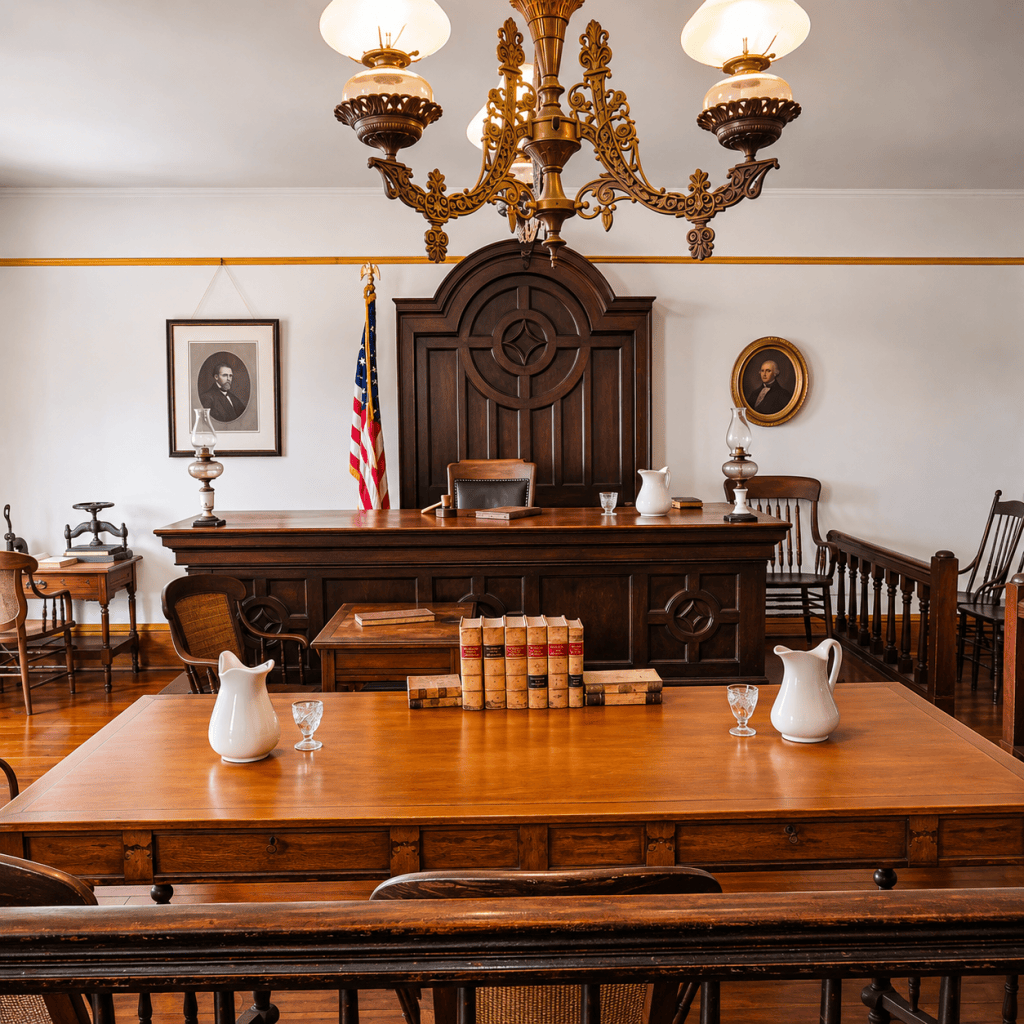
Although the ghosts attract much of the attention, the Whaley House deserves recognition for its place in San Diego’s early history. Thomas Whaley was an ambitious businessman, and his home served several purposes as the surrounding community developed. At various times, the building housed a general store, a granary, San Diego’s first commercial theater, and the county courthouse. Imagine the activity that once filled these rooms.

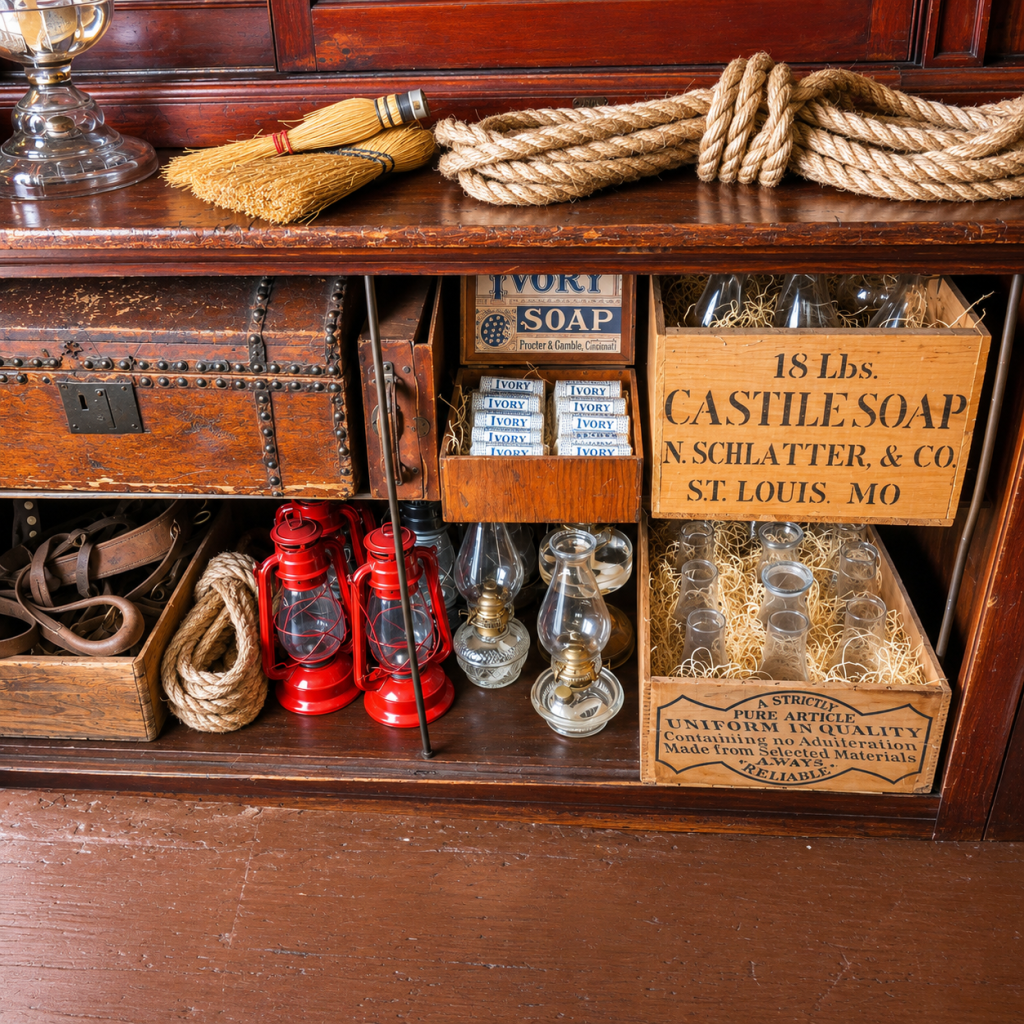

Customers arriving to purchase supplies. Local residents gathering for theatrical performances. Court officials conducting business while the Whaley family continued its domestic life under the same roof. It was a remarkable arrangement, particularly by modern standards. The house wasn’t simply a residence tucked away from the world. For a time, it stood near the center of the community’s commercial and civic affairs, but its connection to the courthouse would eventually bring a frightening confrontation directly to the Whaley family’s doorstep.
In 1871, while Thomas was away on business, armed men entered the property and confronted his wife, Anna. The incident was connected to the removal of county court records during a dispute over the relocation of the county seat. According to accounts of the confrontation, Anna was threatened at gunpoint while the records were taken.
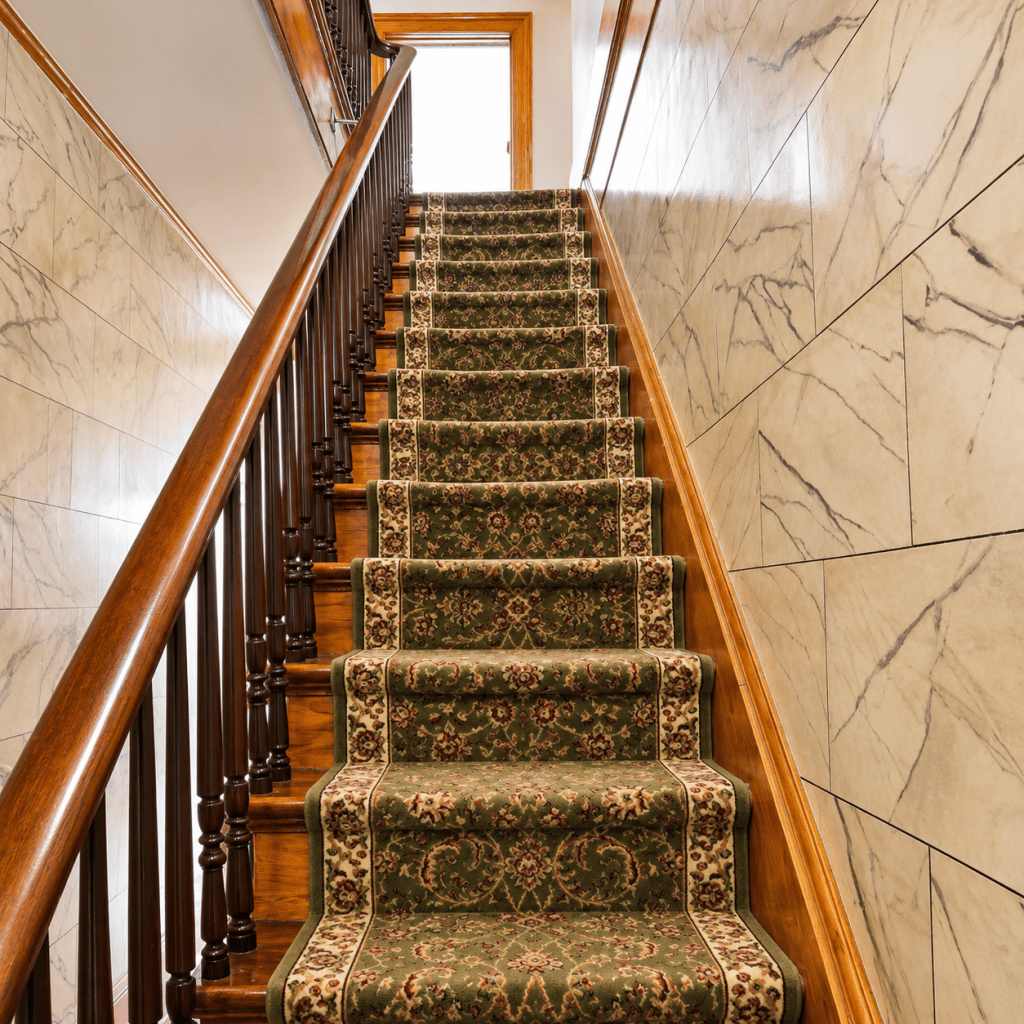
Local ghost stories have since attached particular significance to the staircase, especially the ninth step, where Anna was supposedly confronted. Some visitors claim to experience a sudden chill in that area. Others report seeing a man standing on the upper landing, dressed in nineteenth-century clothing. That figure is often identified as Thomas Whaley. Of course, an old staircase can creak, and historic houses are rarely free of drafts, but the knowledge that a real confrontation occurred inside these walls gives the stories a more unsettling dimension.
The Tragedies of the Whaley Family
For all its business activity and public importance, the house was also the setting for the private lives of Thomas and Anna Whaley and their children, and those lives were not without heartbreak. One of the earliest tragedies came in 1858, when their young son, Thomas Whaley Jr., died of scarlet fever at approximately eighteen months old. Losing a child is devastating in any century, and the Whaleys experienced that loss within the walls of their relatively new home.
Today, stories of a crying infant are among the paranormal reports associated with the upstairs rooms. Visitors have claimed to hear the sounds of a baby when no child is present. Others describe seeing or sensing a small dog nearby, sometimes believed to be one of the family’s former pets, but perhaps the most heartbreaking chapter in the family’s history concerns their daughter Violet.
Violet Whaley married a man named George T. Bertolacci in 1885. The marriage quickly unraveled amid allegations that he had misrepresented himself and abandoned her. The resulting humiliation and emotional distress were devastating. Violet returned to her family home, and in August 1885, at just twenty-two years old, she died by suicide from a gunshot wound. Her death became one of the most frequently discussed tragedies associated with the Whaley House.
Over time, visitors began reporting sudden feelings of sadness and emotional heaviness in areas connected with Violet’s final days. Some paranormal enthusiasts interpret those sensations as evidence that her spirit remains. I tend to approach claims like these cautiously. Knowing that a young woman died tragically in a particular place can affect how someone feels while standing there. History has an emotional weight of its own, even without a supernatural explanation, and Violet’s story is tragic enough without needing to turn her suffering into a ghostly spectacle.
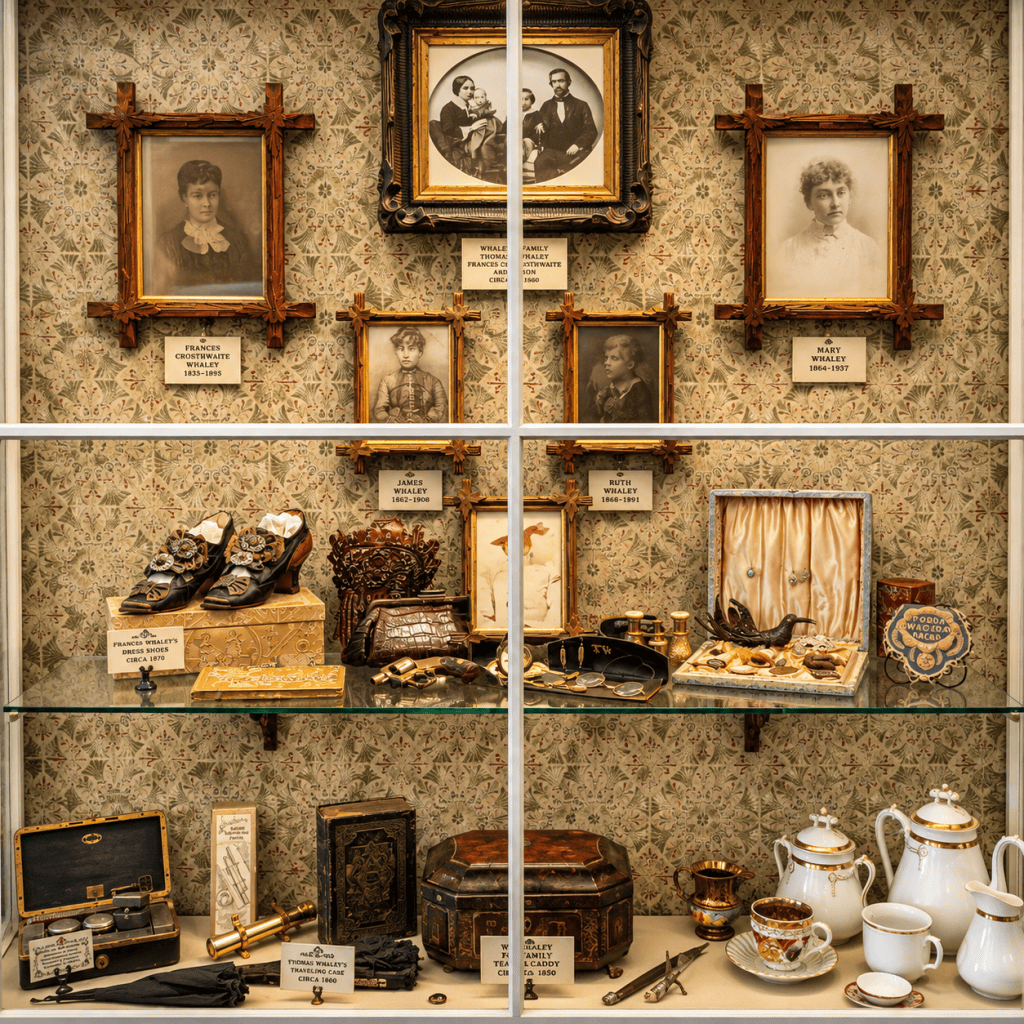
What stayed with me was the thought that behind the carefully preserved furnishings and historic architecture, this had once been a real family’s home. These weren’t simply characters in a haunted-house story. They were people who experienced love, ambition, disappointment, fear, and loss.
The Woman in the Parlor
Thomas Whaley isn’t the only family member believed to remain in the house. His wife, Anna, is one of its most frequently reported apparitions. Visitors have described seeing a woman in period clothing in the downstairs rooms, particularly the parlor, while others claim to have encountered her in the garden.
One of the more famous stories involves television personality Regis Philbin, who visited the house in 1964. Philbin later described seeing a mysterious, pale female figure that he believed might have been Anna Whaley. His account became another piece of the house’s growing paranormal reputation. Other visitors have reported glimpses of a man on the staircase, unusual shadows, unexplained sounds, and the sensation of someone standing nearby when no one is visible. Some even claim to have encountered the ghosts of family pets.
While exploring the dining room of the Whaley House, I captured two photographs that left me with more questions than answers. According to local lore, the Whaley family’s dog is sometimes seen beneath the dining table. In one of my photographs, something unusual appears in that very spot. In another, a strange light seems to hover above the back of a chair. I can’t explain either anomaly, and I’m not claiming they’re paranormal, but they’re certainly intriguing. I’ve included both photographs below so you can take a closer look. Do you see anything unusual? Take a good look and let me know what you think in the comments below. I’d love to hear your interpretations.
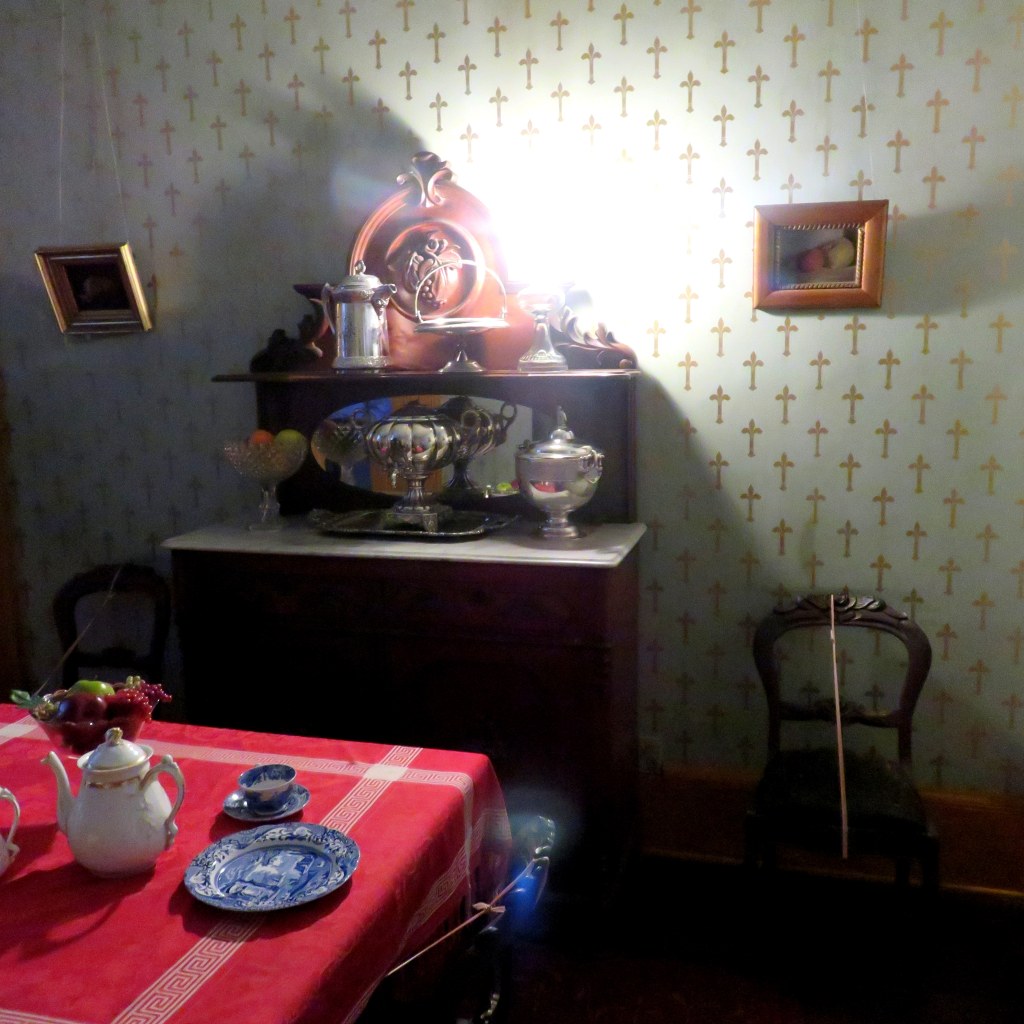
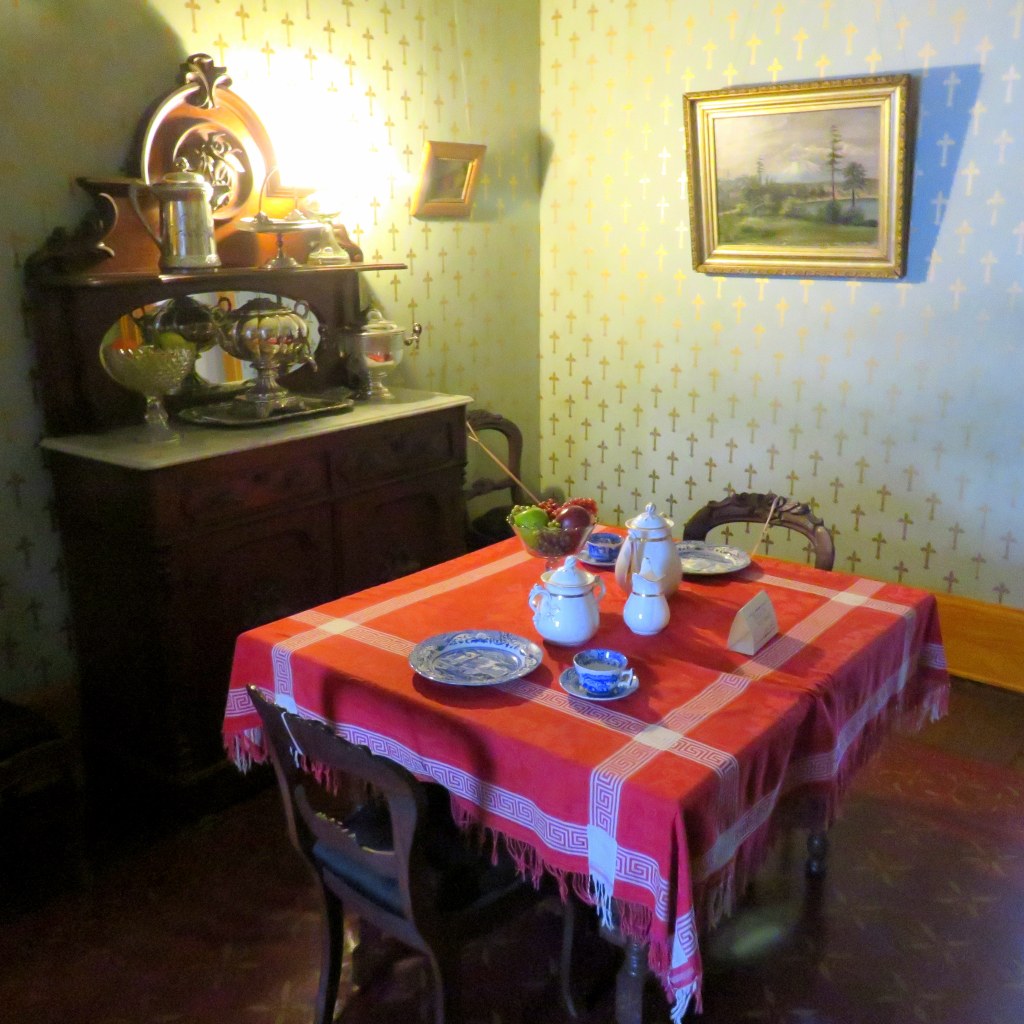
Apparently, the Whaley family’s animals are just as reluctant to leave as their owners. I can’t say for sure I encountered any of them, but there was something undeniably interesting about moving through rooms where generations of people had lived, worked, argued, celebrated, and mourned.
The Little Girl in the Kitchen
Not every ghost story associated with the Whaley House involves a member of the family. One particularly unsettling legend concerns a young girl who supposedly died after a terrible accident near the property. According to the story, the child was running downhill when she struck a clothesline, severely injuring her throat. She was reportedly carried into the house and placed on the kitchen table, where she later died.
The incident has become part of the property’s haunting folklore, although the details are not as firmly established as the documented deaths of Whaley family members. Over the years, visitors have claimed to see a young blonde girl in the kitchen or running through the yard. Others have reported pots and pans moving without explanation. There are also stories of a child’s voice responding to visitors.
During a televised investigation, comedian Tom Green reportedly captured what was interpreted as a child’s voice after attempting to communicate with the house’s alleged spirits. Stories like these are difficult to evaluate without knowing the circumstances behind each recording or encounter. Still, they have helped establish the kitchen as another location of interest for paranormal investigators.
Extensive searches of historical archives, newspaper reports, and local death records have turned up no trace of a child named “Anna Belle Washburn” or “Carrie Washburn,” nor any records of a Washburn family living in San Diego at that time. I believe the story was entirely fabricated by a former Whaley House employee in the mid-20th century to deliberately increase the home’s paranormal mystique.
Music from an Empty Room
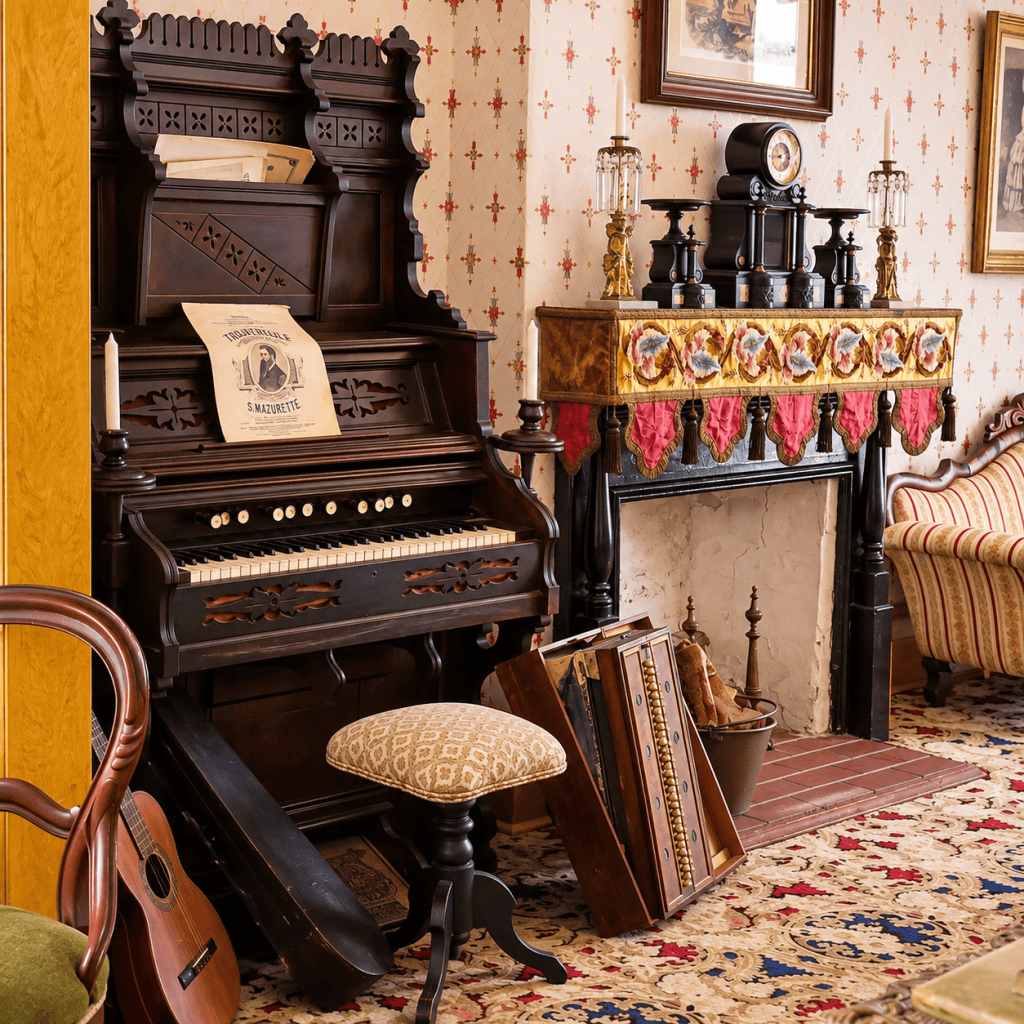
One of the details I found particularly fascinating was the house’s old organ. The instrument is associated with Anna Whaley, who reportedly enjoyed playing music. In the nineteenth century, an organ would have provided entertainment in a home long before radios, televisions, or recorded music became everyday conveniences. I could imagine the family gathered nearby, listening as music filled the rooms.
Today, the organ has become part of the house’s supernatural lore. Visitors and staff have reported hearing music when nobody was playing. Some believe Anna continues to return to the instrument she once enjoyed. Others suggest that the sounds could have more ordinary explanations. Whatever the cause, I found the idea strangely compelling. Of all the things a person might leave behind, music seems particularly capable of making the past feel close. A familiar melody can bring back memories decades later. Perhaps that is why the story of an unseen organist has endured alongside the house’s more frightening legends.
The Most Frightening Things I Saw Weren’t Ghosts
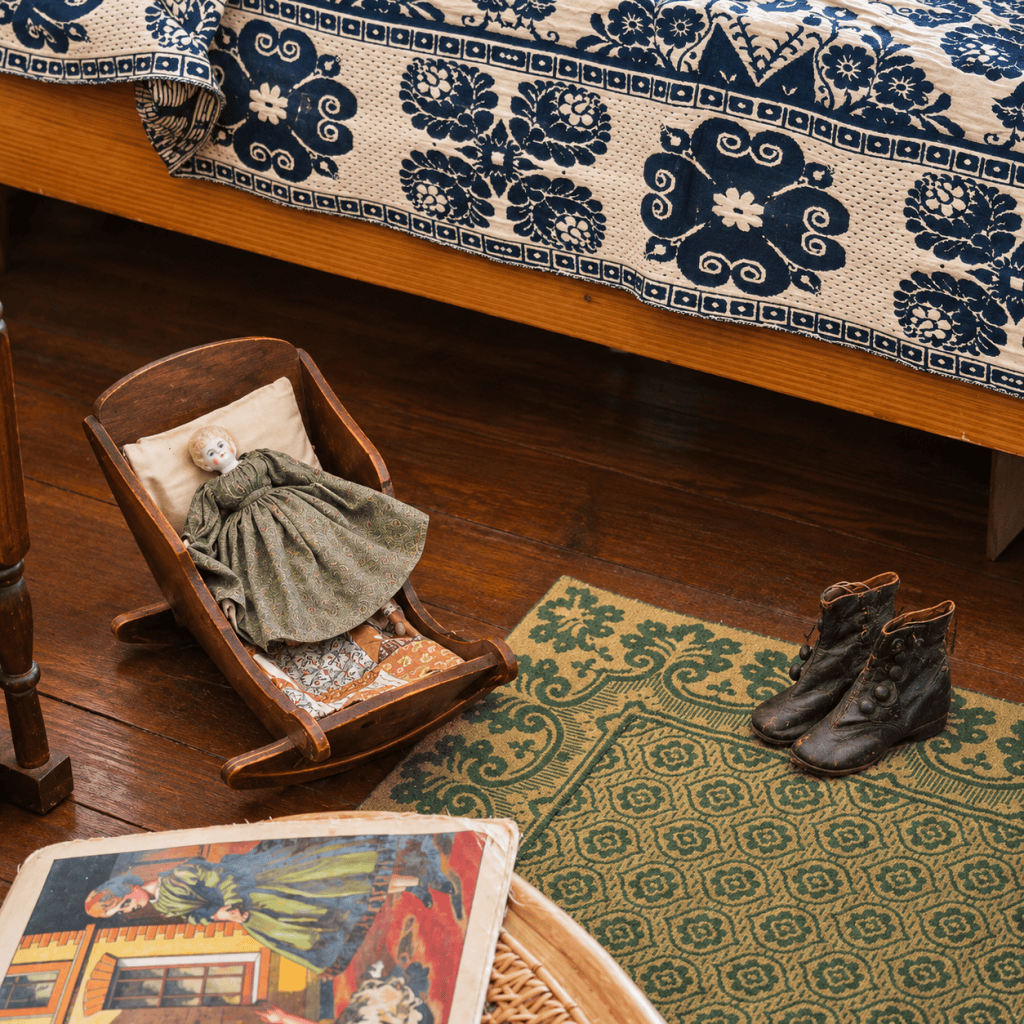
By this point, I had explored a house filled with stories of executions, unexplained footsteps, tragic deaths, ghostly children, and apparitions dressed in Victorian clothing, and yet, the thing that unsettled me most wasn’t anything supernatural. It was the dolls. Those creepy, old-fashioned dolls. They seemed to be everywhere. Sitting quietly among the antique furnishings, staring out with their expressionless faces, they were exactly the sort of objects that make me wonder why anyone ever thought they were appropriate children’s toys.
Maybe it’s the glassy eyes. Maybe it’s the stiff little bodies and perfectly arranged clothing. Or maybe I’ve watched too many horror movies. Whatever the reason, I found them far more disturbing than anything else in the house. I kept expecting one to turn its head when I wasn’t looking. Thankfully, none did. At least, not while I was watching.
I had come hoping to experience something unexplained, but apparently my paranormal encounter was going to consist of being silently judged by nineteenth-century dolls, and frankly, that was enough for me.
A House That Refuses to Be Forgotten
The Whaley family maintained connections to the property for generations, with family members occupying it during different periods until 1953. The building eventually underwent preservation and restoration, opening as a historic house museum in 1960. Today, it remains one of Old Town San Diego’s best-known landmarks. Its reputation as one of America’s most haunted houses has brought countless visitors through its doors, many hoping to experience something they cannot explain. Some leave convinced that the dead still walk its halls. Others leave with nothing more than photographs, historical knowledge, and perhaps a souvenir from the gift shop.
I fell into the second category. I didn’t hear Yankee Jim’s heavy boots. I didn’t encounter Thomas Whaley on the staircase or Anna standing in the parlor. There were no mysterious voices, moving objects, or ghostly figures waiting for me around a corner, but I don’t consider that a disappointing visit. Because somewhere between the old furnishings, the narrow staircase, and the stories attached to each room, I found something that interested me just as much as the possibility of a haunting. The history.
Standing outside the house earlier that day, I had remembered the dramatic television investigations and the reputation that had made me want to visit. By the time I left, I was thinking more about the people who had actually lived there. Thomas Whaley, determined to establish himself in a growing frontier town. Anna, raising a family while the house also served the community. Their children, whose lives unfolded within those brick walls, some ending far too soon, and Yankee Jim, whose execution had become inseparable from the property’s identity.
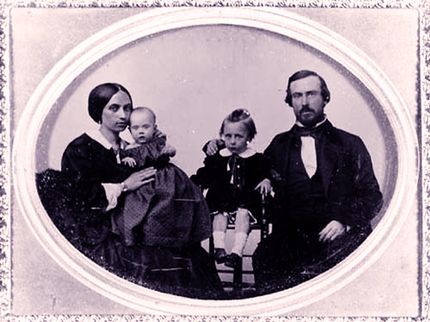
Perhaps the Whaley House really is haunted. Perhaps the footsteps, apparitions, and unexplained voices have ordinary explanations. Or perhaps some places simply carry so much history that visitors cannot help feeling the presence of those who came before them. I can’t tell you which explanation is correct. What I can tell you is that the Whaley House is worth visiting, even if the ghosts never make an appearance, and as I made my way back through Old Town San Diego, surrounded once again by the historic streets that had drawn me in that day, I couldn’t help thinking about how easily a place can become known for its legends while the real lives behind those legends begin to fade.
The Whaley House may be famous for the dead who supposedly remain there, but it’s the lives once lived inside those walls that make its story worth remembering.

