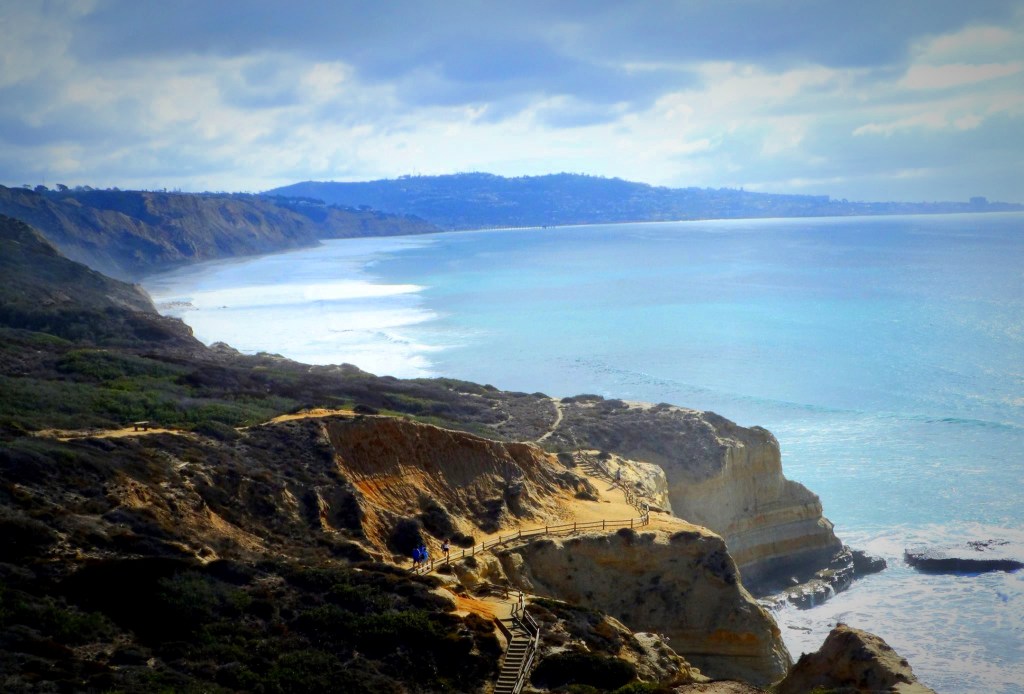
If the stress of everyday life is weighing you down, take a trip to Torrey Pines State Reserve just north of San Diego. Torrey Pines State Reserve holds one of San Diego’s best-kept secrets. It may not be obvious at first glance, but this place is incredibly special—it’s home to the rarest pine tree in North America and one of the rarest trees on Earth: the Pinus torreyana, known locally as the Torrey Pine. When you visit, you’re witnessing a truly rare and endangered species in its natural habitat.

In the early 20th century, San Diego had its own version of John Muir—Guy Fleming. A man of many talents, Fleming is best remembered for his dedication to preserving the Torrey Pines for future generations. Before the area became a State Park, it was privately owned, and Fleming was entrusted with its protection—armed with neither a gun nor a badge. His success in safeguarding the land, and later managing the newly established park, was a remarkable achievement. Today, one of the reserve’s most scenic trails is named in his honor, giving visitors the chance to experience the rare trees he fought to protect.

The main area, perched on a bluff overlooking a state beach, is famous not only for its rare trees but also for its sandstone terraces and breathtaking ocean views. The Razor Point Trail winds through pristine southern maritime chaparral, providing spectacular glimpses of the Pacific Ocean before reaching a scenic overlook.

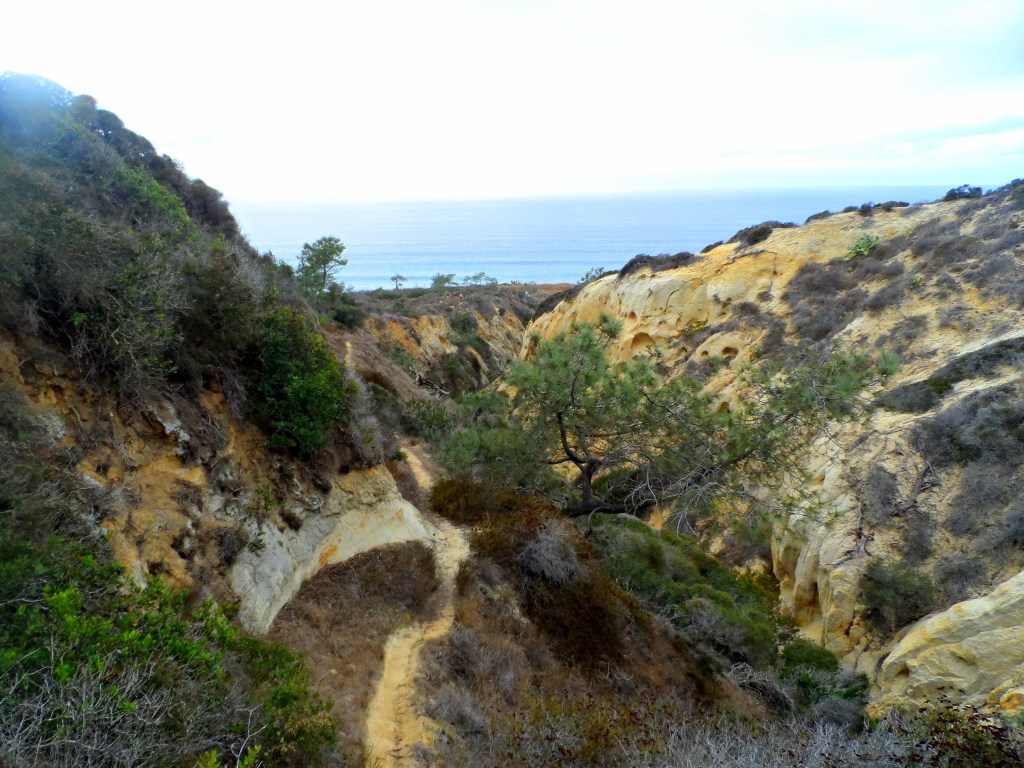
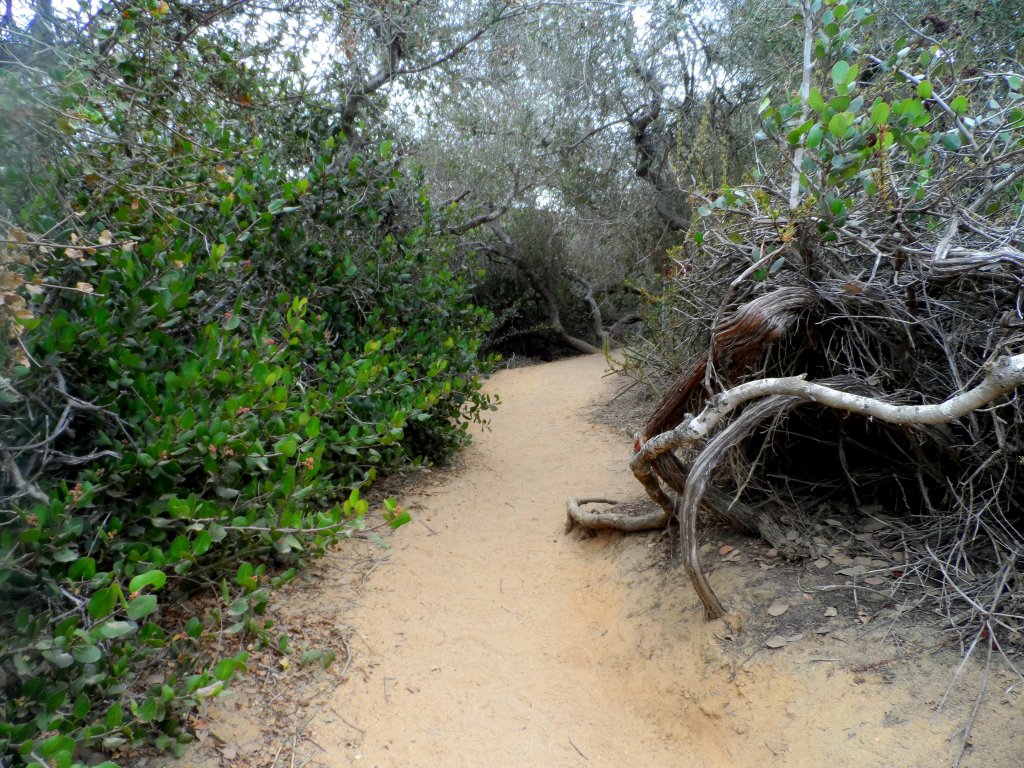
At the start of the trail, I passed the usual rattlesnake warning signs and faced the familiar choice: Margaret Fleming Trail A or B. I went left this time. (I’ve decided that from now on, left will be the default, and if I return for a second hike in the same park, I’ll take the right.) The path was wild, quiet, and largely untouched—thick brush surrounded me, with beautiful Torrey Pines crowning the hilltop. As I ventured on, I soon came upon a sandy stream bed that channels runoff from the hillside. Footprints dotted the sand, but it was clear I was alone. The only sound was a small plane towing a banner over the beach. Despite the upscale condos near the trailhead, this felt like perfect mountain lion territory. I imagined how I might look to a lion—vulnerable, plump, and downright tasty. There were no cougar or mountain lion warnings posted, and probably none around, but my mind filled in the gaps.


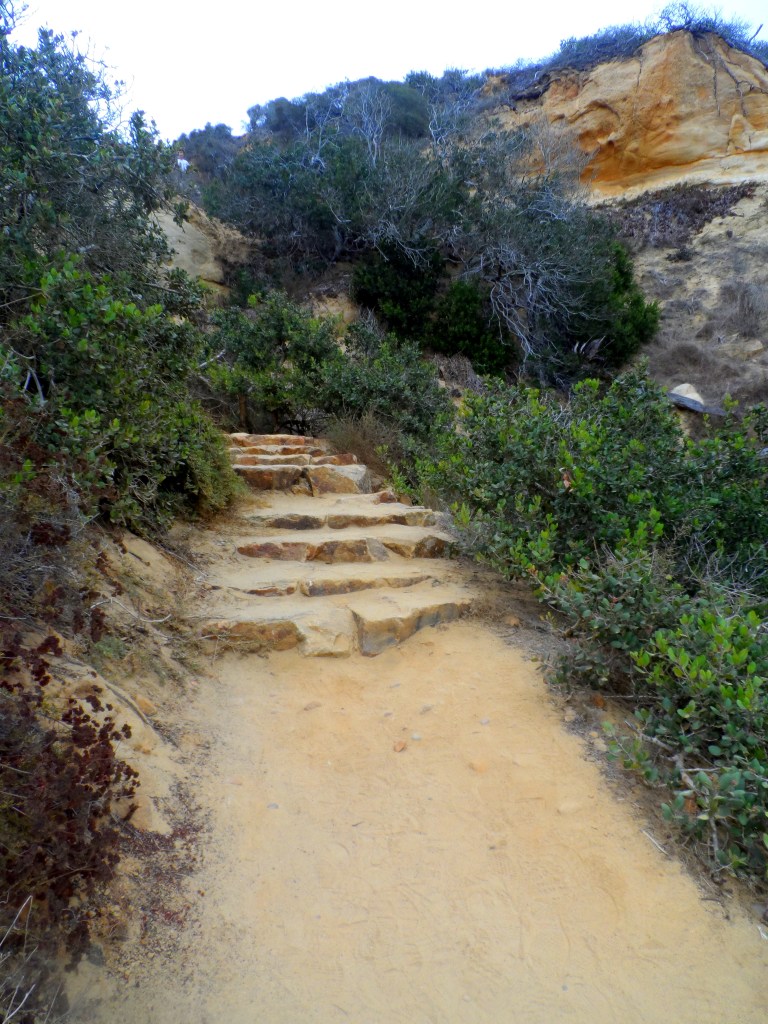
As you climb the stairs up to Red Butte, pause to admire the hard, reddish rock beneath your feet—part of the Linda Vista Formation. This durable layer, resistant to erosion, was formed during the Middle Pleistocene, about 1 million years ago. Scientists have determined its age by identifying unique fossils within the rock and using radioactive dating techniques. The oldest rock visible in Torrey Pines lies at the base of the sea cliffs and belongs to the Delmar Formation, which dates back 48 million years.

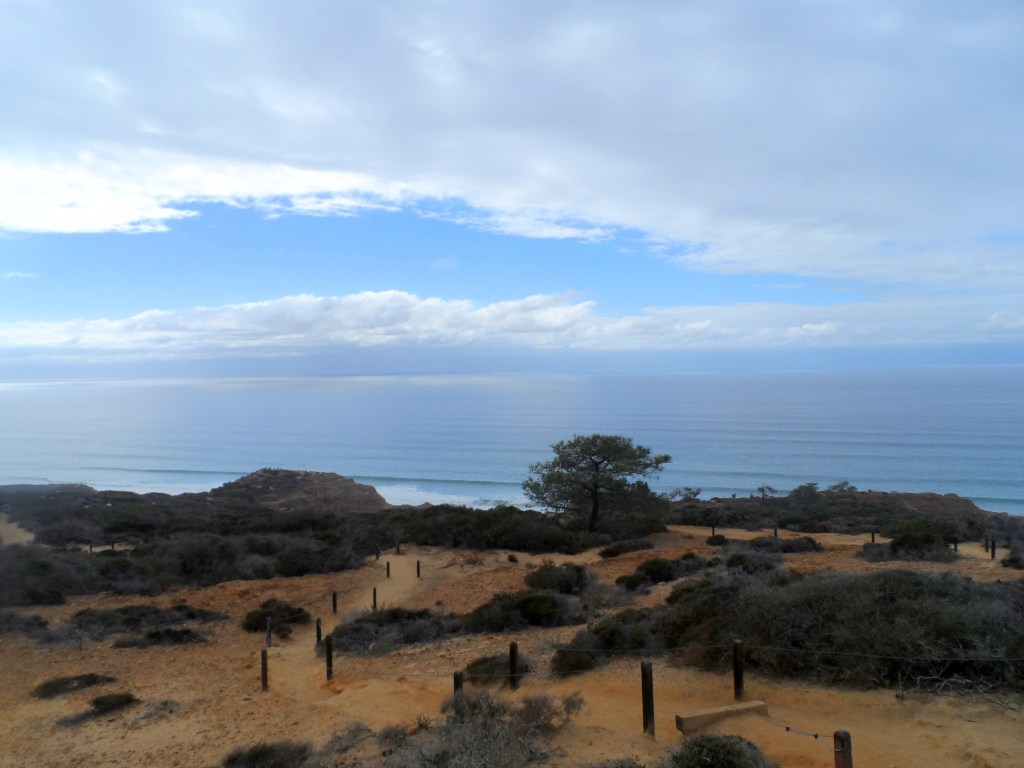
This trail is thrilling because it branches off into several other paths. The highlight? It leads you to a vast rock outcrop that serves as an incredible lookout point with stunning ocean views. My advice? Pause here and take a moment to listen. No matter how crowded the park might be, you’ll likely only hear the wind whispering through the trees, the soft rustle of branches, and the ocean waves below—offering a rare glimpse into what Southern California has sounded like for thousands of years.

As you make your way down toward the coast, the terrain begins to drop away, unveiling the almost surreal Big Basin formation. This weathered slope, dotted with pinnacles and crevices, looks like it belongs in a desert landscape—but here it stands, right beside the Pacific Ocean. It’s truly an unforgettable experience to behold a scene that feels like it belongs near Death Valley’s Zabriskie Point while listening to the sound of crashing ocean waves instead.



The nearby Flat Rock, easily seen from the stepladder leading down to the sand, is a popular spot for local anglers and a fantastic place to feel the spray from crashing waves.

South of Flat Rock is the area known as Black’s Beach – the country’s first public nude beach. Today, the northern section of the beach remains clothing-optional, while nudity is not allowed in the southern area. Whether you choose to lounge clothed or au naturel, be sure to stay clear of the cliff walls—rockslides are frequent and have injured swimmers before.
Both areas of the park draw large crowds—especially on weekends. Expect busy parking lots, cyclists, joggers, families, and beachgoers all sharing the same 8 miles of trails, paved roads, and beaches. If you’re seeking stunning natural beauty, you won’t be disappointed.

During World War II, an army base was established here to defend San Diego from naval attacks, but the road itself is even older — it was once the primary automotive route between San Diego and Los Angeles. As you hike back along this road, take in the sweeping views of the Palomar and Laguna Mountains, as well as the Los Peñasquitos Lagoon. When you get back to the parking lot, stop by the historic lodge built in 1922 with Hopi and Mission Revival influences.

There are two parking areas in the northern section and two in the southern section, as the park is divided into these two halves. Unless you park at the top, be prepared for a steep walk uphill from the lot to reach the higher trails—meaning most of your workout happens before you even begin hiking!
On that note, do be aware that parking can get tricky. You can find yourself hunting for free street parking or deciding to go ahead and pay in the main lot, which is usually between $12 and $15.


 Wander Woman