Four months, countless discoveries, and a city I still haven’t quite figured out.
I’ve traveled enough to know that not every place leaves the same impression. Some towns make you want to stay forever. Others have you looking for the nearest highway before you’ve even unpacked, and then there’s Athens, Georgia. I spent just under four months living in this little corner of the South during my travels, and to say my feelings about it were complicated would be an understatement. Did I hate Athens? Sometimes. Did I love it? Absolutely.
It’s a strange thing to feel both ways about a place, especially when you’re someone who spends so much time dreaming about the next destination, but Athens had a way of getting under my skin, occasionally for all the wrong reasons, while still giving me plenty of reasons to get out and explore, and that’s what I did.
A College Town with a Personality All Its Own
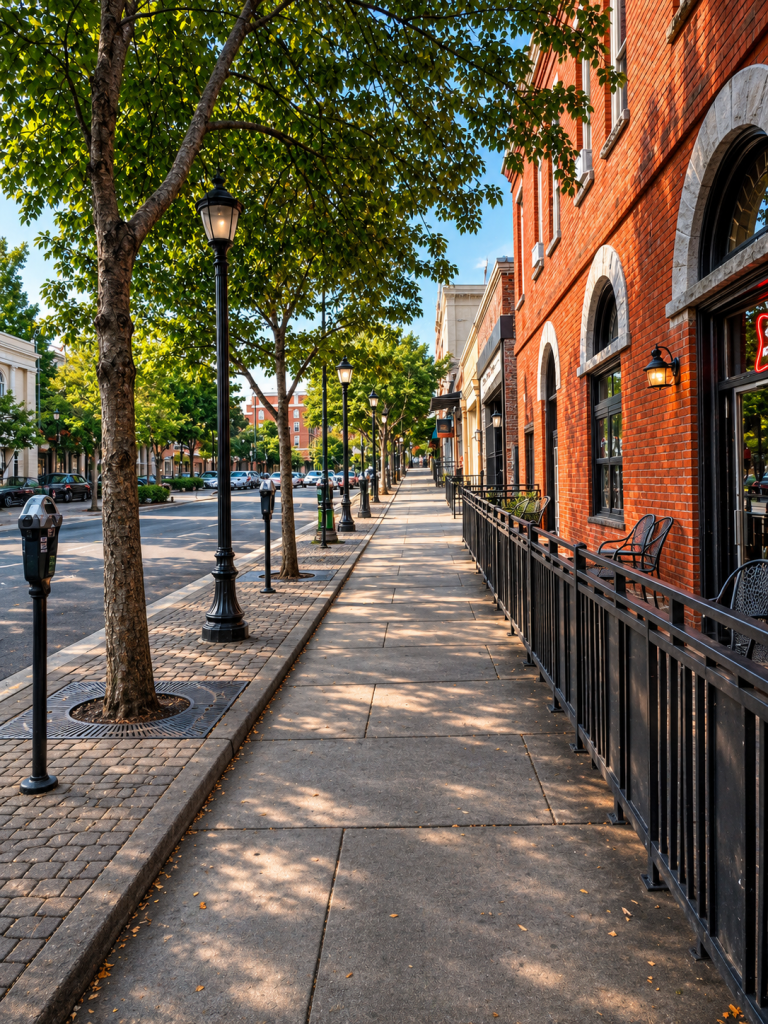
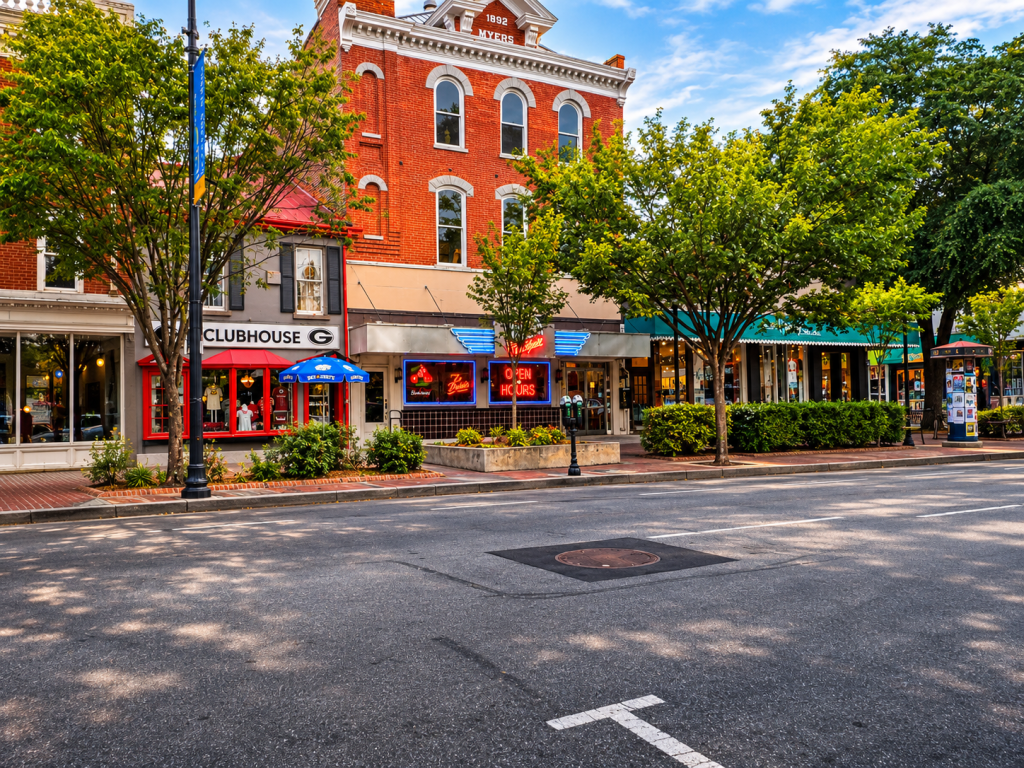
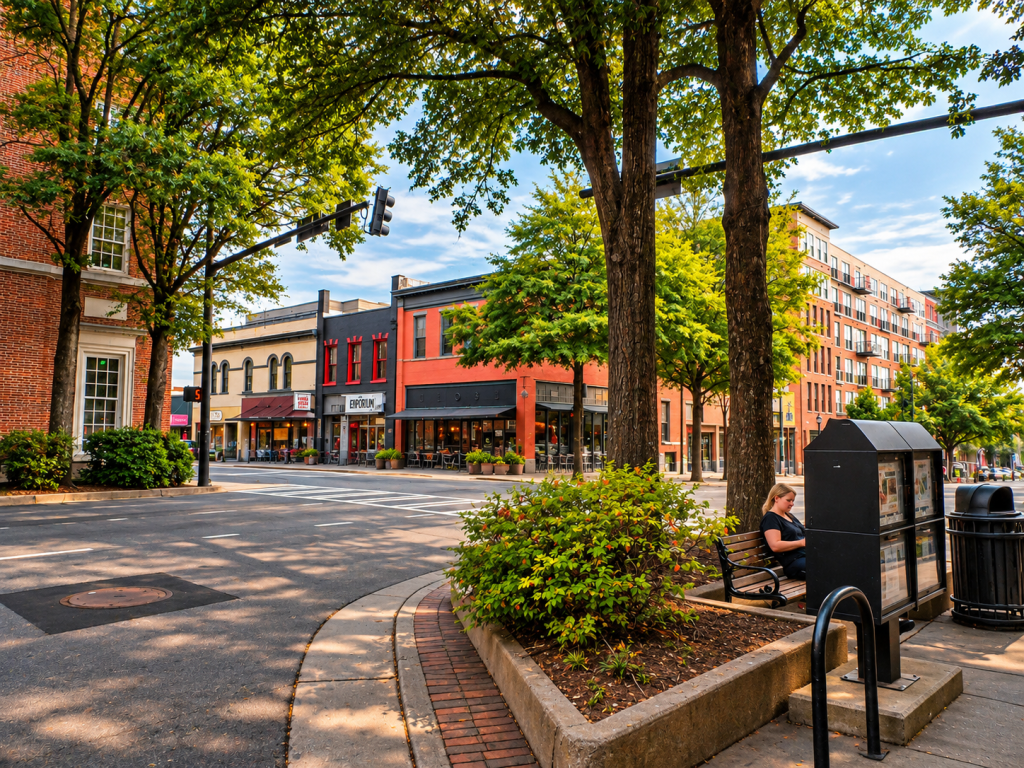
Athens isn’t the kind of Georgia town that quietly fades into the background. Home to the University of Georgia, it’s a lively mixture of college students, musicians, artists, historic architecture, and enough restaurants and bars to keep just about anyone entertained. Downtown quickly became one of my favorite places to wander.
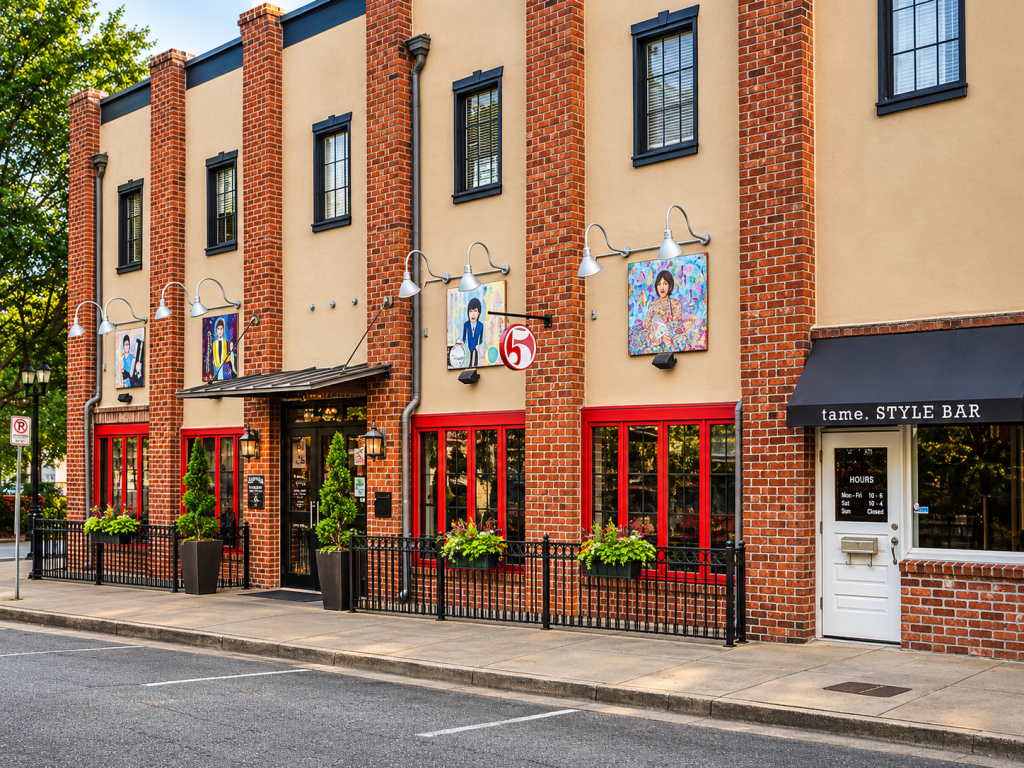
Behind the old Victorian storefronts, I found independent coffee shops, quirky boutiques, restaurants, and music venues tucked into buildings that had been standing long before Athens became famous for its nightlife. There’s something I love about a downtown that hasn’t completely surrendered its personality to modern development. Athens still has that feeling of old meeting new, where a historic building might house a trendy restaurant and a few doors down, a band is getting ready to play.
Of course, Athens also has the kind of Georgia heat that makes you question why anyone willingly goes outside in the summer, but even that couldn’t keep me from exploring.
A City Built Around a University
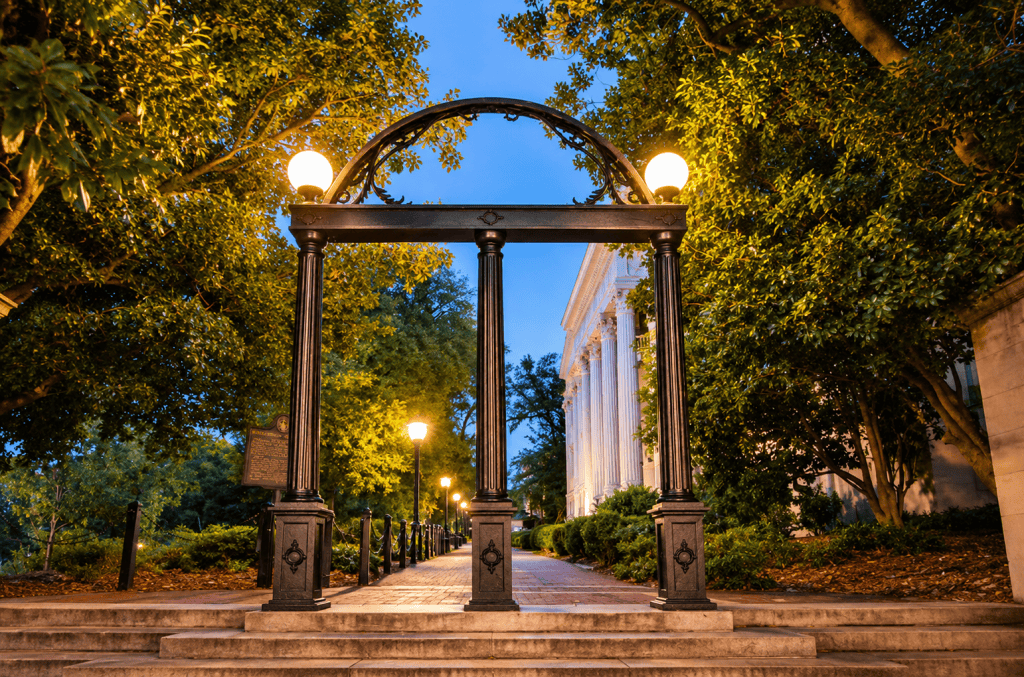
One of the things that fascinated me most about Athens was its history. The city’s story began with the University of Georgia, which was chartered in 1785 as the nation’s first state-chartered university. Abraham Baldwin, who helped establish the institution, became its first president. The university didn’t begin holding classes until 1801, and the surrounding settlement eventually grew into Athens, named after the ancient Greek center of learning.
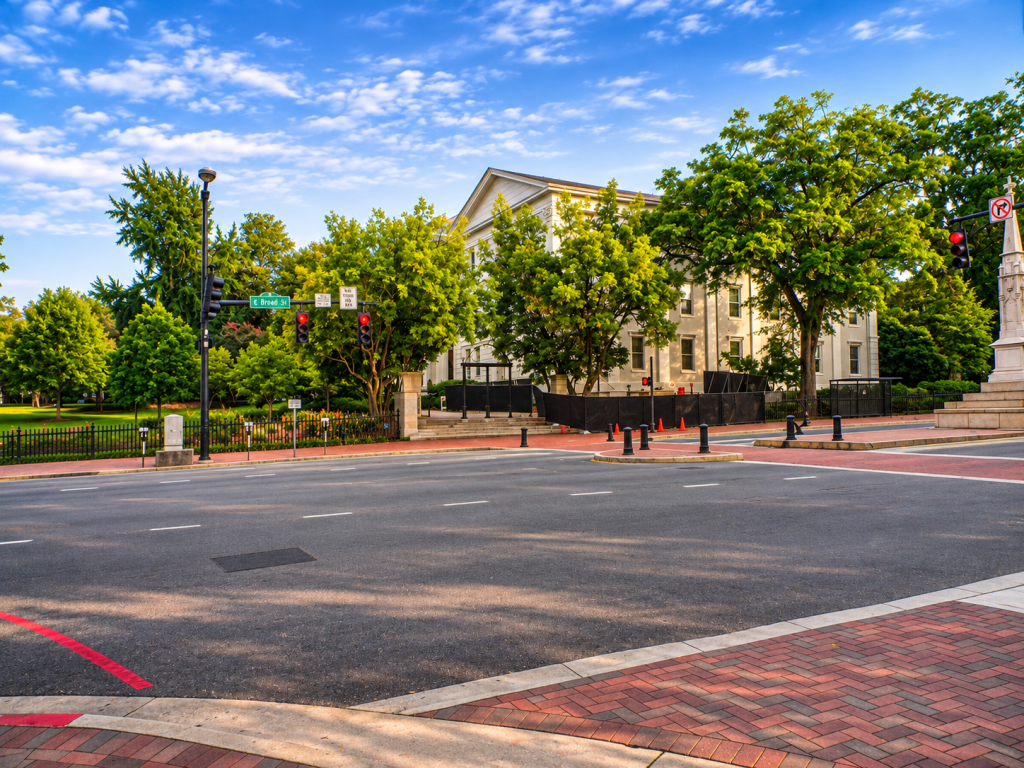
Athens was incorporated in 1806, and the university remained at the center of its development. One of the earliest campus buildings, Old College, still stands today. Originally known as Franklin College, it offers a glimpse into the university’s beginnings.
I have always been drawn to old buildings, especially those that have survived generations of change. Walking around a place like Athens, I couldn’t help wondering how different the streets must have looked two hundred years ago. How many people had walked those same paths? How much of the original town was still hiding beneath everything that came afterward? Those are the questions that make exploring historic places so interesting to me.
The Civil War Years & a Cannon That Never Worked
Athens escaped the widespread destruction that devastated many Southern communities during the Civil War, but the conflict still left its mark. Local industries supported the Confederacy, including the Cook and Brother Armory, which manufactured firearms. Textile mills produced materials for uniforms, while residents organized efforts to supply Confederate soldiers.
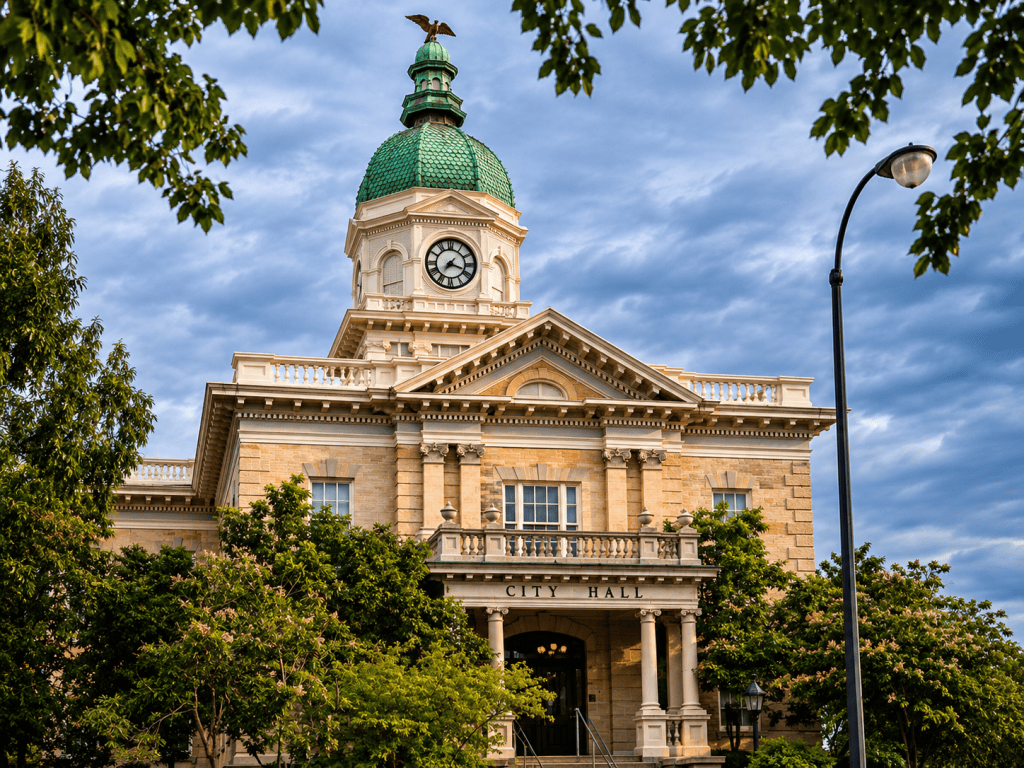
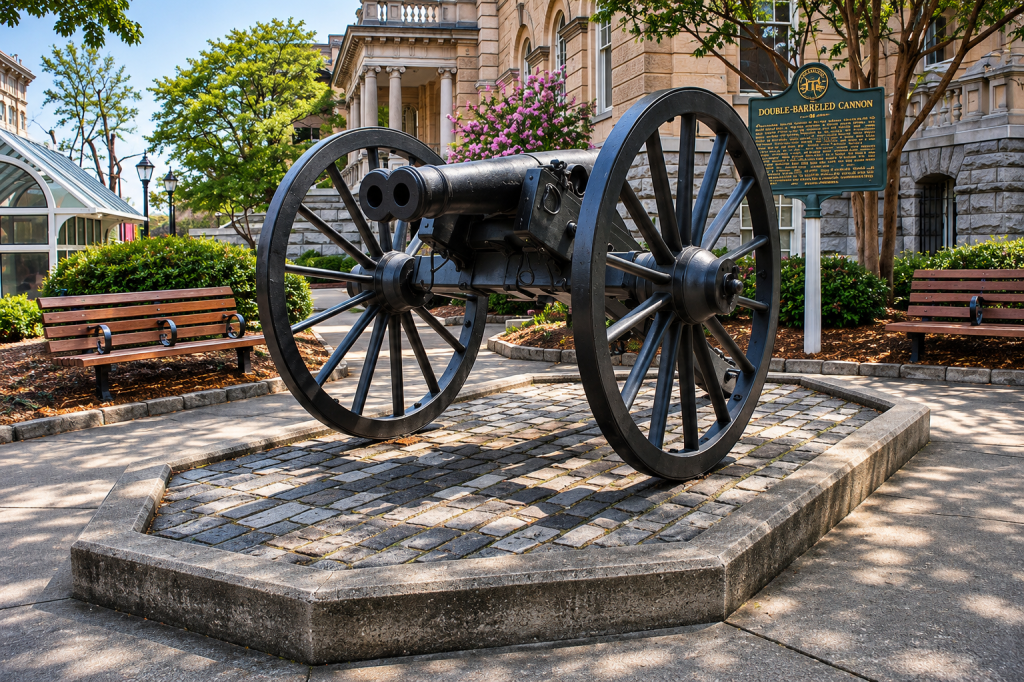
As the war continued, enrollment at the university declined until classes were suspended in 1863. Some campus buildings were used to accommodate soldiers and refugees before the university reopened in 1866, but one of the city’s strangest historical reminders sits outside City Hall. The famous double-barreled cannon.
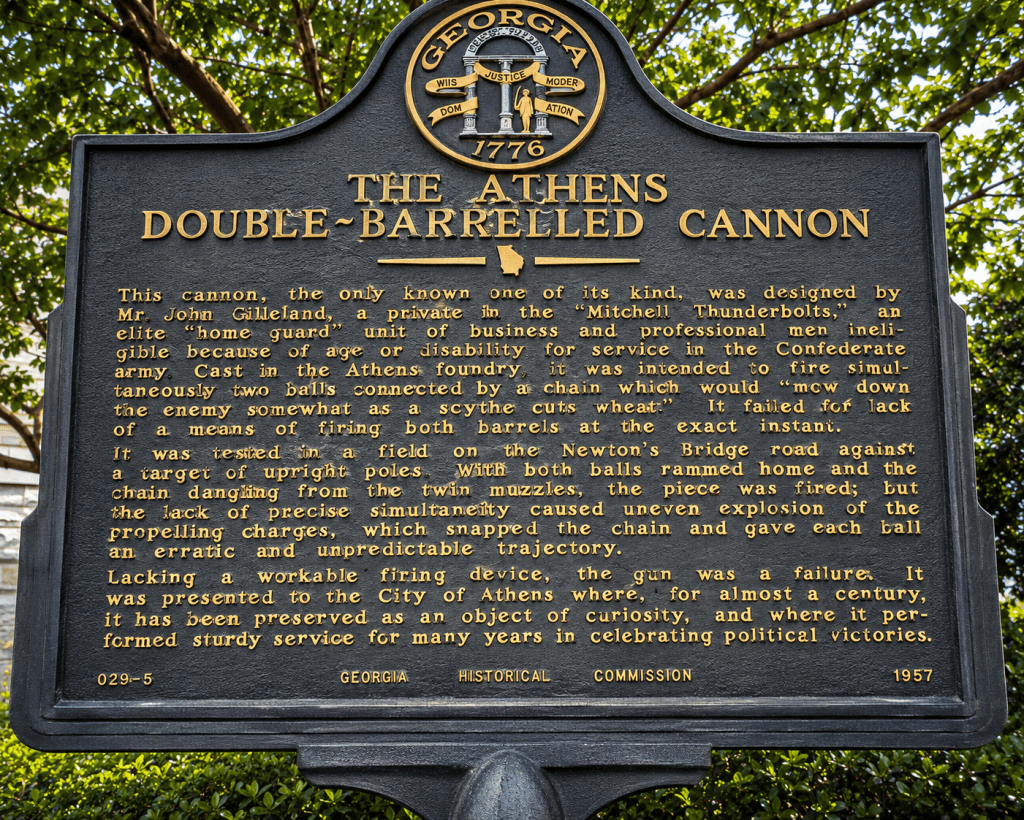
Designed during the Civil War by Athens resident John Gilleland, the unusual weapon was intended to fire two cannonballs connected by a chain. The idea was that the spinning chain would sweep through enemy soldiers. Unfortunately, the cannon proved considerably less impressive in practice. The experiment was unsuccessful, and the weapon never became a practical battlefield invention. Today, it remains one of Athens’ more unusual historical curiosities, and exactly the sort of odd piece of history I enjoy discovering.
Old Houses & the Stories Behind Them
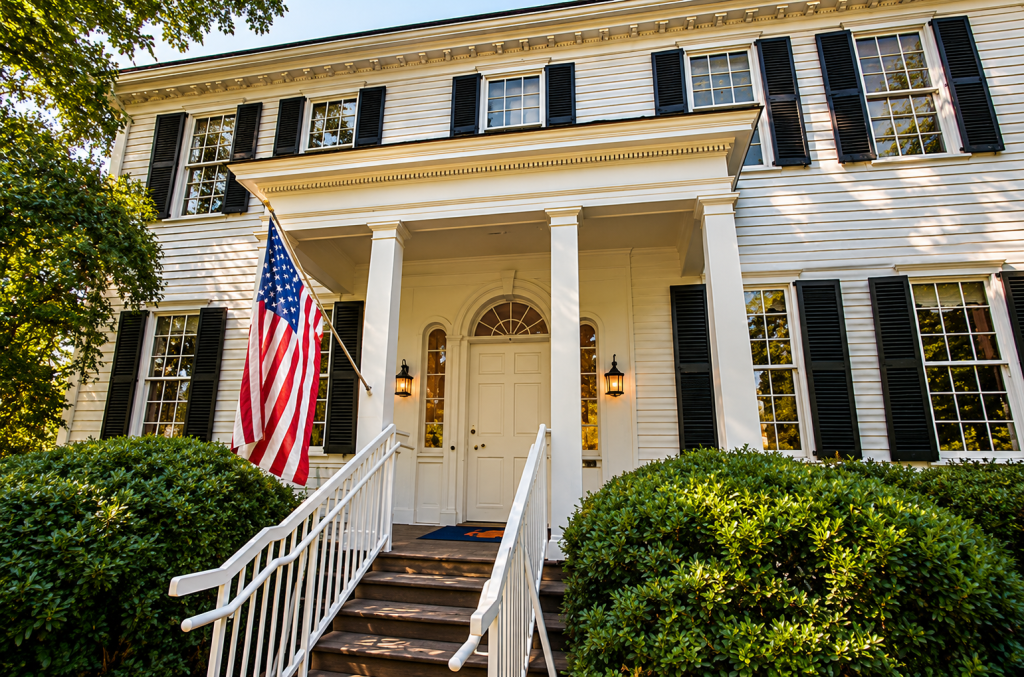
Beyond the university and downtown, Athens has an impressive collection of historic homes, and anyone who knows me knows that I can’t resist an old house with a story. The Church-Waddel-Brumby House, dating to the early nineteenth century, is considered one of the city’s oldest surviving residences. Its Federal-style architecture reflects an Athens that existed long before the college bars and crowded sidewalks.
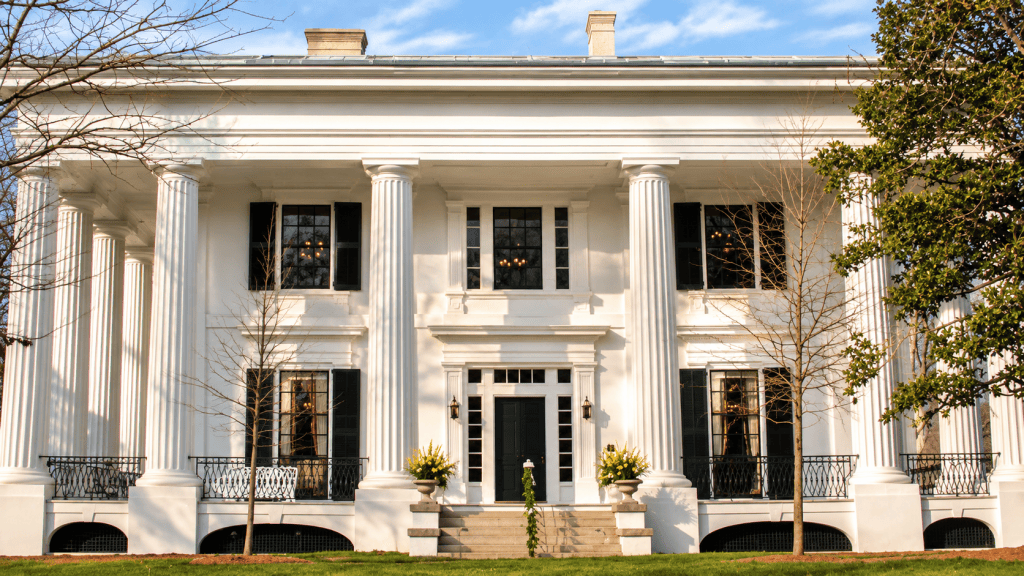
Then there’s the Taylor-Grady House, an elegant Greek Revival residence associated with Henry W. Grady, the journalist who became one of the leading voices of the post-Civil War “New South.” With its grand columns and stately appearance, it’s a reminder of the wealth and social divisions that shaped the region before and after the war.
The historic Cobham neighborhood also tells part of Athens’ story. Developed during the nineteenth century, it became one of the city’s early residential districts. I could spend hours looking at old architecture, imagining the lives that unfolded behind those doors. It’s not just the buildings themselves that interest me. It’s the people who lived in them, the events they witnessed, and the stories that survived.
The Georgia Theatre: A Building That Refused to Disappear
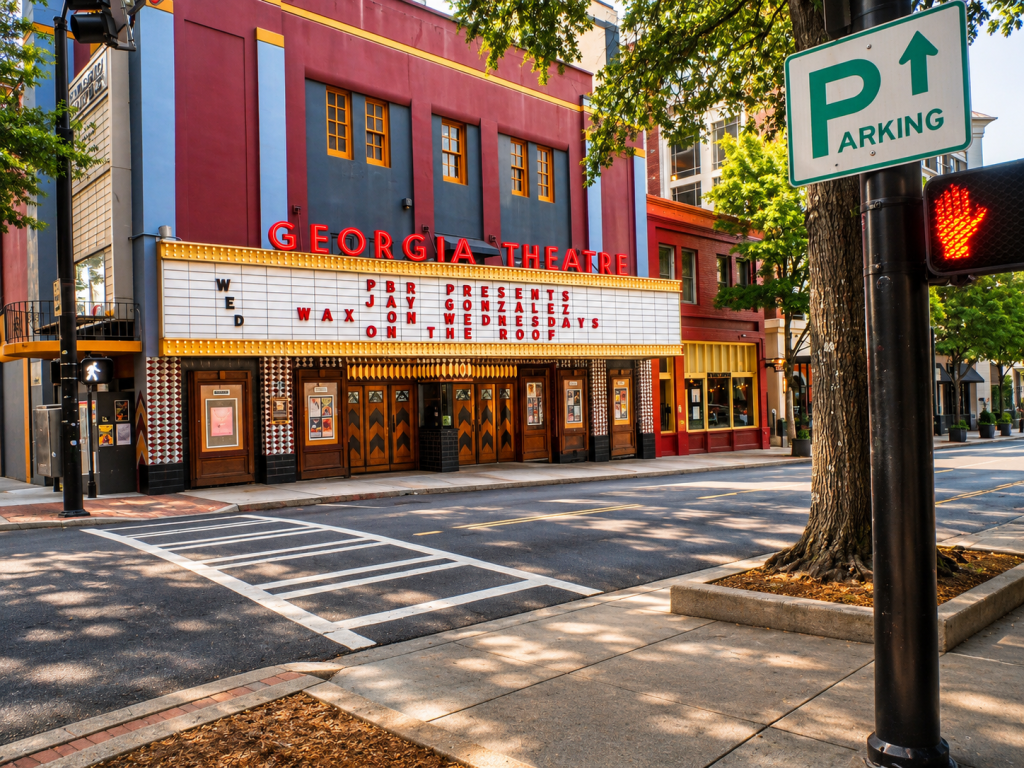
Another Athens landmark with a fascinating past is the Georgia Theatre. The property has been part of downtown life for well over a century. Before becoming a theater, the site was associated with a YMCA building constructed in 1889 and later used for several different businesses. The Elite Theatre opened there in 1935, and the building eventually became the Georgia Theatre, one of Athens’ best-known live music venues. Then, in 2009, a devastating fire nearly destroyed it. Rather than disappear into history, the theater was rebuilt and reopened in August 2011.
I love stories like that. Buildings are often demolished when they become inconvenient, damaged, or outdated. Seeing one survive, especially a place so closely connected to a city’s identity, makes its history even more meaningful, and in Athens, music is a very big part of that identity.
The Town That Gave the World R.E.M. & the B-52s
Before spending time in Athens, I knew it had a reputation for music. What surprised me was just how deeply music seemed woven into everyday life. Athens helped launch bands like R.E.M., the B-52s, and Widespread Panic, while groups such as Neutral Milk Hotel became part of its influential alternative music scene.
The legendary 40 Watt Club is one of the best-known venues associated with that history, but it wasn’t just the famous names that made the city interesting. It was the sheer amount of live music. On any given night, you could wander downtown and find musicians performing somewhere. Bars, clubs, and smaller venues seemed to offer a constant rotation of local talent. There was always something happening, and even if you weren’t particularly interested in nightlife, it was difficult not to appreciate the creativity that gave Athens its reputation.
Let’s Talk About the Food
Now, if there’s one thing Athens did exceptionally well, it was feeding people. I could probably write an entire article about the restaurants alone. For a relatively small city, Athens offered an impressive variety of places to eat, from casual pizza joints and retro diners to more upscale restaurants and international cuisine.
Some of my favorites included Little Italy, where I could grab a slice of pizza without committing to an entire pie, and Clocked, a retro-style diner that made a pretty memorable cherry Coke. Then there was Last Resort Grill, Mama’s Boy, Cali & Tito’s, and DePalma’s. Whether I wanted something inexpensive and simple or felt like treating myself to a good meal, there always seemed to be somewhere worth trying.
Athens also had a thriving interest in locally sourced food, vegetarian options, and craft breweries. I might have had mixed feelings about living there, but I certainly wasn’t going to complain about the food.
A Downtown That Never Seemed to Sleep
If Athens had a second identity beyond music, it was partying, and I mean partying. With the University of Georgia at its center, the city had a nightlife scene that seemed almost disproportionate to its size. Bars were everywhere. The Globe, Bourbon Street, Walkers, Sister Louisa’s Church, and Max Canada were just a few of the names that stood out.
There were nights when downtown seemed to be one enormous gathering of students, locals, and visitors moving between restaurants, bars, and music venues. For someone who enjoys wandering around historic downtowns, it was certainly entertaining to observe, but I also learned that living in a college town is a very different experience from visiting one. Sometimes all that energy was exciting. Other times, I just wanted a little peace and quiet.
And Then There Was Football
I should probably confess something. I’m not much of a sports person. Which, as it turns out, is practically a crime in Athens. It didn’t take me long to discover that the Georgia Bulldogs aren’t simply a football team. They’re a way of life. Red and black were everywhere. Conversations revolved around games, players, rivalries, and the next big matchup, and when football season arrived, the entire city seemed to revolve around Sanford Stadium.
I couldn’t help finding it amusing that a college football stadium could hold a crowd comparable to the population of the city itself. I may never have become a devoted Bulldogs fan, but I certainly learned what “Go Dawgs!” meant.
Football wasn’t the only sporting event that drew crowds, either. The Athens Twilight Criterium brought professional bicycle racing into the downtown streets, turning the area into a lively combination of competition and festival atmosphere. It was another reminder that Athens rarely needed an excuse to celebrate something.
Beyond Athens: The Georgia I Fell in Love With
As much as I enjoyed certain parts of Athens, one of the best things about spending time there was having so much of Georgia within reach. Georgia is an incredible state for anyone interested in history. From the Blue Ridge Mountains to Savannah’s historic streets, there are old cemeteries, Civil War sites, abandoned settlements, former plantation properties, ancient Indigenous earthworks, and forgotten buildings scattered across the landscape.
Those are the places that have always fascinated me. Give me a weathered gravestone, an abandoned building, or a forgotten stretch of road with a story behind it, and I’m perfectly happy spending the day exploring. Georgia had no shortage of those discoveries, and while Athens was my temporary home, it was also a starting point for exploring a state filled with fascinating history.
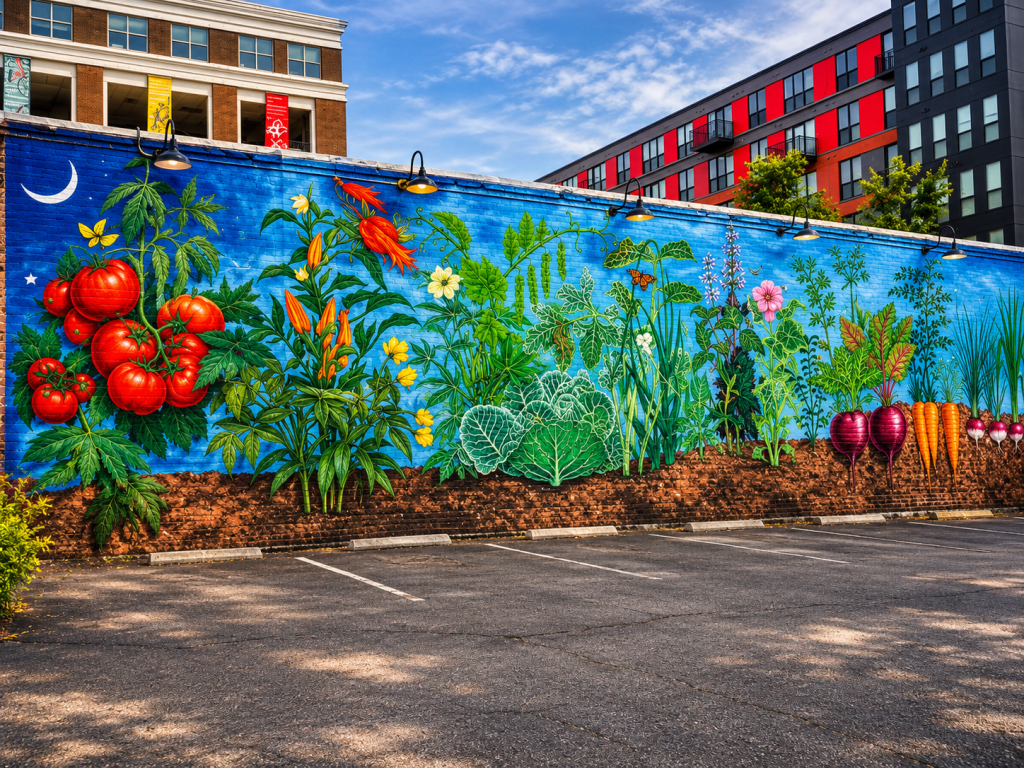
So, Did I Love Athens or Hate It?
That’s still a difficult question to answer. I spent less than four months living there, and there were certainly moments when I couldn’t wait to leave. Not every place is somewhere you want to call home, even when there’s plenty to appreciate about it.
Athens had its frustrations, and I never quite felt that it was where I belonged, but I also remember wandering through historic downtown streets, discovering beautiful old houses, learning about the city’s past, finding wonderful little restaurants, and watching a town that seemed to run on music, football, and an endless supply of energy. Those are good memories, and sometimes that’s what travel teaches you. You don’t have to love living somewhere to appreciate what makes it special.
Athens wasn’t my forever place. It was simply one more stop along the road, a place where I spent a few months, explored what I could, and eventually moved on. Would I live there again? Probably not. Would I go back to visit? Absolutely. Despite everything, Athens gave me something I always hope to find when I arrive somewhere new. A place with character, history, and stories worth remembering.