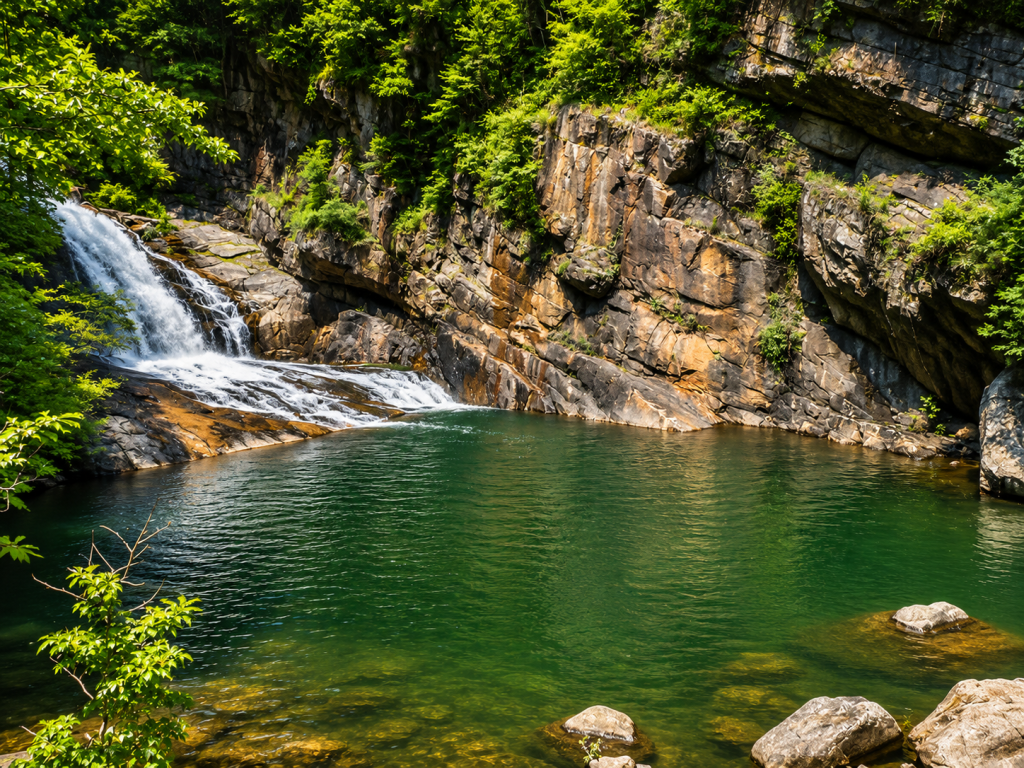
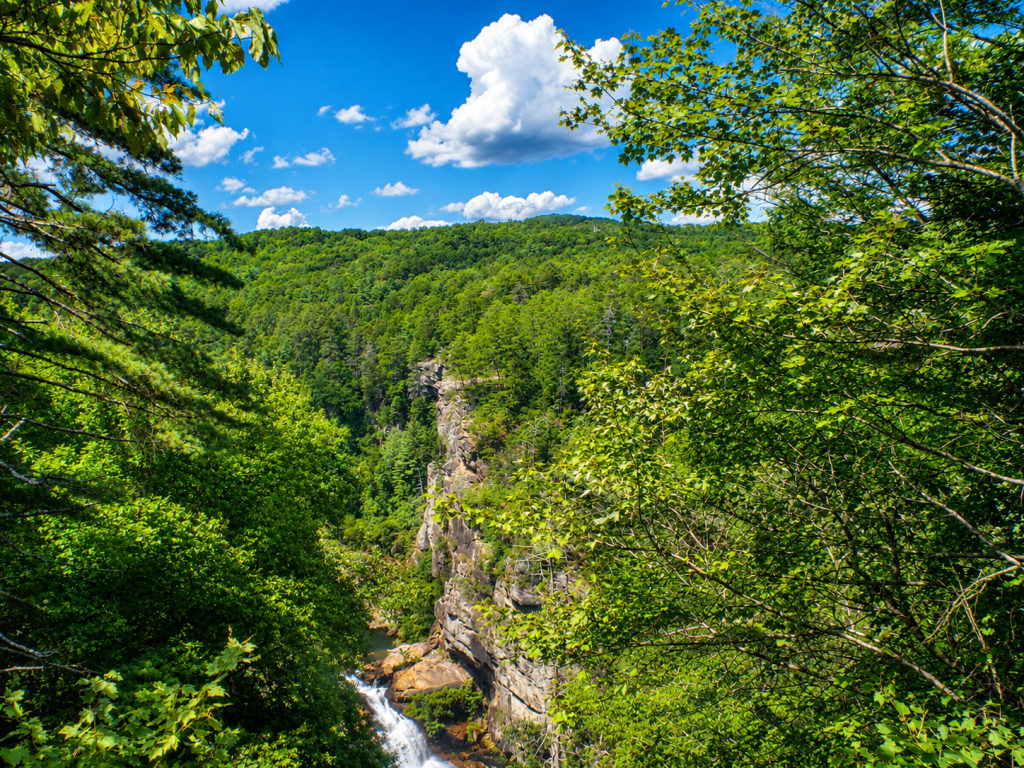
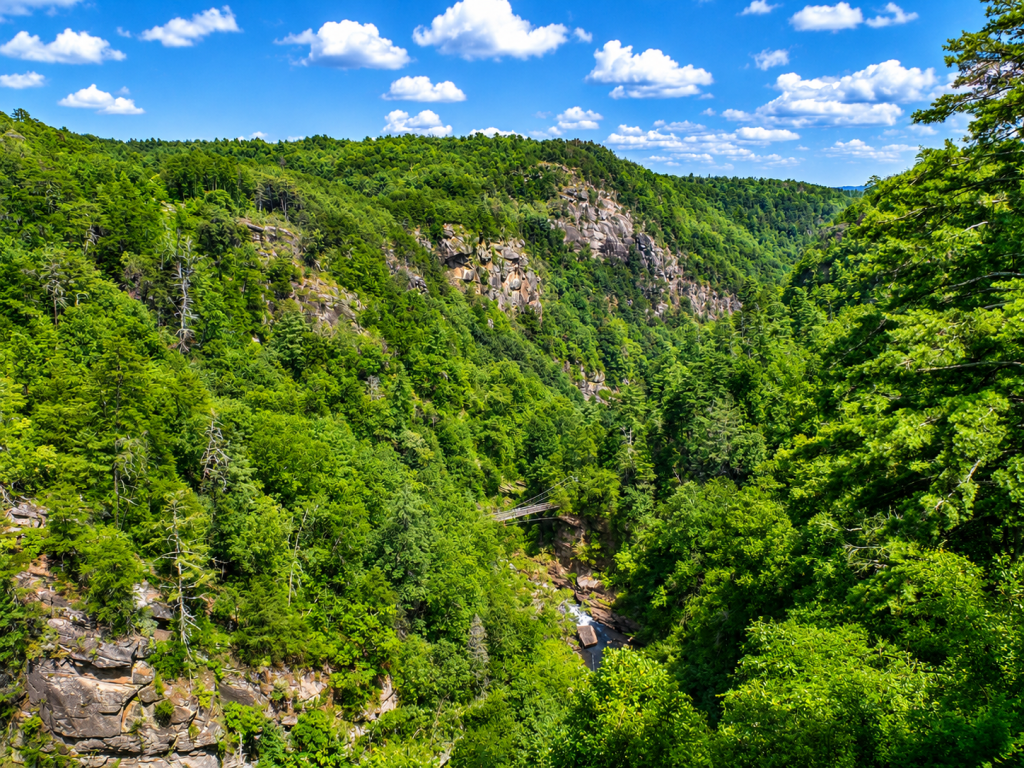
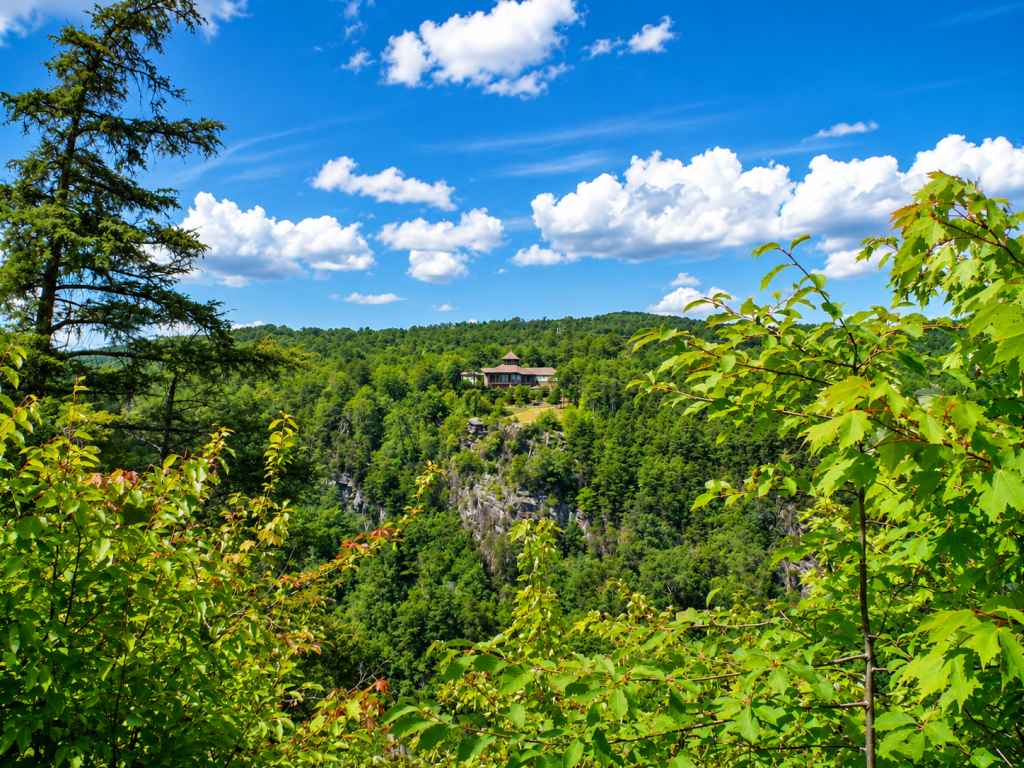
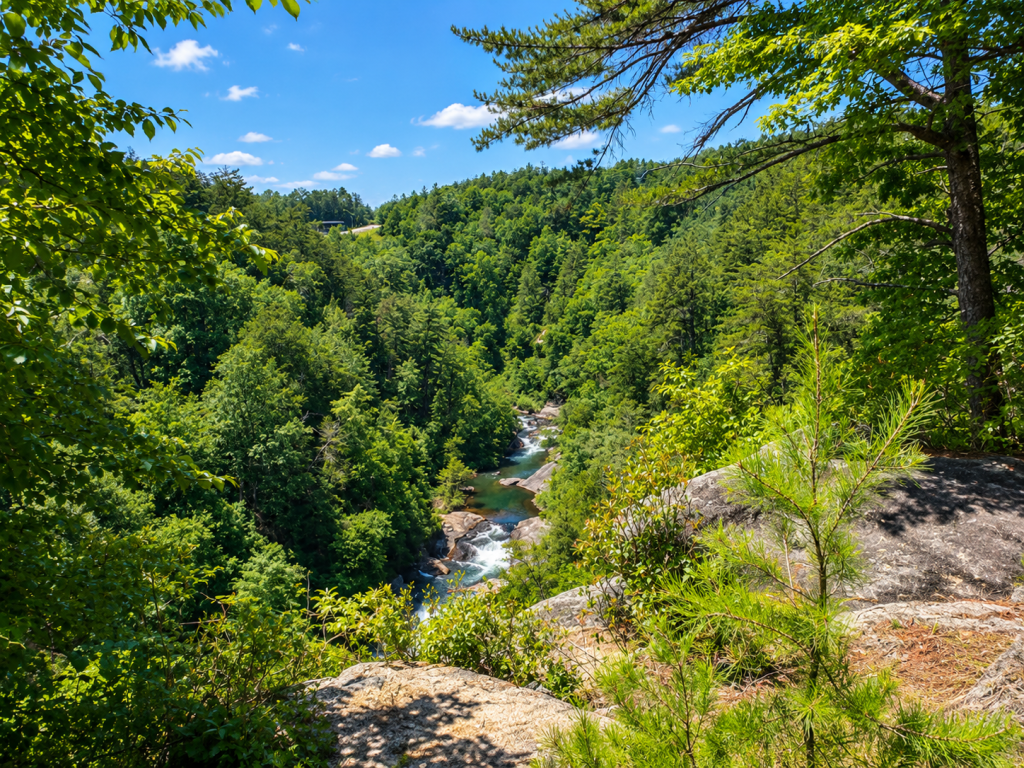
There are hikes that leave you feeling accomplished, hikes that leave you speechless, and then there are hikes that leave you questioning every decision that brought you to the trailhead. Tallulah Gorge was all three. Tucked into the mountains of northeastern Georgia, Tallulah Gorge State Park is home to one of the deepest and most spectacular canyons in the eastern United States. The gorge stretches approximately two miles, with sheer rock walls plunging nearly 1,000 feet toward the Tallulah River below. Along its course, the river tumbles through a series of waterfalls that have been drawing visitors to this rugged corner of Georgia for generations.
It’s the kind of place that photographs never quite do justice. You can look at pictures of the canyon, admire the waterfalls, and imagine what it must be like to stand above such an enormous drop, but nothing prepares you for the moment you actually see it, and absolutely nothing prepares your legs for the stairs.
A Beautiful Place With a Wild Past
Long before Tallulah Gorge became a state park, the canyon was already a place of wonder, danger, and fascination. The gorge was carved over an immense span of geological time as the Tallulah River gradually cut through the surrounding rock. Indigenous peoples knew this landscape long before European settlers arrived. The origin of the name Tallulah remains a subject of debate, although the gorge has long been associated with Cherokee history.
By the late nineteenth century, the dramatic scenery had turned Tallulah Falls into a popular tourist destination. Visitors traveled to the mountains to admire the waterfalls, peer into the canyon, and experience a landscape unlike anything else in the region, but not everyone was content to admire the gorge from solid ground.
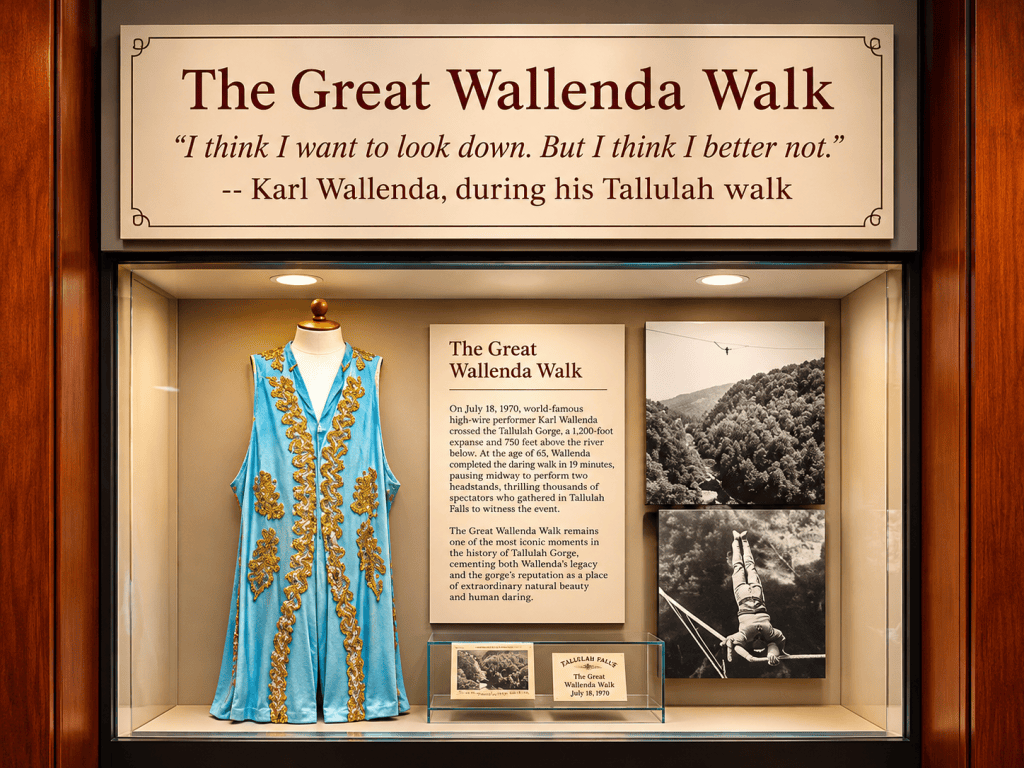
In 1886, a tightrope walker known as Professor Leon crossed the canyon on a wire suspended high above the rocks. His accomplishment was extraordinary enough, but decades later another daredevil would make Tallulah Gorge famous all over again. On July 18, 1970, legendary high-wire performer Karl Wallenda stepped onto a cable stretched approximately 1,200 feet across the gorge. At 65 years old, he crossed the enormous chasm before thousands of spectators, stopping along the way to perform two headstands. Two headstands. Suspended hundreds of feet above the ground.
I couldn’t help thinking about that as I looked across the canyon. I was about to tackle a staircase with handrails and solid footing, and I already had reservations. Wallenda had crossed the entire thing on a wire.
The Descent: Easy Enough to Fool You
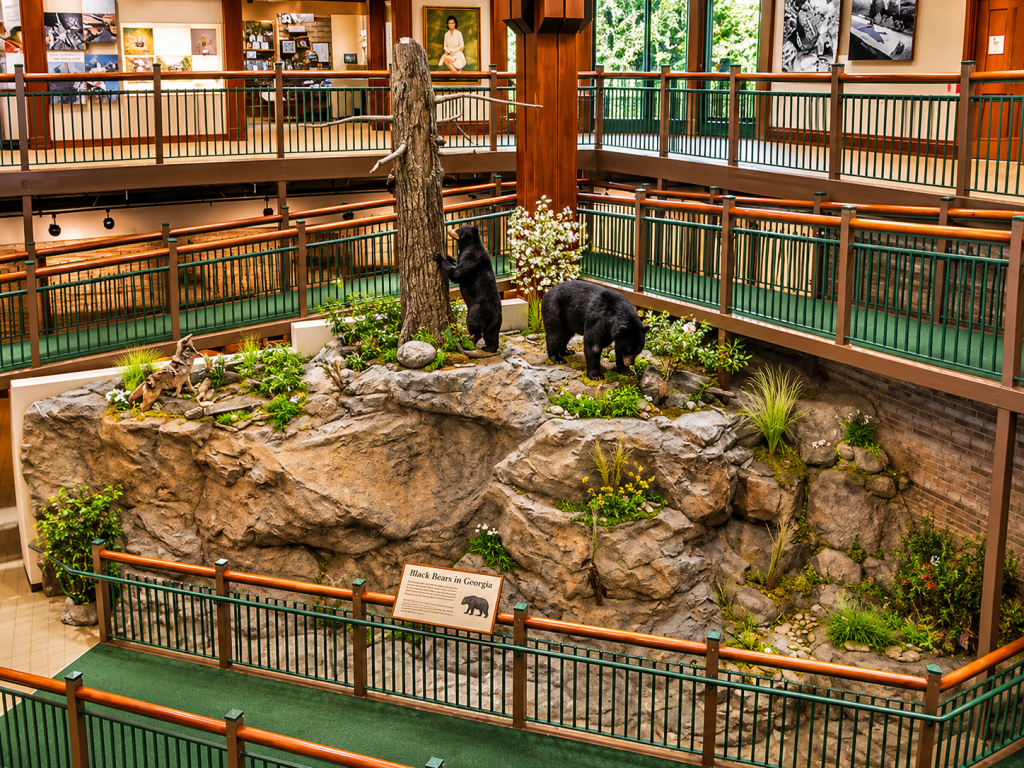
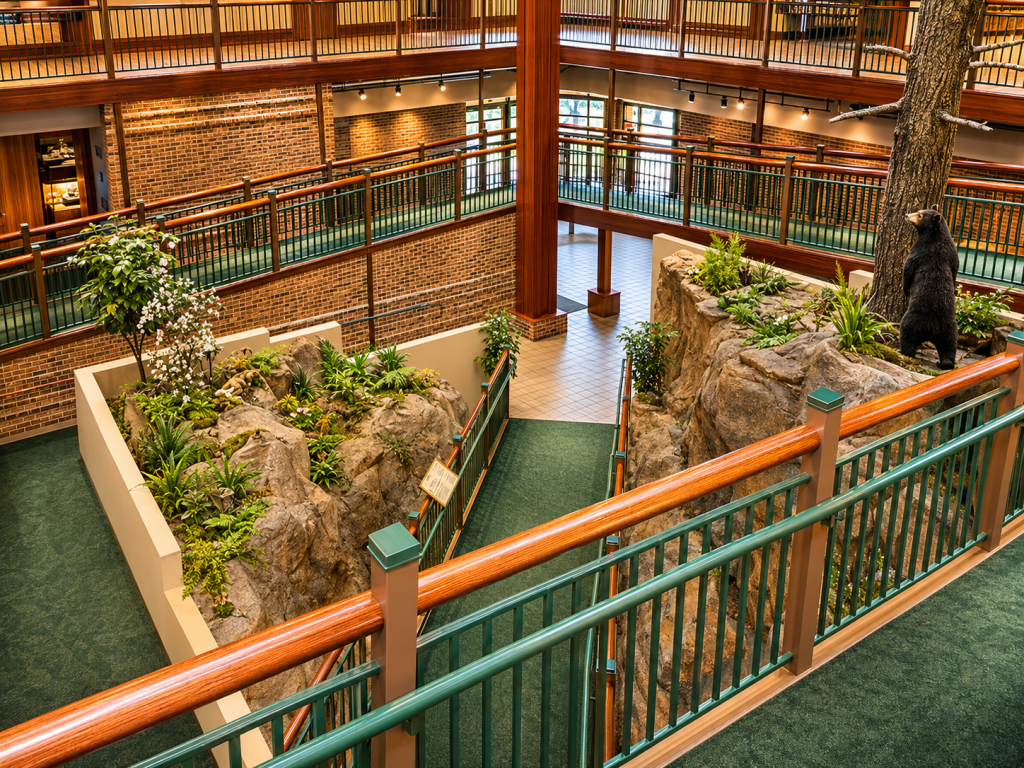
My adventure began near the Jane Hurt Yarn Interpretive Center, where visitors can learn about the gorge’s history, wildlife, and geology before setting out to explore. There are several ways to experience Tallulah Gorge, from relatively manageable walks along the rim to much more demanding routes that descend toward the river. Access to the gorge floor itself is controlled through a permit system, but the Hurricane Falls staircase and suspension bridge offer their own unforgettable challenge. I chose the stairs.

At first, everything seemed perfectly reasonable. The trail led through the woods, with glimpses of the canyon appearing between the trees. The air was fresh, the scenery was beautiful, and the anticipation of getting closer to the waterfalls made the walk feel almost effortless, and then came the staircase, and more staircase, and then, just when I thought I had surely reached the bottom, another flight appeared.
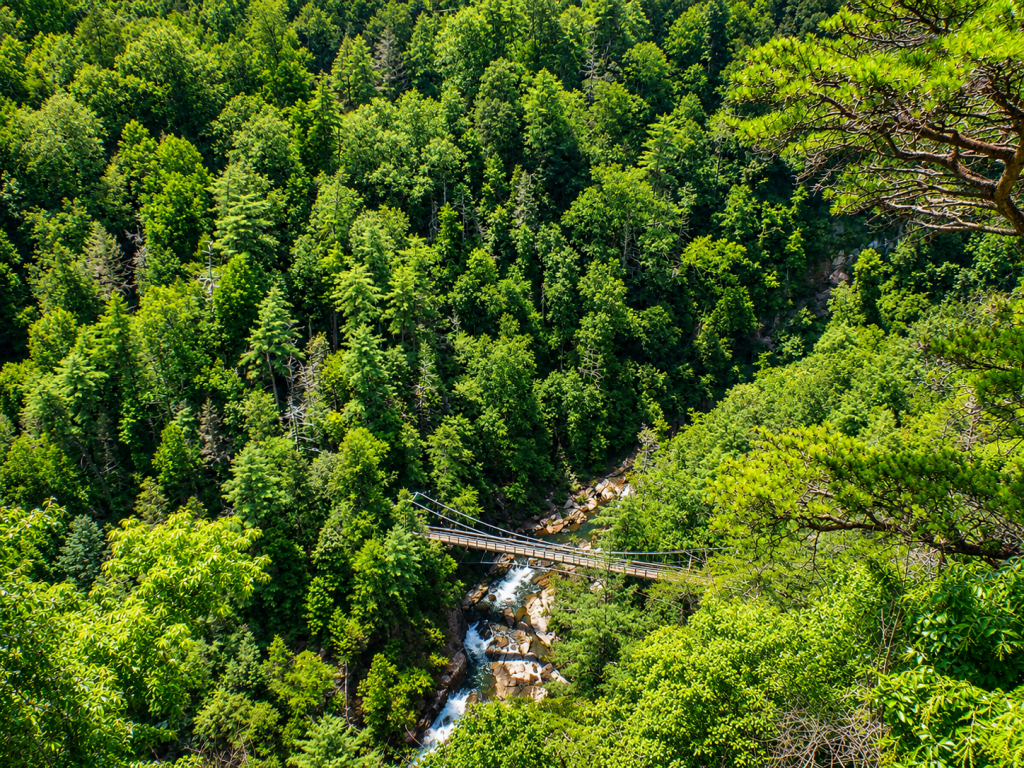
The steps dropped steeply into the gorge, winding down through the forest toward the suspension bridge. With every flight, the canyon walls seemed to rise higher around me. Going down wasn’t particularly difficult at first. Gravity was doing most of the work, and I was far too distracted by the scenery to think much about the consequences, but somewhere along that descent, a rather inconvenient thought crossed my mind. Every single step I was taking down would eventually have to be climbed back up. I decided not to think about that just yet.

Eighty Feet Above the River
Reaching the suspension bridge was worth every step. Stretching across the gorge approximately 80 feet above the rocky riverbed, the bridge offers an extraordinary view of the canyon and the rushing water below. Standing there, surrounded by towering rock walls and dense mountain forest, I finally understood why Tallulah Gorge attracts so many visitors. The landscape is immense.
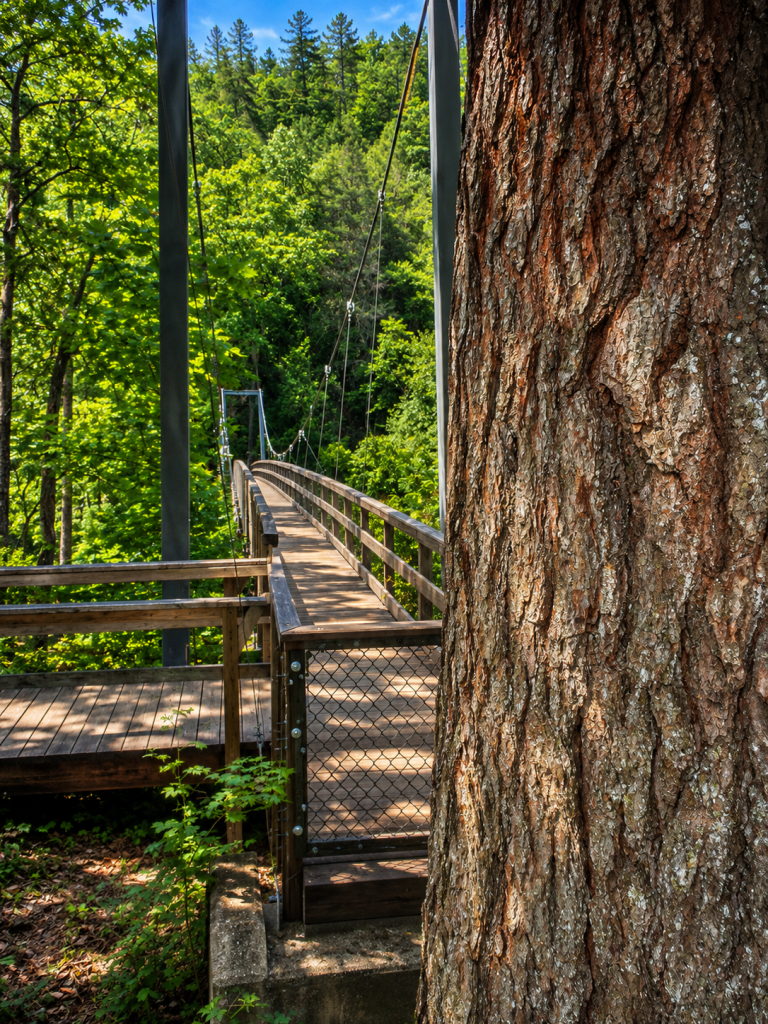
Water has spent countless years carving its way through the rock, creating a place that feels both beautiful and intimidating. The sound of the river echoes through the canyon, while the waterfalls spill over ledges that seem impossibly far below the overlooks above. For a few moments, I forgot about the stairs entirely. I took in the view, admired the sheer scale of the gorge, and enjoyed the satisfaction of having made it down. Unfortunately, the gorge wasn’t finished with me. Not even close.
The Climb Back Out: Where the Real Suffering Begins
There is something particularly cruel about a hike that saves its hardest part for the return trip. The descent into Tallulah Gorge had been exciting, scenic, and surprisingly enjoyable. The climb back out was an entirely different experience. The staircase that had seemed so manageable on the way down suddenly felt endless. My legs began to burn. My breathing grew heavier. Every landing offered a moment of relief before another flight of stairs appeared above me, and they just kept coming.
I stopped to catch my breath, looked up, and wondered how something that had taken so little effort to descend could possibly require this much determination to climb. It wasn’t long before my legs began protesting every upward step. This was no leisurely afternoon stroll through the Georgia mountains. This was a serious physical challenge disguised as a sightseeing adventure. The kind of hike where you start making deals with yourself. Just get to the next landing. Take a break. Another flight. Another break. Don’t look up. Don’t count how many stairs are left.
The Hurricane Falls staircase route involves hundreds of steps and depending on how far you continue along the trail, the total can become a formidable workout. The steep elevation changes make it especially demanding for anyone unaccustomed to strenuous hiking. I had known Tallulah Gorge was considered challenging. Knowing it and experiencing it are two very different things.
By the time I finally reached the upper trail again, my legs felt like they had been through a personal war with the mountain. Looking around, I quickly realized I wasn’t the only casualty. People were scattered everywhere, some sitting on the ground trying to catch their breath, others stretched out flat as though they’d just survived something far more serious than a hike. I couldn’t help but laugh. Apparently, Tallulah Gorge had humbled quite a few of us that day, and I have to admit, seeing everyone else in various stages of recovery made me feel a whole lot better about my own struggle, but I had made it, and despite every complaint my body had offered along the way, I wouldn’t have traded the experience.
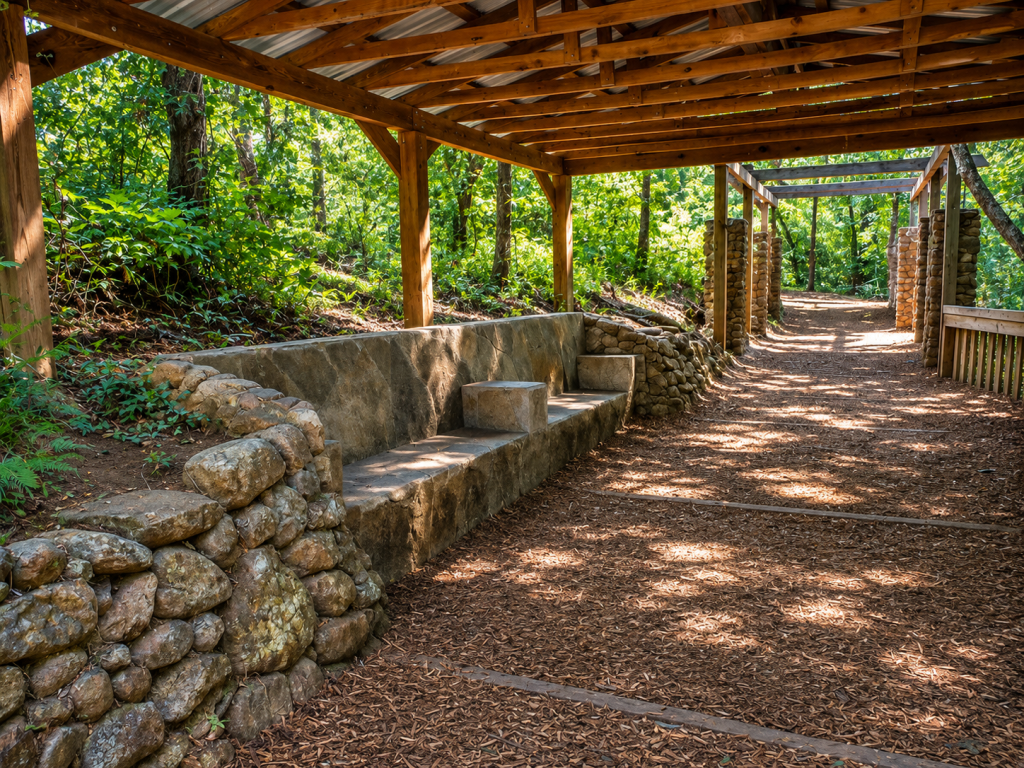
A Place That Demands Respect
Tallulah Gorge is breathtaking, but its beauty comes with genuine hazards. The canyon’s steep terrain, exposed rock, swift water, and sudden elevation changes make it a place where preparation matters. Over the years, visitors have been seriously injured or killed after falls and accidents in the gorge. This isn’t a destination where you should underestimate a trail simply because it begins at a visitor center or appears manageable on a map.
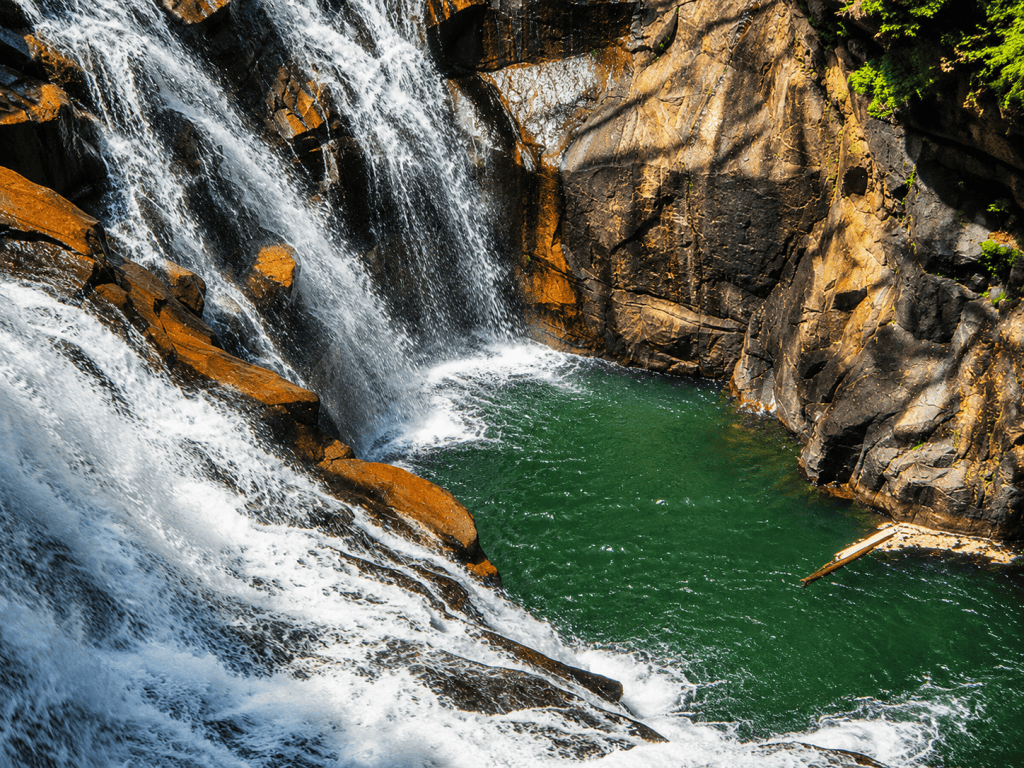
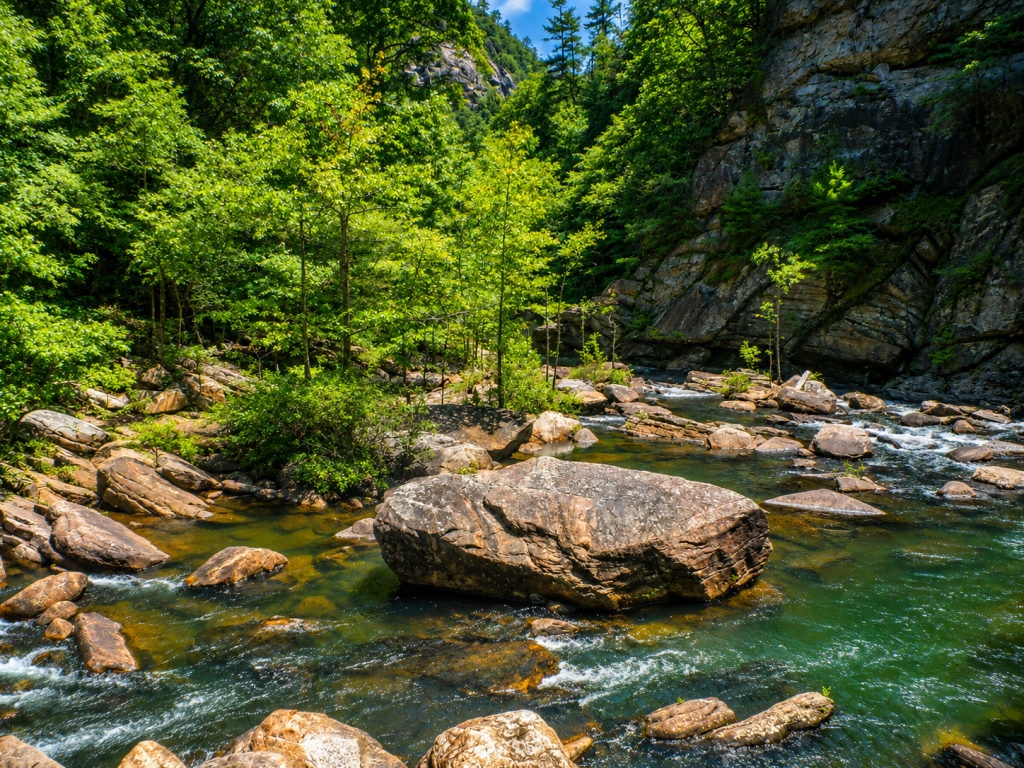
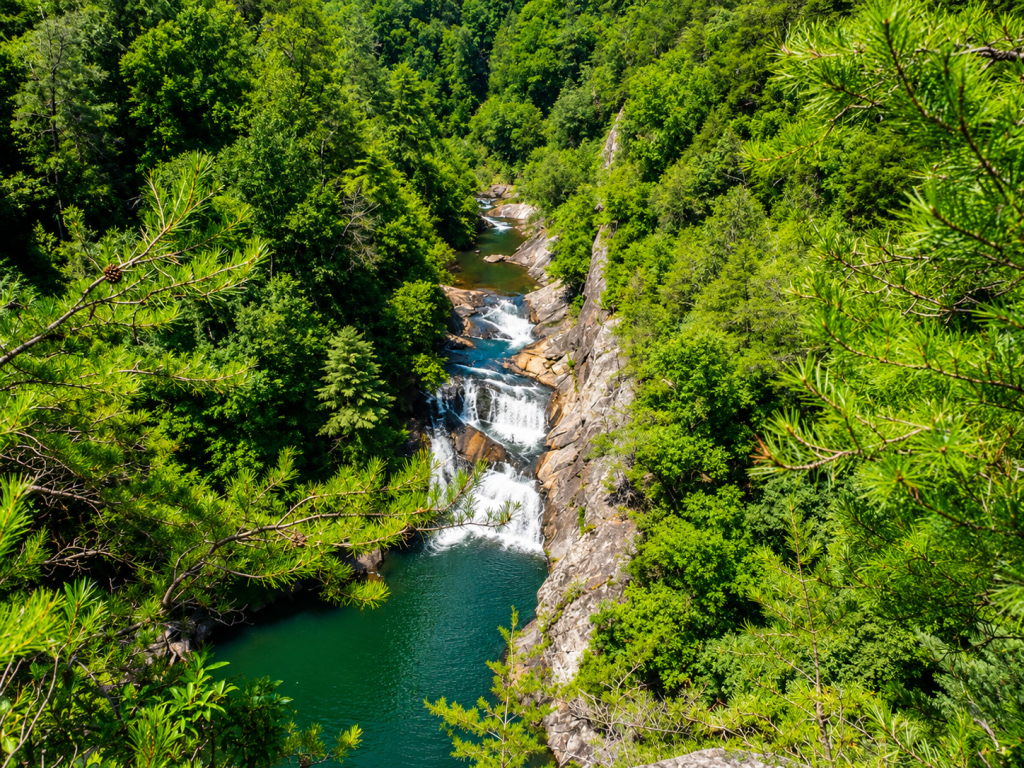
Anyone planning to hike the staircase should wear sturdy shoes, carry plenty of water, and allow enough time for breaks. The climb can be especially exhausting in hot or humid weather. For those hoping to explore the gorge floor, a separate permit is required, and access may be restricted because of weather, water releases, or other safety conditions. It’s worth checking with the park before making plans.
Fortunately, you don’t have to descend into the canyon to appreciate its beauty. The rim trails provide spectacular overlooks, allowing visitors to experience the gorge without committing to the strenuous staircase, but if you’re physically prepared for the challenge, the journey toward the suspension bridge offers a perspective you simply cannot get from above.
Was It Worth It?
Absolutely. Would I call it an easy hike? Not in a million years. Tallulah Gorge is one of those places that stays with you long after you’ve left. Not simply because of its waterfalls or its dramatic canyon walls, but because of the effort it takes to experience them up close.
There’s something satisfying about standing at the top of a difficult trail, looking back toward the landscape you’ve just explored, and knowing you pushed yourself farther than you expected. My legs may not have appreciated the adventure, but I certainly did.
Georgia has no shortage of beautiful places, yet Tallulah Gorge stands apart. It’s wild, dramatic, historically fascinating, and physically demanding enough to humble even an enthusiastic traveler. I arrived expecting beautiful scenery and a memorable hike. I left with both, along with aching legs, a healthy respect for staircases, and one more story from the road.
Some places take your breath away because they’re beautiful. Tallulah Gorge takes your breath away twice—once for the view, and again when you have to climb back out.