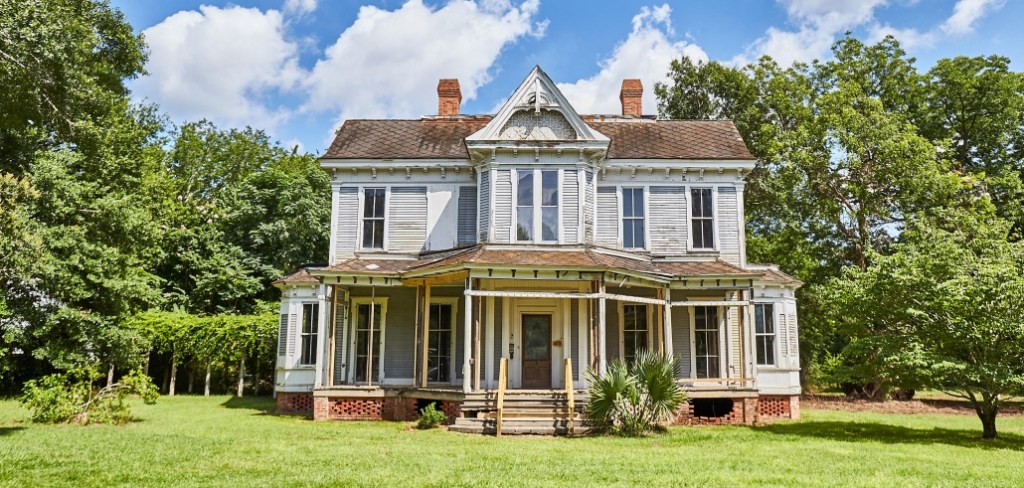
Founded in 1809, Madison is both the county seat and the largest town in Morgan County. Named after U.S. President James Madison, who negotiated a treaty with the nearby Creek Indians, the town’s early settlers were largely veterans of the American Revolution who received land grants in the area as a reward for their service. Madison prospered as a key stagecoach stop and as a residence for planter families. Before the Civil War, it was praised as “the most cultured and aristocratic town on the stagecoach route from Charleston to New Orleans.” For nearly two centuries, Madison has warmly welcomed visitors from around the globe.

Twenty years later, the Civil War broke out, and in 1864, Madison found itself directly in the path of one wing of General Sherman’s army. Joshua Hill, a Madison attorney, former U.S. Senator, and committed Unionist, was granted permission to cross Federal lines and meet with General Sherman at his headquarters. Through their negotiations, an agreement was reached that spared Madison from destruction. For the second time, both the town’s residential neighborhoods and its city center avoided a devastating blow.
Today, Madison’s National Register Historic District boasts one of the largest collections of 19th-century architecture in the state. In 2001, Travel Holiday Magazine named Madison the “#1 Small Town in America,” and in 2012, Budget Travel Magazine recognized it as one of the “Top 16 Most Picturesque Villages in the World.”

Madison is remarkably well preserved and stands as one of the few towns in Georgia that escaped destruction at the hands of General William Tecumseh Sherman during the Civil War. However, despite avoiding Sherman’s flames, a devastating fire swept through the downtown area on April 9, 1869, destroying forty-two stores along with several other buildings and homes. Afterward, Madison never fully regained the wealth and prominence it once held before the war.
Stop by the Madison Welcome Center to pick up a brochure and start your self-guided walking tour of over 50 antebellum sites scattered throughout the city’s historic downtown district. Madison has preserved its small-town charm and continues to serve as the heart of the community. The downtown area features a central town square, anchored by historic landmarks like City Hall, the Morgan County Courthouse, and the U.S. Post Office. The Madison-Morgan County Chamber of Commerce, housed in the historic town hall and fire station building on the square, offers a prime spot to take in the lively mix of retail shops, professional offices, and local services.
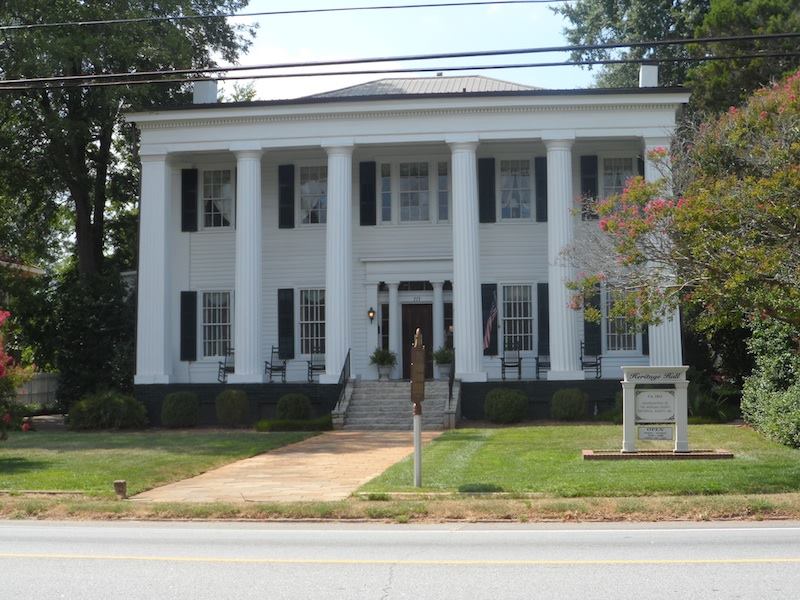
Heritage Hall (1811) Greek Revival Architecture Headquarters for Morgan County Historical Society.
Madison is home to nearly 100 antebellum residences lining its tree-shaded streets, many meticulously restored to their former glory. What sets Madison apart is how little modern development has altered its landscape, allowing the town to preserve its authentic charm and historic ambiance. Recognized on Georgia’s Antebellum Trail, Madison is proudly designated as one of the state’s Historic Heartland cities.
Madison is just one hour east of Atlanta on I-20. It’s the perfect day trip! I enjoyed immersing myself in the historic atmosphere of this town. To appreciate some antebellum beauty and experience a true taste of old Southern charm, visit Madison, Georgia.


 Wander Woman