DAWSON COUNTY, GEORGIA
There are places you visit for the scenery, and then there are places where the landscape itself seems to have a story to tell. Amicalola Falls, tucked deep into the mountains of North Georgia, is one of those places. The farther you travel into the southern Appalachians, the more the outside world seems to disappear. Roads wind through thick forests, mountains rise in endless shades of green, and somewhere beyond the trees, the sound of rushing water waits to be discovered. That was what drew me to Amicalola Falls State Park.
I had come to see one of the Southeast’s most impressive waterfalls, but as I’ve learned from exploring historic places, there’s often much more to a location than what first meets the eye, and Amicalola has a history that stretches far beyond its hiking trails.
The Mountain Has a Name
Long before Georgia established a state park here, the Cherokee knew these mountains and the waters that ran through them. They called the falls Amicalola, commonly translated as “Tumbling Water.” It’s a fitting name.
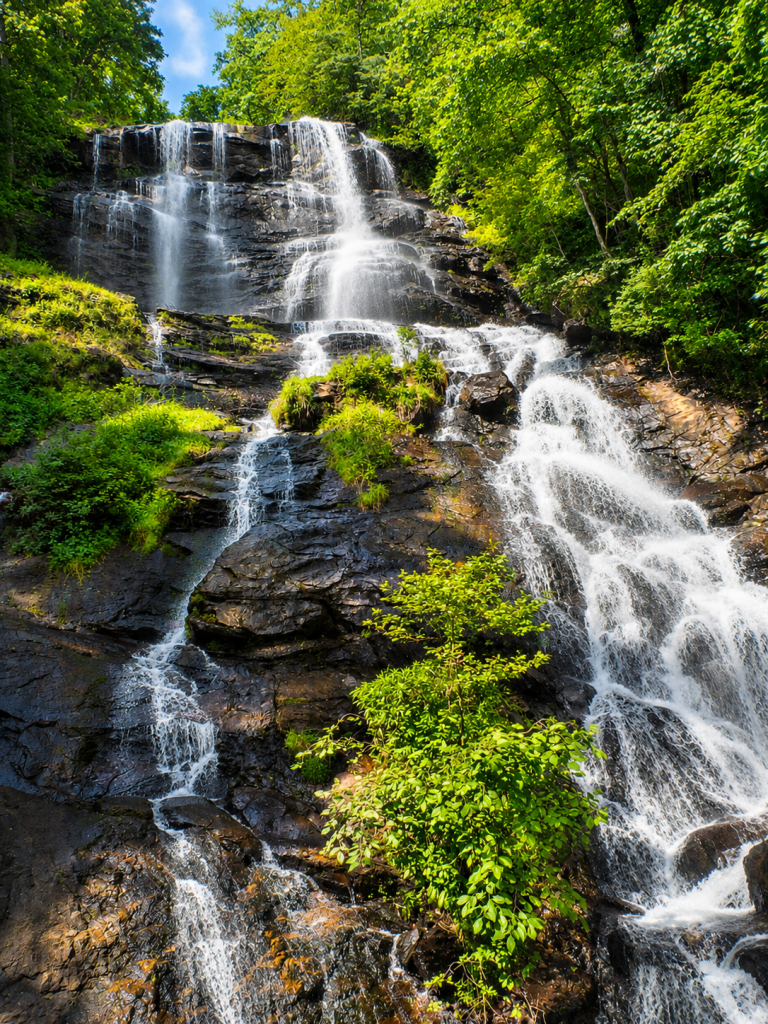
High in the mountains, Amicalola Creek gathers strength as it travels along the slopes of the Blue Ridge. Eventually, the water reaches a series of rocky ledges and begins its spectacular descent, dropping 729 feet down the mountainside. Standing beneath a waterfall of that size, it’s difficult not to feel small.
Water has been carving its way through these mountains for thousands of years, long before hiking trails, observation platforms, or park roads existed. The surrounding forest has changed, generations have come and gone, and yet the water continues its journey, but these mountains hold stories that aren’t nearly as peaceful as the scenery suggests.
A History Beneath the Trees
Before the arrival of European settlers, this region was part of the Cherokee homeland. That changed dramatically in 1838, when the United States government carried out the forced removal of the Cherokee from Georgia and other southeastern states. Thousands were driven west along routes that became known collectively as the Trail of Tears.
The mountains surrounding Amicalola were remote, and according to local historical accounts, that isolation allowed at least one Cherokee woman to escape removal. As the Georgia Guard searched the region for Cherokee residents who had remained behind, the woman reportedly went unnoticed near Amicalola Creek. She continued living in the area into the late 1840s.
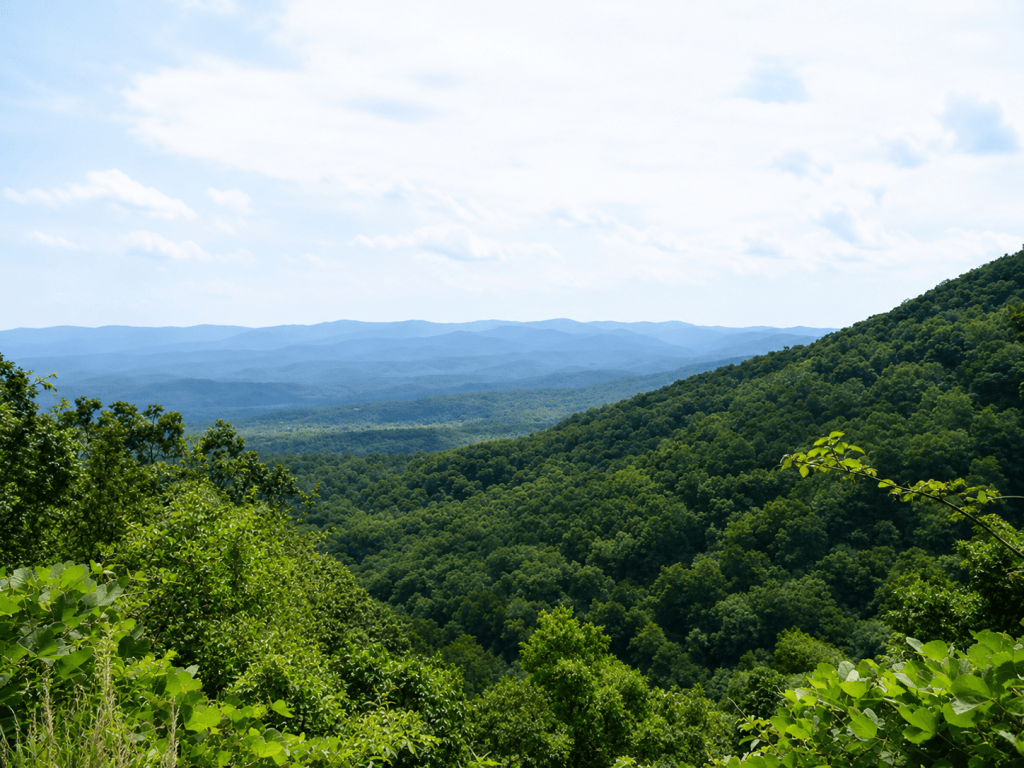
I’ve always found stories like this particularly haunting. It’s easy to walk through a beautiful forest and imagine it as untouched wilderness, but places that appear peaceful today have often witnessed events that left no obvious trace. There are no towering monuments along every trail to remind visitors of the people who once called these mountains home. Sometimes the history is simply there, hidden beneath the same trees that have grown over the landscape for generations.
The Climb Toward the Falls
Amicalola Falls isn’t a place where you must venture miles into the wilderness to find something worth seeing. The waterfall is the park’s centerpiece, and several trails provide different ways to experience it, but don’t mistake accessibility for an easy hike. The terrain can be steep, with rocky paths, elevation changes, and long stretches of stairs that challenge even enthusiastic hikers. In fact, struggling to reach the falls is hardly a modern experience.
In 1832, Georgia surveyor William Williamson recorded one of the earliest known written descriptions of Amicalola Falls. Captivated by what he saw, he attempted to make his way toward the top. He didn’t get very far before the mountain reminded him of his limitations. By his own account, he was exhausted before reaching the halfway point.
Nearly two centuries later, I suspect plenty of visitors can relate. There’s something humbling about a mountain trail. You can admire the scenery all you want, but the mountain doesn’t care how determined you are. Every incline must be earned, and sometimes the most memorable part of a hike isn’t reaching the destination. It’s everything you notice while trying to get there.
The moss-covered rocks. The shifting light through the canopy. The sound of water growing louder as the trail carries you closer, and then, somewhere ahead, the forest opens enough to reveal what you’ve been climbing toward. A tremendous wall of moving water, spilling over ancient stone.

Where Another Journey Begins
Amicalola Falls has another connection to American hiking history. For many long-distance hikers, the park represents the beginning of a much larger adventure. When the Appalachian Trail was first completed in 1937, its southern terminus was located on Oglethorpe Mountain, near Jasper, Georgia.
Over time, development and road construction began affecting the southernmost portion of the trail. By the 1950s, maintaining the original route had become increasingly difficult. In 1956, the decision was made to relocate the southern terminus to Springer Mountain. Amicalola Falls State Park became an important access point for hikers preparing to begin the Appalachian Trail.
Today, the park’s Approach Trail leads approximately 8.5 miles from the visitor center to Springer Mountain, where the famous footpath officially begins its northbound journey. For some people, Amicalola is a pleasant afternoon in the mountains. For others, it’s the first chapter of a journey that could take months to complete. I find that contrast fascinating. The same trail that offers one person a brief escape from everyday life can mark the beginning of an entirely different existence for someone else.
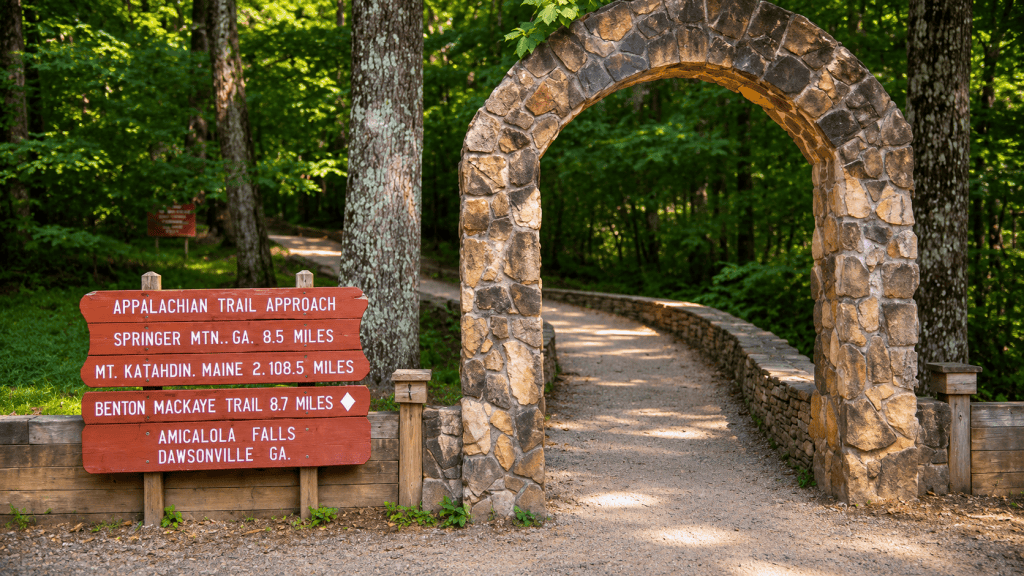
The Long Climb and the Stairway Down
I decided to begin my hike by heading up the mountain, following the approach toward the southern starting point of the Appalachian Trail. There was something exciting about knowing I was walking a route that countless hikers have taken before setting out on one of the most famous long-distance trails in America.
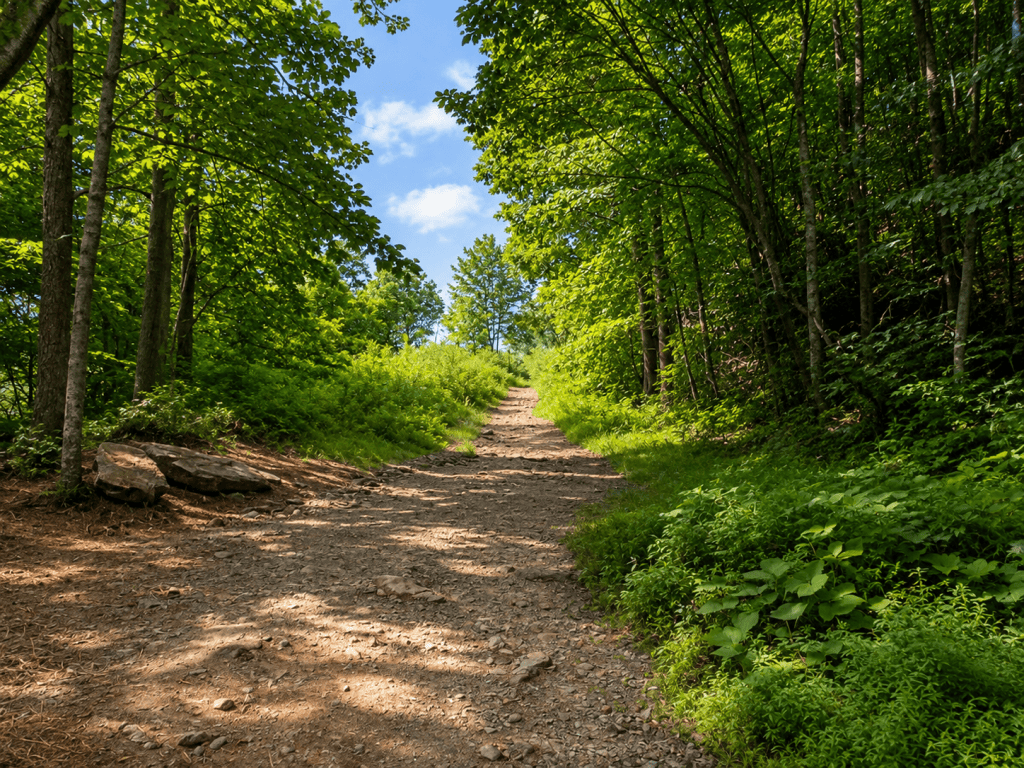
For some, these mountains mark the beginning of a journey stretching more than two thousand miles. For me, it was an opportunity to disappear into the North Georgia wilderness for a while and see where the trail would lead. The farther I climbed, the more the forest seemed to close around me. Tall trees stretched overhead, their branches forming a canopy above the trail. The ground was uneven, and the steady uphill climb made it impossible to forget that I was gaining elevation. It was the kind of hike that makes you appreciate every level stretch of ground, but I wasn’t in any hurry.
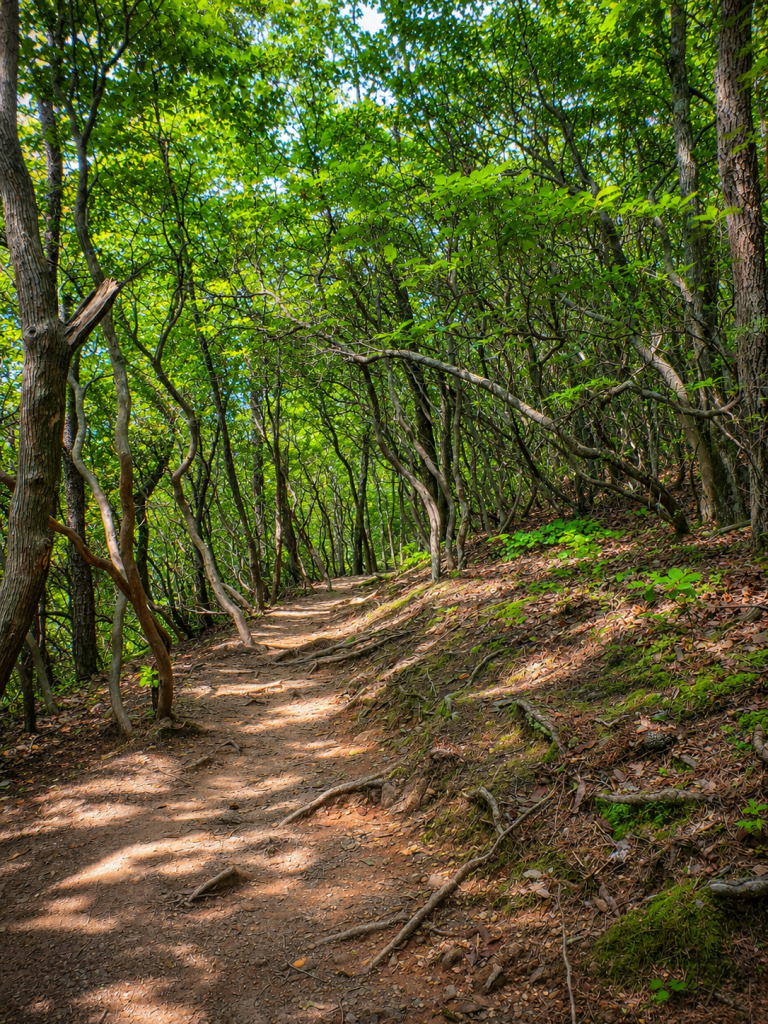
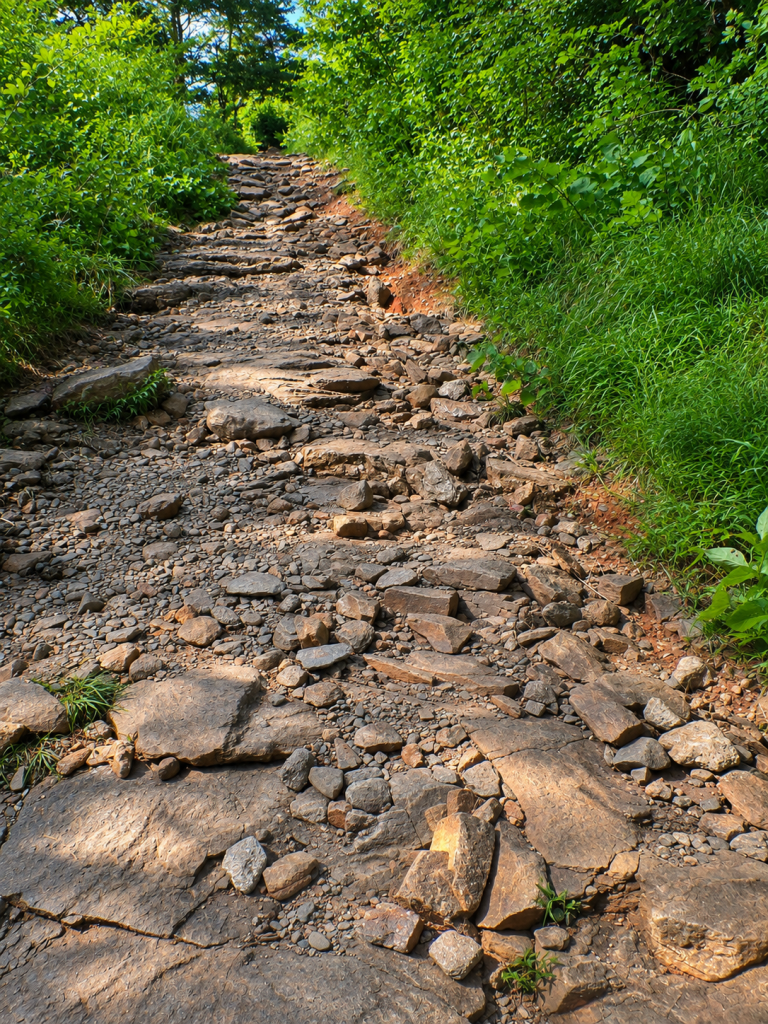
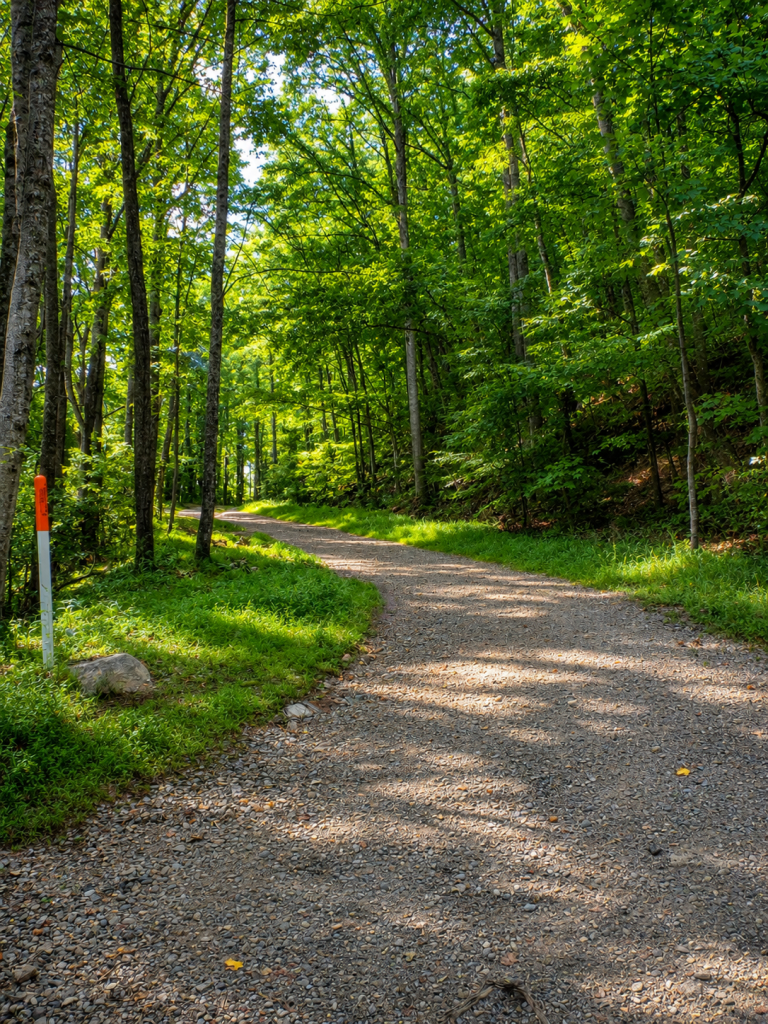
I’ve always enjoyed the quieter parts of exploring, the moments when there is nothing around but trees, winding trails, and the occasional sound of something moving through the undergrowth. There is a certain freedom in being surrounded by wilderness, away from traffic, buildings, and the constant noise of everyday life.
Of course, what goes up eventually must come down, and at Amicalola Falls, coming down meant tackling the long, strenuous staircase running alongside the waterfall. If the climb up the mountain had tested my endurance, the descent was an entirely different challenge. The steps seemed to go on forever, dropping steeply down the mountainside. With every section, the waterfall revealed another part of itself, the rushing water spilling over massive rock formations beside the staircase.
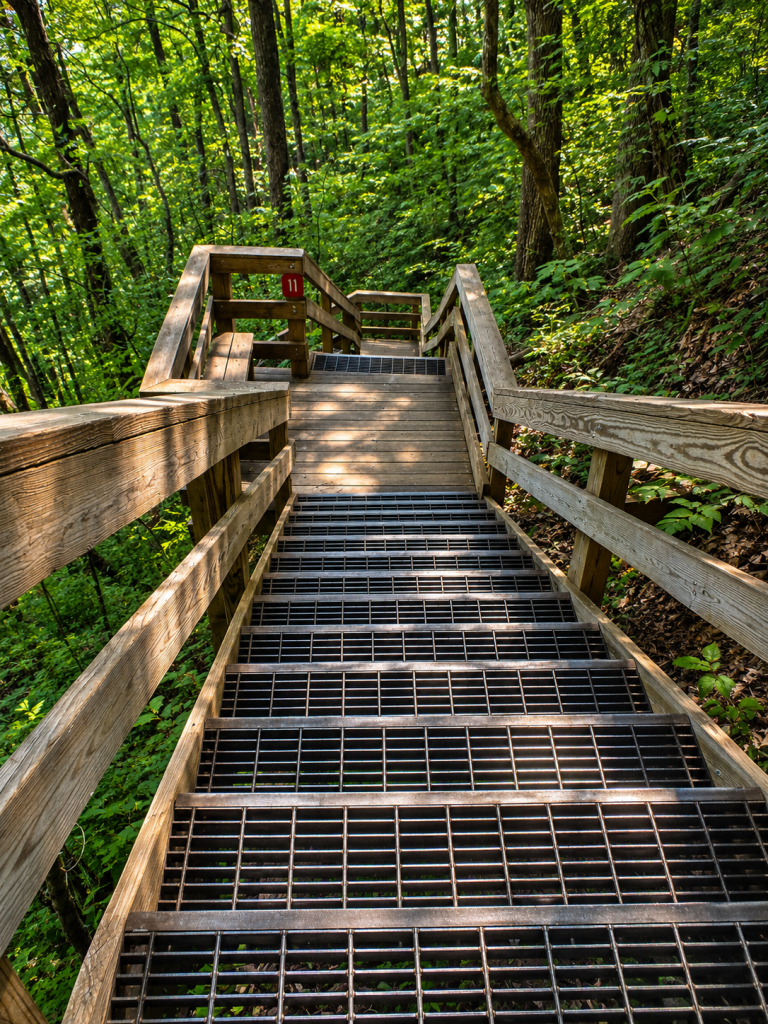
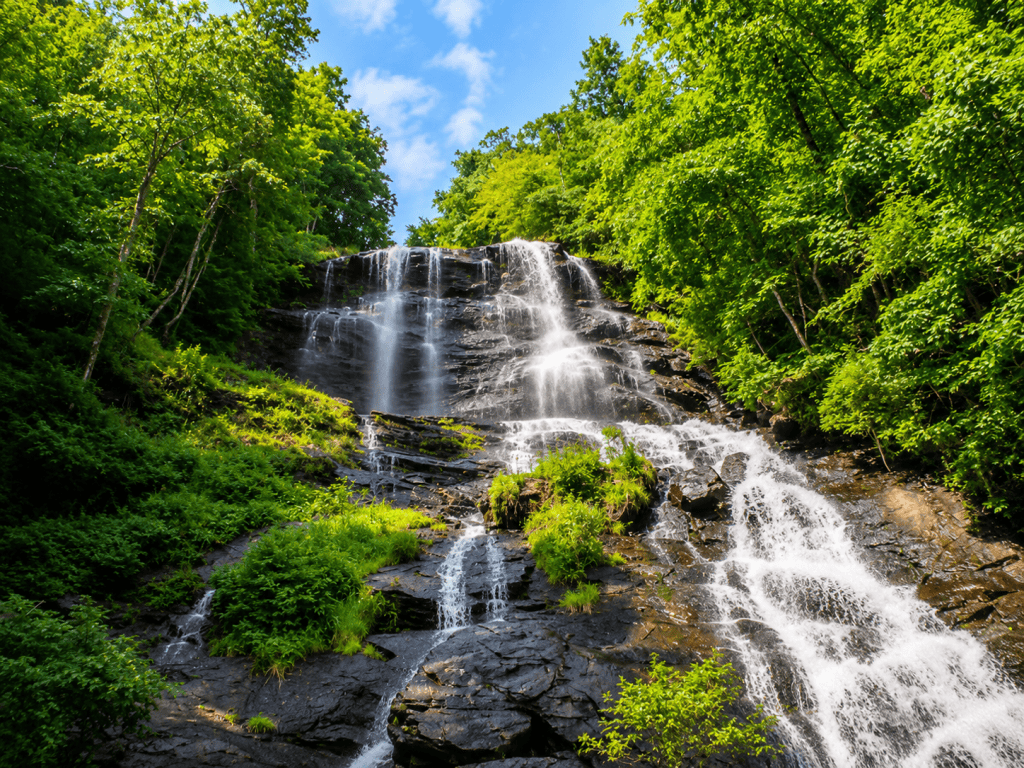
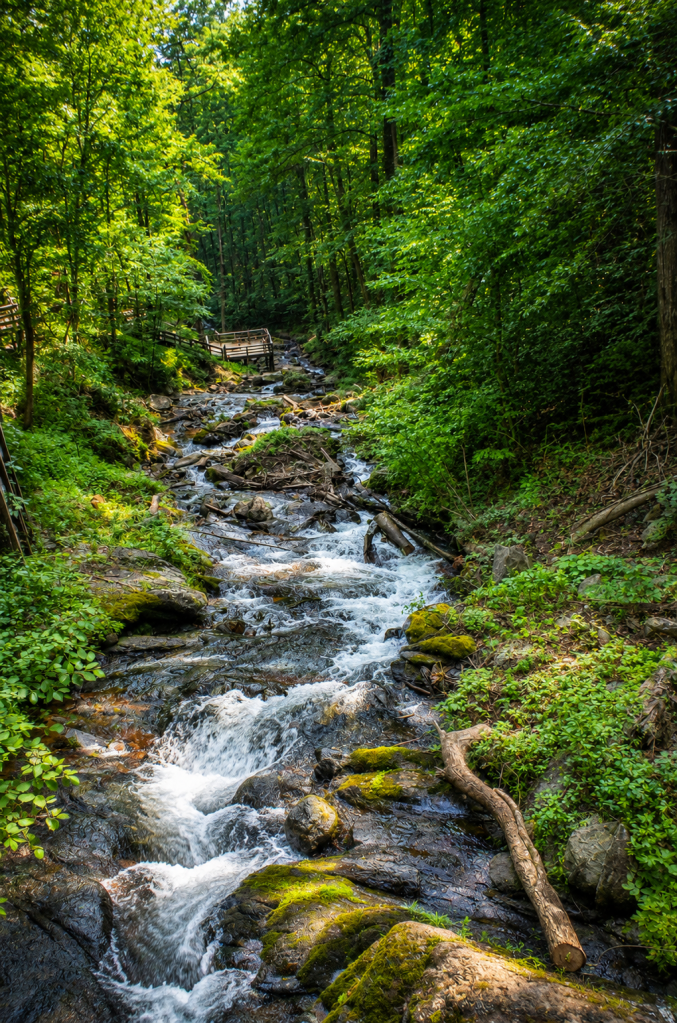
It was beautiful, but it wasn’t exactly a leisurely stroll. Descending that many steps requires concentration, especially when your legs have already been working their way uphill. Still, there was something remarkable about experiencing the waterfall from that perspective. Rather than standing at a distant overlook, I was making my way down beside it, watching the water tumble from one rocky ledge to another. The sound of rushing water filled the surrounding forest. I could understand why the Cherokee called this place Amicalola — Tumbling Water.
By the time I reached the bottom, I had experienced the mountain in two very different ways: the quiet, demanding climb through the woods and the dramatic descent beside one of Georgia’s most spectacular natural landmarks, and although my legs had certainly earned a rest, I wouldn’t have wanted to experience it any other way.
The Beauty & the Danger
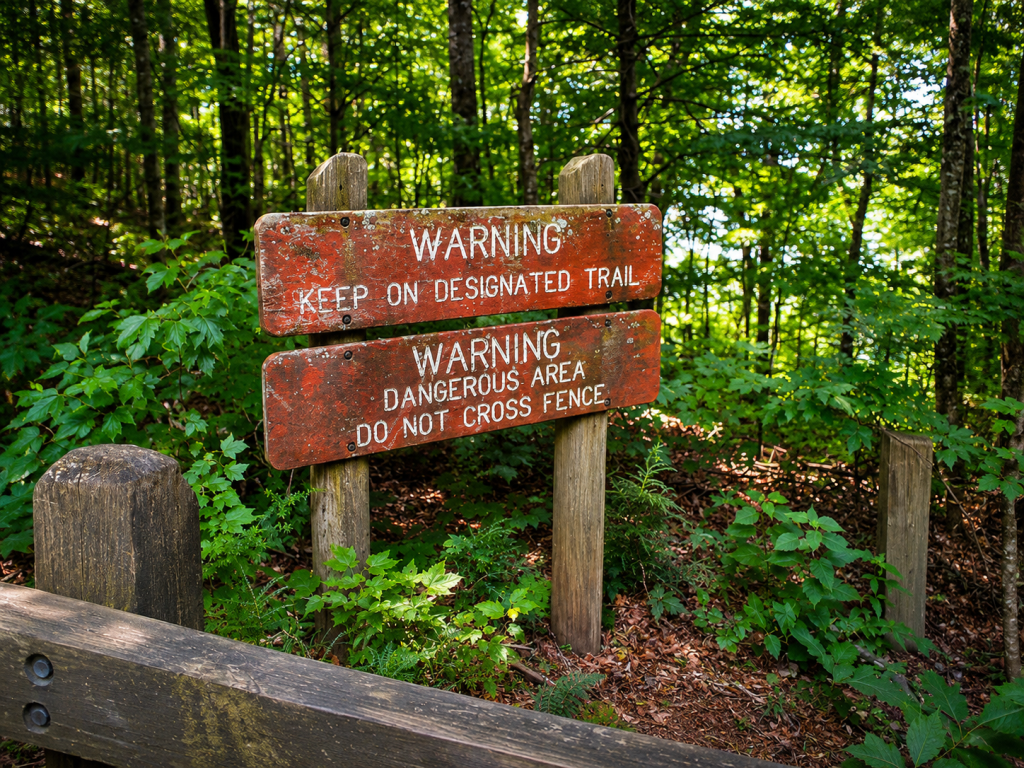
As beautiful as Amicalola Falls is, the landscape demands respect. The steep terrain, wet rocks, and significant drop-offs can become dangerous when visitors venture beyond designated paths. In 1977, a visitor fell from a rocky ledge near the waterfall. The incident helped prompt the development of a mountain search-and-rescue team at the park.
It’s a sobering reminder that the same natural features that make these places extraordinary can also make them unforgiving. The mountains have existed long before us, and they will continue long after we’re gone. No photograph is worth stepping beyond a protective barrier or risking a fall.
What Stays With Me
Looking back, what I remember most about Amicalola Falls isn’t just the waterfall itself. It’s the contrast between the two parts of my hike. The climb through the forest, following a trail connected to one of America’s greatest wilderness journeys, and the long descent beside water that has been tumbling down those rocks for countless generations.
One part of the journey was quiet and almost solitary. The other was filled with the relentless sound of falling water. Both reminded me why I love exploring places like this. You can read about a mountain, study its history, and admire photographs of its scenery, but none of that quite compares to feeling the climb in your legs, standing beside the rushing water, and realizing you’re experiencing a small part of a landscape with centuries of stories behind it.
Amicalola Falls was worth every uphill step and every aching step back down.

